

2026 Best Cable Branch Boxes for Global Buyers
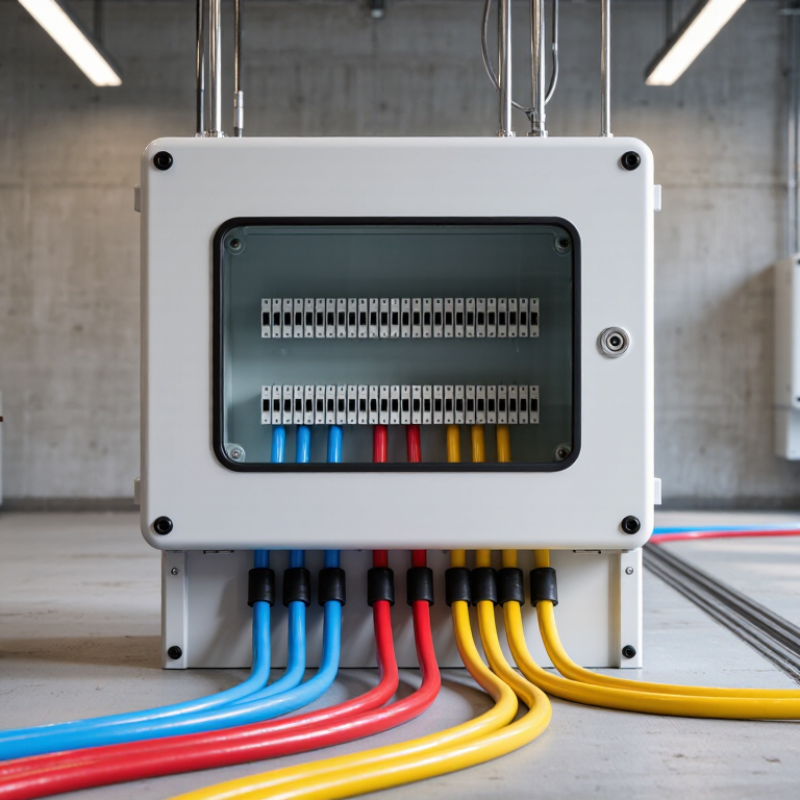
Cable branch boxes divide one incoming cable into several controlled outgoing circuits. They also provide termination, enclosure protection, and easier maintenance.
Common designs include straight-through, T-type, Y-type, fused, and terminal distribution boxes. Selection depends on cable size, conductor material, current, installation space, and environmental exposure.
IEC 61439 voltage limits deserve careful attention. When a branch box falls within this standard’s scope, it belongs to low-voltage assemblies rated up to 1,000 V AC or 1,500 V DC.
This limit is not the only selection point. Buyers should check rated operational voltage (Ue), insulation voltage (Ui), impulse withstand voltage (Uimp), rated current, and short-circuit withstand capability. A higher voltage rating cannot compensate for undersized terminals or poor heat dissipation.
IP protection matters outdoors. Dust, rain, salt air, and cable bending can quickly expose weak enclosure designs. Ask for design verification and routine verification records under IEC 61439 where applicable.
Confirm creepage distances, internal wiring, temperature-rise performance, and protective conductor continuity. A box may look solid and still be unsuitable.
Overlooking local installation rules is another common mistake. Global purchasing needs both international documentation and site-specific compliance. Shortcuts create expensive rework.


