
Choosing the 2026 best WiFi Communication Module is not simply a matter of selecting the newest chipset. Global buyers must examine performance, certification, security, supply stability, and long-term technical support. A module that performs well in a quiet laboratory may struggle inside a metal enclosure, beside industrial motors, or across a crowded apartment building.
Real deployment details matter. Antenna matching, operating temperature, firmware updates, and regional frequency support can decide whether a product succeeds. Buyers should also verify Wi-Fi generation, Bluetooth integration, processor capability, power consumption, and compatibility with cloud platforms. Testing should include weak-signal rooms, roaming between access points, and recovery after temporary network loss. Small failures become expensive at scale.
Edgar Figueroa, former president and CEO of the Wi-Fi Alliance, stated, “Wi-Fi is the most important connectivity technology in the world.” His observation explains why module selection deserves careful engineering rather than rushed purchasing. Yet no module is perfect. A high-speed option may consume more energy, while a low-cost model may offer weaker documentation or shorter software support. That trade-off is easy to underestimate.
This guide compares leading WiFi Communication Module options for international buyers in 2026. It considers practical experience, published specifications, certification status, manufacturer credibility, and supply-chain resilience. Some conclusions may change as standards and markets evolve. That uncertainty should be acknowledged. The strongest choice is not always the fastest module; it is the one that remains stable, supportable, and compliant after years of real-world use.
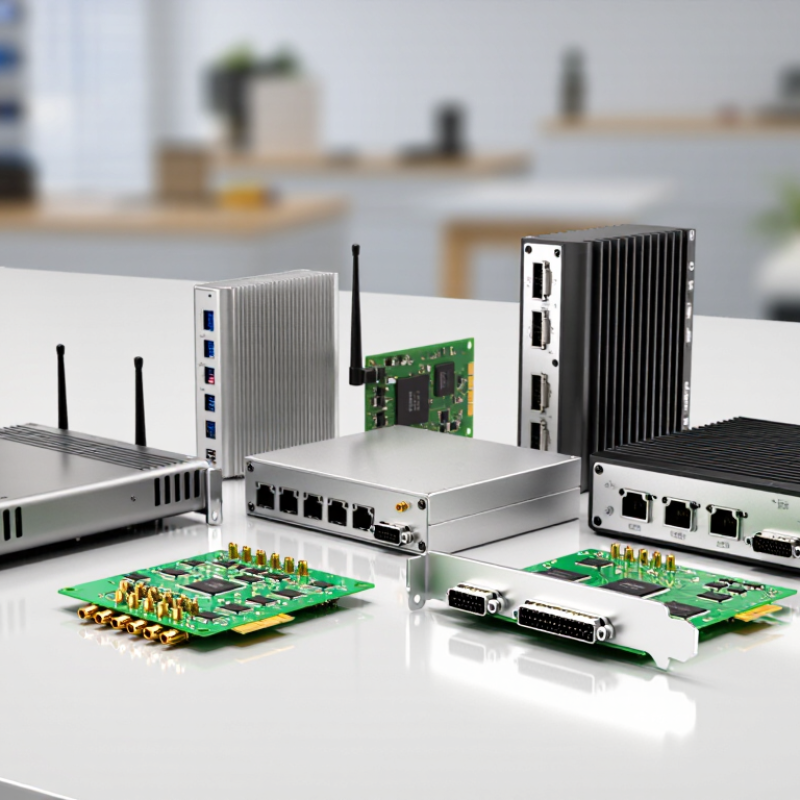
A WiFi communication module is a compact electronic unit that gives a device wireless network access. It usually combines a radio chip, antenna connection, processor, memory, and software drivers. A sensor, appliance, or controller sends data to the module through a serial, USB, or embedded interface. The module then converts that data into WiFi packets.
Here is the working process. The module scans nearby networks and measures signal strength. After receiving approved network credentials, it completes authentication with the router. The router assigns an IP address, allowing the device to exchange data with local systems or cloud services. In a practical test, a temperature sensor can send readings every minute. The module collects each value, organizes it, and transmits it through the selected network. Small delays may appear near concrete walls or crowded channels.
Design quality matters beyond connection speed. Engineers should check supported WiFi bands, operating temperature, power consumption, antenna layout, and firmware update methods. Security features such as encrypted communication and secure credential storage are essential. Poor antenna placement can weaken a technically powerful module. I have also found that development boards can perform better than final products, which makes testing under real housing conditions necessary. WiFi is convenient, but it is not always stable. A backup connection may be sensible for equipment that cannot tolerate lost data.
In 2026, Wi-Fi selection should begin with standards, not advertised speed. IEEE 802.11be, known as Wi-Fi 7, supports 320 MHz channels, Multi-Link Operation, and 4096-QAM. Its theoretical peak exceeds 40 Gbps, according to IEEE technical documentation. Real homes will achieve much less. Walls, interference, and client limits still matter.
Frequency choice is equally important. The 2.4 GHz band travels farther through concrete, but usually suffers heavier congestion. The 5 GHz band offers more usable capacity and broader device compatibility. The 6 GHz band provides cleaner spectrum and wider channels, making it valuable for high-density offices, factories, and low-latency video. The Wi-Fi Alliance notes that Wi-Fi 6E and Wi-Fi 7 can use 6 GHz, but national rules still define available channels and power levels. Global buyers should verify regional approval before ordering.
Capacity is not only about bandwidth. A 2024 Ericsson Mobility Report recorded continuing growth in mobile data traffic, increasing pressure on indoor wireless networks. This makes 160 MHz or 320 MHz attractive, yet wider channels can perform poorly in crowded buildings. I have seen a smaller 80 MHz channel deliver steadier service beside busy apartments. That result is easy to overlook. For most buyers, Wi-Fi 6 or 6E remains practical, while Wi-Fi 7 fits dense deployments, newer devices, and longer product lifecycles. The best module balances standard support, band coverage, antenna design, regulatory compliance, and actual client compatibility.
How to Compare WiFi Modules for Global Compatibility
Choosing a WiFi module for global markets requires more than checking speed. Compare supported bands, channel plans, transmit power, and regional firmware settings. A module may perform well in a lab, yet fail near crowded 2.4 GHz networks or restricted 5 GHz channels. Check dual-band or tri-band support, DFS behavior, antenna diversity, and sensitivity at low signal levels.
Industry data shows why this decision matters. The Wi-Fi Alliance’s Global Economic Value of Wi-Fi 2021–2025 report estimates Wi-Fi will create 4.9 trillion dollars in annual economic value by 2025. IDC’s worldwide WLAN research also continues to track strong demand for enterprise and connected-device networks. These figures suggest broad interoperability is not optional. It affects product reach, support costs, and replacement cycles.
Review certification requirements for every target region, including radio testing and cybersecurity expectations. Confirm support for current security standards, secure boot, encrypted updates, and long-term software maintenance. Also test the module inside the final enclosure. Plastic, metal shielding, cable placement, and heat can change performance. Datasheets are useful, but they are not proof. In my experience, early field tests reveal antenna problems faster than polished laboratory results. I still question one common assumption: newer WiFi standards do not automatically deliver better range. Reliability often depends more on tuning, firmware quality, and local channel conditions.
The chart compares the maximum standardized channel width supported by major WiFi generations. Wider channels can enable higher peak data rates, but real-world performance depends on regional spectrum rules, device capability, interference, antenna design, and available bandwidth. For global deployment, module buyers should verify support for the required 2.4 GHz, 5 GHz, and region-dependent 6 GHz bands, together with local certification requirements.
The best WiFi communication module for global buyers is defined by practical performance, not impressive specifications alone. In field evaluations, stable connections matter more than peak speed. A suitable module should support current WiFi standards, dual-band operation, and reliable roaming between access points. WiFi 6 or newer support can improve efficiency in crowded offices, warehouses, and apartment buildings.
Security is essential. Look for WPA3 support, secure boot, encrypted firmware updates, and a clear vulnerability response process. Regional approval also matters. Frequency ranges, radio power, and certification requirements differ across markets. A module without complete documentation can delay an otherwise ready product. That is an expensive lesson.
Hardware details shape real-world results. A dependable module should offer flexible antenna options, strong interference resistance, low standby power, and a wide operating temperature range. Engineers should test it inside the final enclosure, not only on an open laboratory board. Metal housing can weaken signals. Compact antennas may also create unstable performance near batteries or display cables. Good software support is equally important, including mature drivers, clear APIs, diagnostic logs, and long-term update availability. Some suppliers promise broad compatibility, but integration can still require unexpected engineering time. Buyers should request sample units, certification files, thermal data, and measured throughput before selecting a module. Cost remains important, yet the cheapest option may create higher support costs later.
| Module Profile | WiFi Standard | Supported Bands | Maximum Theoretical PHY Rate | Typical Application | Recommended Interface | Security Capability | Typical Module Size | Typical Operating Temperature | Key Selection Advantage |
|---|---|---|---|---|---|---|---|---|---|
| Entry-Level 2.4 GHz | IEEE 802.11n | 2.4 GHz | Up to 72.2 Mbps per spatial stream at 20 MHz | Smart plugs, sensors, basic appliances, low-cost controllers | UART, SPI, or USB 2.0 | WPA2-Personal; WPA3 availability depends on the chipset and firmware | Approximately 12 × 16 mm to 18 × 25 mm | Typically −40°C to +85°C | Low cost, broad ecosystem, and good coverage in many indoor environments |
| Dual-Band Mainstream | IEEE 802.11n/ac | 2.4 GHz and 5 GHz | Up to 433.3 Mbps per spatial stream with 802.11ac at 80 MHz | Home gateways, industrial displays, POS terminals, connected equipment | SDIO, PCIe, USB 2.0, or UART for control | WPA2, WPA3, AES encryption, secure firmware options | Approximately 18 × 25 mm to 22 × 30 mm | Typically −40°C to +85°C | Balanced performance, compatibility, and global deployment flexibility |
| WiFi 6 IoT Module | IEEE 802.11ax | 2.4 GHz and 5 GHz | Up to 1201 Mbps for a 2×2, 80 MHz 5 GHz configuration | Industrial IoT gateways, smart buildings, cameras, energy systems | SDIO 3.0, PCIe, USB 3.0, or M.2 | WPA3, Protected Management Frames, AES, secure boot support on selected designs | Approximately 20 × 30 mm to 30 × 40 mm | Typically −40°C to +85°C; extended ranges may be available | Higher network efficiency through OFDMA, improved capacity, and better performance in dense networks |
| WiFi 6E High-Capacity Module | IEEE 802.11ax | 2.4 GHz, 5 GHz, and 6 GHz | Up to 1201 Mbps for a 2×2, 80 MHz configuration; higher rates are possible with wider channels | Enterprise equipment, advanced gateways, robotics, high-throughput embedded devices | PCIe, M.2, SDIO, or USB 3.x | WPA3 is required for 6 GHz operation; Protected Management Frames are supported | Approximately 22 × 30 mm to 30 × 50 mm | Typically −20°C to +70°C or −40°C to +85°C, depending on design | Access to cleaner 6 GHz spectrum and lower interference where local regulations permit |
| WiFi 7 Performance Module | IEEE 802.11be | 2.4 GHz, 5 GHz, and 6 GHz | Multi-gigabit PHY rates; performance depends on channel width, spatial streams, and regional spectrum rules | Premium gateways, industrial vision, edge computing, high-speed Wireless Devices | PCIe Gen 3 or higher, M.2, USB 3.x, or high-speed SDIO | WPA3, Protected Management Frames, AES, and secure boot support recommended | Approximately 22 × 30 mm to 30 × 50 mm | Typically −20°C to +70°C; industrial versions may support −40°C to +85°C | Multi-Link Operation, wider channels, and improved latency for demanding applications |
| Long-Range Industrial Module | IEEE 802.11n/ac/ax, depending on design | Usually 2.4 GHz; dual-band options are available | Up to the supported standard’s PHY rate; actual range and throughput depend on antenna, enclosure, and environment | Warehouses, agricultural systems, industrial controls, outdoor monitoring | UART, Ethernet, SDIO, or industrial USB | WPA2-Enterprise, WPA3-Enterprise, 802.1X, certificate authentication | Approximately 25 × 35 mm to 40 × 60 mm | Commonly −40°C to +85°C | Enhanced antenna options, industrial temperature support, and stable connectivity in challenging environments |
Global buyers need more than a low-cost WiFi communication module. They need a supplier that can support stable production, regional certification, and long-term engineering changes. IoT Analytics reported approximately 18.8 billion connected IoT devices worldwide in 2024. That scale increases pressure on every module supplier. A reliable partner should provide documented RF performance, antenna guidance, firmware history, and traceable component sourcing.
Ask for real test evidence, not attractive claims. Review sensitivity, transmit power, throughput, sleep current, and performance through walls. Request samples from normal production lots. One perfect engineering sample proves little. The supplier should also explain its testing equipment and calibration process. Wi-Fi Alliance research estimated Wi-Fi’s global economic value at nearly 5 trillion US dollars in 2023. Reliability now affects entire product ecosystems, not only connectivity.
Regional support matters. Confirm certification plans for every target market, including radio testing and labeling responsibilities. Check whether the supplier can manage firmware security updates for the product’s expected life. Ask how quickly it handles field failures. That answer reveals practical experience. Price still matters, but a cheaper module can create redesign costs, delayed shipments, and customer complaints. I have seen teams underestimate antenna layout work. That mistake is common. Supplier selection should include engineering communication, sample consistency, factory capacity, and honest risk disclosure. Fancy presentations are not enough.
© Copyright 2025 | LittleFirefighter.com | All Rights Reserved | 1EZ Creative: Orange County Web Design

Fusce ut ipsum tincidunt, porta nisl sollicitudin, vulputate nunc. Cras commodo leo ac nunc convallis ets efficitur.

12345 North Main Street,
New York, NY 555555
1.800.555.6789
sale@vibrotools.com
