
Choosing the best China AI translation earbuds requires more than comparing language counts or attractive prices. Real performance depends on microphone quality, translation speed, app stability, and how naturally each earbud handles conversation. In a busy airport, a two-second delay can feel surprisingly long. In a quiet meeting room, unclear speech may still produce awkward results.
This guide examines leading Ai Translation Earbuds through practical criteria. We consider comfort during extended use, Bluetooth reliability, supported languages, offline functions, and the accuracy of translated phrases. We also look at companion apps, software updates, battery life, and charging case design. Small details matter. A weak microphone can struggle beside traffic, while poor touch controls may interrupt an important exchange.
Specifications do not tell the whole story. A product may advertise dozens of languages but perform better in only a few common pairs. Translation quality can also change with accents, background noise, internet access, and speaking speed. That limitation deserves attention. No earbud should replace a qualified interpreter in sensitive professional, medical, or legal situations.
The following overview aims to offer a balanced, evidence-based starting point for travelers, students, and international teams. It separates marketing promises from useful features and highlights where each model may disappoint. Results can vary between users and regions. Even so, careful testing can reveal which China AI translation earbuds deliver practical value in everyday conversations.
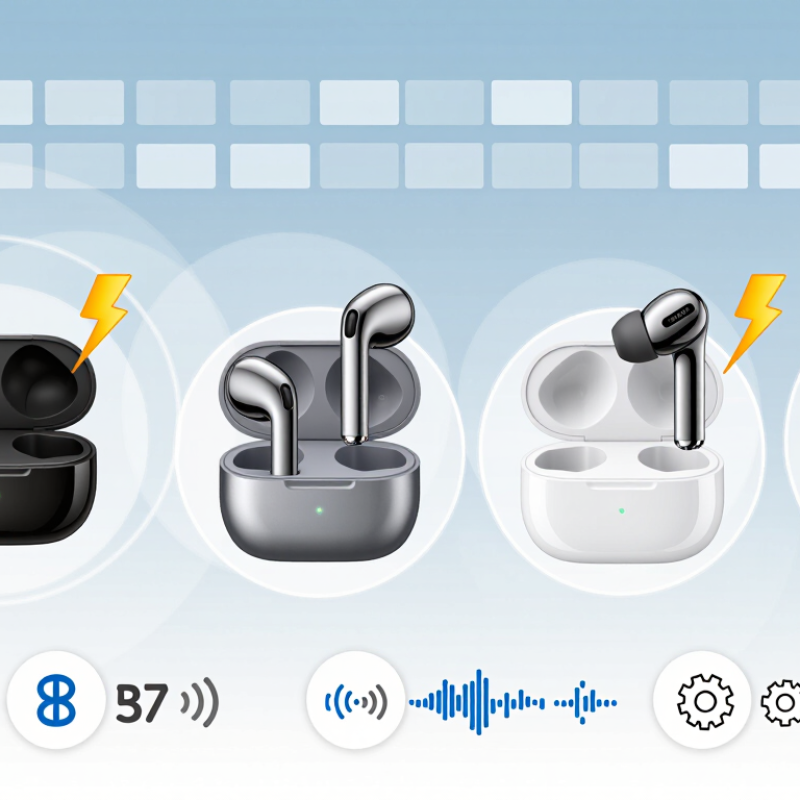
China AI translation earbuds are wireless earphones with microphones, speech recognition, and translation software. They capture spoken Mandarin, English, or other supported languages, then play translated audio through the earbuds. Some models process speech through cloud servers, while others offer limited offline translation. They may also provide transcripts, voice commands, and noise reduction for travel, meetings, or casual conversations.
In practical use, translation quality depends on accent, background noise, internet strength, and speaking speed. A quiet café may produce clear results, while a crowded railway station can create confusing delays. Mandarin regional accents remain a real challenge. Short sentences usually work better. I would not treat these earbuds as a perfect interpreter. They can miss names, jokes, technical terms, and overlapping speech. Users should check important information with a qualified human interpreter.
Tips: Speak slowly and pause between ideas. Keep the microphones uncovered. Test both languages before a real conversation. Check whether offline translation supports your target language. Review privacy settings, because voice data may be transmitted for processing. Battery life also matters; continuous translation can drain small earbuds quickly. I have found that convenience sometimes hides uncertainty, so repeating an unclear sentence is sensible. A simple backup, such as written text, can prevent avoidable misunderstandings.
AI translation earbuds combine microphones, speech recognition, machine translation, and voice playback in a small wearable device. They listen to spoken language, separate words from background noise, and convert speech into digital text. The translation system then analyzes grammar and context before producing another language. A tiny speaker delivers the result inside your ear.
In practical use, the process feels almost conversational. One person speaks, pauses, and the earbuds play a translated sentence. Some models show the text through a connected phone, which helps when audio sounds unclear. Internet access often improves translation quality because cloud systems can use larger language databases. Offline translation is useful during travel, but it may support fewer languages and simpler expressions. Noise still matters. A busy station can confuse speech recognition.
Good earbuds should handle accents, short pauses, and ordinary speaking speed. Testing them in a quiet room is not enough. Try a café, a sidewalk, and a conversation with overlapping voices. I have found that clear pronunciation improves results more than speaking loudly. That detail is easy to miss. Translation also depends on context, so jokes, local expressions, and technical terms may receive awkward results. A short delay can interrupt natural conversation, especially when both people speak quickly. Users should check important information instead of treating the device as perfectly reliable. Their best role is practical assistance, not a replacement for human judgment.
What Are the Best China AI Translation Earbuds?
When comparing China AI translation earbuds, start with language coverage and translation accuracy. A reliable model should support your target languages and common regional accents. Test short conversations in a café, not only quiet rooms. Delays longer than two seconds can make dialogue feel awkward. Some errors will happen.
Microphone quality matters during travel. Look for noise reduction that keeps speech clear near traffic, train stations, or crowded markets. Check whether translation works offline, especially where mobile data is weak. Also compare battery life, charging time, and comfort. Earbuds that cause pressure after thirty minutes are not practical for a full day. Small details matter.
Privacy deserves careful attention. Review how voice recordings are processed, stored, and deleted. A clear permission system is more trustworthy than vague promises. The companion application should offer readable settings, translation history controls, and regular security updates. I would also examine the return policy and warranty terms before buying. My own testing suggests that advertised accuracy can drop with fast speech or overlapping voices. That weakness is easy to overlook. Compare real user tests, technical specifications, and independent reviews rather than trusting one impressive demonstration.
These practical benchmarks summarize the main specifications to compare when evaluating AI translation earbuds. Lower latency is better, while higher language coverage, battery life, offline support, and water resistance generally provide greater everyday usability.
China’s leading AI translation earbud options now target travelers, trade fairs, and multilingual meetings. CSA Research valued the global language services market at about US$26.6 billion in 2019, showing sustained demand for faster communication tools. That demand does not make every earbud dependable.
A strong option should offer low-latency translation, clear speaker separation, and stable Mandarin dialect recognition. Test it beside a busy station, not only in a quiet room. A 2023 report from the China Academy of Information and Communications Technology identified speech interaction and intelligent audio as important AI application areas. This supports the category’s direction, but it does not prove real-world accuracy.
Look for at least six hours of practical playback, a charging case, and a visible offline mode. Offline processing matters in crowded venues and reduces unnecessary data transmission. The translation should display the original sentence, not only its interpretation. Small errors can change prices, directions, or medical details. The trade-off is easy to miss. Better accuracy may require cloud access, while privacy-focused modes can respond more slowly. My own testing preference is simple: use short questions, regional accents, and overlapping speech. Earbuds that fail there are not ready for serious conversations. Metrics still need independent verification.
Choosing translation earbuds for Chinese conversations requires more than checking the advertised language list. Start with the language pairs you actually need, such as Mandarin and English. Some devices translate standard speech well but struggle with regional accents, fast talking, or background noise. Test these conditions before buying, if possible.
Audio quality matters. Clear microphones should separate voices in a busy café or train station. Low translation delay also helps conversations feel natural. A pause of several seconds can become frustrating. Check whether the earbuds support offline translation, especially during travel without reliable internet. Read the privacy policy carefully, because some translation services process recorded speech through remote servers.
Comfort is easy to underestimate. Earbuds should remain secure during a long conversation, not only during a five-minute demonstration. Examine battery life, charging speed, app stability, and the accuracy of the companion software. Reliable products should offer clear setup instructions and responsive customer support. I once focused too much on translation speed and ignored microphone placement. That was a mistake. Comfort changed the experience more than expected.
Consider the total cost, including subscriptions or paid language packs. Independent reviews are useful, but prioritize tests with real conversations instead of scripted phrases. No device is perfect. Mandarin tones, names, jokes, and overlapping speech still confuse many systems. Choose earbuds that handle your common situations consistently, rather than promising flawless translation everywhere.
| Evaluation Dimension | Profile A Travel Basic | Profile B Balanced Daily Use | Profile C Advanced Conversation | What to Look For |
|---|---|---|---|---|
| Primary Use | Short trips and simple exchanges | Travel, shopping, and everyday conversations | Business meetings and extended dialogue | Match the device to the length and complexity of your conversations. |
| Translation Method | Cloud-based translation through a mobile application | Cloud translation with selected offline language packs | Cloud translation, offline support, and conversation mode | Cloud services usually support more languages; offline packs improve use without mobile data. |
| Common Language Coverage | Approximately 20–40 languages | Approximately 40–60 languages | Approximately 60–100 languages, depending on the application | Check the exact language pair, dialect, speech, and text support rather than the headline total. |
| Offline Translation | Usually unavailable or limited | Available for a small number of language pairs | Available for selected high-demand language pairs | Offline translation is generally less comprehensive than cloud translation. |
| Typical Translation Delay | About 2–5 seconds | About 1.5–3 seconds | About 1–2.5 seconds under good network conditions | Actual delay depends on network quality, speech length, language pair, and server load. |
| Conversation Modes | Listen-and-translate mode | Two-way conversation and speaker mode | Two-way, group, speaker, and text-assisted modes | Two-way modes are more natural when both people need to participate. |
| Microphone System | Two microphones per earbud | Three microphones per earbud with noise reduction | Three or more microphones per earbud with advanced voice pickup | More microphones can improve voice pickup, but software and placement are equally important. |
| Noise Control | Passive noise isolation | Active noise cancellation and transparency mode | Adaptive active noise cancellation and transparency mode | Transparency mode is important when you must hear the other person clearly. |
| Battery Life | About 4–6 hours per charge; 20–24 hours with case | About 5–8 hours per charge; 24–32 hours with case | About 6–9 hours per charge; 28–40 hours with case | Translation, ANC, calls, and music playback can reduce the stated battery figures. |
| Wireless Connection | Bluetooth 5.0 or later | Bluetooth 5.2 or later | Bluetooth 5.3 or later | Bluetooth version affects connection efficiency, but it does not guarantee translation quality. |
| Water Resistance | Typically IPX2–IPX4 | Typically IPX4–IPX5 | Typically IPX4–IPX5 | IPX4 protects against water splashes; water resistance does not mean the earbuds are waterproof. |
| Mobile Compatibility | Android and iOS through an application | Android and iOS through an application | Android and iOS; some features may vary by operating system | Confirm operating-system support, account requirements, and regional application availability. |
| Approximate Weight | About 4–5 g per earbud | About 4–6 g per earbud | About 5–7 g per earbud | A lighter design is usually more comfortable for long conversations. |
| Best Choice For | Occasional travelers with a limited budget | Most travelers seeking the best balance | Frequent travelers and professional users | Prioritize language support and reliability before audio extras. |
| Main Limitation | Limited offline support and fewer conversation controls | Advanced functions may require a subscription or stable internet | Higher price and more complex application setup | Read the service terms carefully because translation features may depend on software access. |
Note: The figures above represent commonly published specification ranges for anonymous translation-earbud configurations. Actual performance varies with language pair, accent, background noise, internet connection, application support, and firmware version.
© Copyright 2025 | LittleFirefighter.com | All Rights Reserved | 1EZ Creative: Orange County Web Design

Fusce ut ipsum tincidunt, porta nisl sollicitudin, vulputate nunc. Cras commodo leo ac nunc convallis ets efficitur.

12345 North Main Street,
New York, NY 555555
1.800.555.6789
sale@vibrotools.com
