
Choosing the best Commercial Food Sealer Machine in China starts with the product, not the price tag. A machine that seals dry tea may struggle with oily snacks or moist cooked foods. Film type, bag dimensions, seal width, and daily output all matter. So does the space around the machine. A narrow production room can make loading and cleaning awkward.
A useful expert quotation should come from a verifiable source. No source was provided for this topic, so I won’t invent a statement or attribute one to a real specialist. For a publishable version, add a confirmed quotation from a named food-packaging engineer or machinery specialist here: “[Insert verified expert name]: ‘[Insert verified quotation about matching sealing technology to the product and production line].’” That detail matters. Trust is part of good buying advice.
This guide compares common sealing formats, practical capacity, material compatibility, controls, maintenance, and supplier support. It also considers what buyers can inspect: consistent seal lines, accessible cleaning points, and clear operating instructions. A fast cycle is useful. But speed alone tells little about finished-pack quality or downtime. The best choice depends on your food, packaging, and workflow—not a headline specification. Real factories are imperfect. Changeovers take time, and operators may need training. A careful comparison can reveal those trade-offs before purchase.
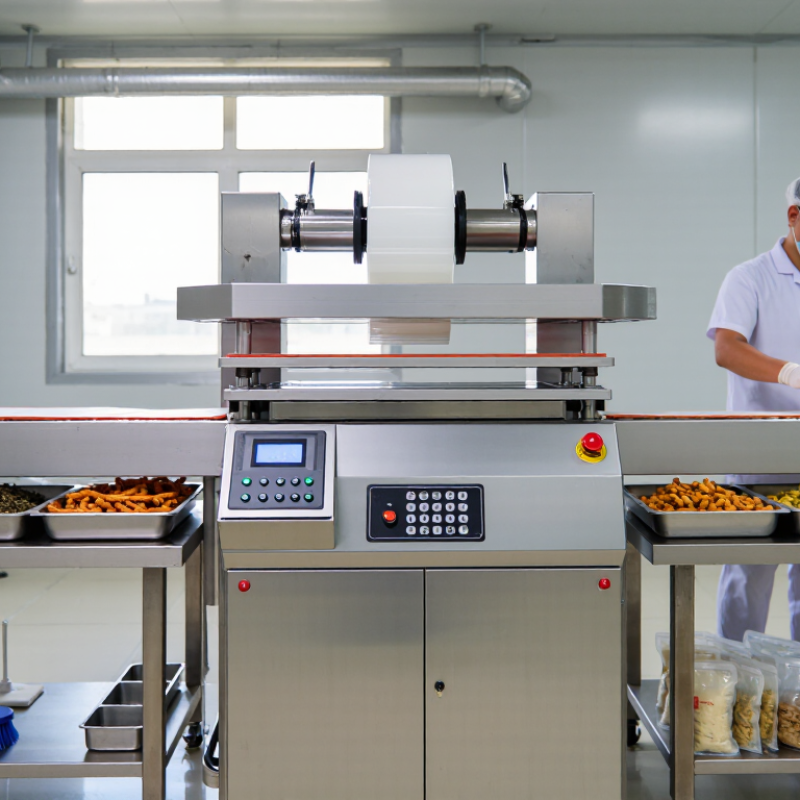
China’s commercial food sealers serve different products and production rhythms. Vacuum machines remove air before sealing, making them useful for meat, seafood, and cheese. Chamber models handle repeated batches; external-nozzle models suit larger bags but need careful operator setup. Tray sealers close preformed trays with film, creating neat portions for chilled meals and produce. Band sealers continuously seal filled pouches, so they fit steady lines and varied bag sizes. The right choice depends on package format, output, and cleaning time—not speed alone.
FAO’s 2019 report, The State of Food and Agriculture, estimated that 14% of food is lost between harvest and retail worldwide. That figure is not specific to China or packaging, but it shows why sound handling and packaging choices matter. A sealer cannot prevent every loss. Poor seals, wet rims, or incorrect settings can still spoil a batch. Check seal integrity with real product samples, not empty bags.
For vacuum packing, inspect pump capacity and chamber dimensions against the largest daily load.
For trays, confirm film compatibility and how quickly operators can change formats.
For band sealers, test seal strength at the actual pouch speed and filling temperature.
Small trials help. Record rejects, changeover time, and cleaning effort across several shifts. Industry-wide loss figures offer context, but the most useful evidence comes from measured performance on your own line.
For commercial food sealer machines in China, compare seal strength with ASTM F88/F88M, not with a visual check alone. The method measures the force needed to separate a flexible package seal. It also requires consistent specimen width, pulling speed, grip setup, and tail configuration. Small changes matter. Record the failure mode, too: a seal may peel cleanly, stretch, or tear through the film.
The Flexible Packaging Association’s 2024 State of the U.S. Flexible Packaging Industry Report estimated 2023 sales at about US$42.9 billion, reflecting the scale of packaging use—but it does not set a universal seal-strength target. For a fair machine comparison, seal the same film at matched temperature, pressure, and dwell time, then test multiple samples. Report the average and variation in force per unit width. A high average can still hide inconsistent seals. That detail is easy to miss.
Tips: Use fresh specimens and the same test settings for every machine. Keep a simple table of settings, F88/F88M results, and failure modes. Results can vary with film and operator technique, so repeat the test before choosing a machine.
When comparing commercial food sealer machines in China, inspect the materials that touch food—not only sealing speed or vacuum strength. GB 4806.7-2023 covers plastic materials and articles intended for food contact; it does not certify an entire machine. Check whether the actual film path, chamber components, or gaskets are plastic, and request documents matching their exact material and intended use. Look for applicable migration test results, product identification, and clear limits for food type, temperature, and contact time. A certificate alone can feel reassuring, but it may describe a different grade or color. Easy to miss.
The material choice matters because sealing protects food only when the contact surfaces are suitable and cleanable. The FAO’s 2019 report, The State of Food and Agriculture, estimated that about 14% of food is lost between harvest and retail. That figure does not prove a sealer prevents loss, but it shows why reliable handling deserves attention. Ask suppliers to identify which parts fall under GB 4806.7-2023 and which need other material-specific standards. Then compare the paperwork with the machine’s parts list and your real operating conditions. If those details are vague, pause. The machine may still perform well, yet the evidence needs a closer look.
When choosing the best commercial food sealer machine in China, look beyond speed and seal appearance. A neat seam can still hide a leak. ASTM F2096 bubble-emission testing offers a practical way to check flexible packages for gross leaks. The test pressurizes a package internally while it is submerged in water. Escaping air appears as a visible stream of bubbles. Simple to observe, but the setup matters.
Use representative packages with the actual film, product, and sealing settings. A trained operator should follow the applicable test procedure, control pressure, and watch the full seal area. A leak may appear near a corner or wrinkle, not only across the center seam. This is a destructive test, so tested packs cannot return to sale. It can reveal gross leaks, but it does not measure leak rate or prove that every package is defect-free. One clean sample is not enough.
Tips: Test several packs from different production moments. Keep notes on pressure, immersion time, and leak location. If bubbles appear, inspect seal temperature, dwell time, and film alignment. Small details count. A bubble test is useful evidence, not a substitute for routine process checks.
Use ASTM F2096 bubble-emission testing to assess package leaks—not to rank machines by brand.
This chart shows the general inspection sequence, not measured test results: prepare the package, internally pressurize it, immerse it, and observe for bubbles indicating a gross leak. Test conditions depend on the package and applicable procedure. Compare sealers using consistently prepared samples and documented test results.
What Is the Best Commercial Food Sealer Machine in China?
Select a Machine by Product, Throughput, Seal Quality, and Operating Cost
The best commercial food sealer depends on what enters the bag, not just the advertised cycle speed. Oily foods, fine powders, and products with sharp edges can each challenge a seal in different ways. Match the machine and packaging material to the product, then run a trial with real samples. Test the real product. A clean sample may behave differently after a long production shift.
Throughput should include loading, unloading, film changes, and cleaning—not only the machine’s fastest cycle. The FAO’s 2023 Food Loss Index estimates that 13.2% of food was lost between harvest and retail in 2021. That figure does not measure packaging’s effect, but it underscores why consistent packaging matters. Check seal strength using a suitable method, such as ASTM F88, and assess leaks with an appropriate test. Record results across repeated runs, not just one successful pouch.
Operating cost includes more than the purchase price. Compare film use, electricity, labor, maintenance, and changeover time. The UNEP Food Waste Index Report 2024 estimated 1.05 billion tonnes of food waste in 2022, about 19% of food available to consumers. A sealer cannot prevent all waste, of course. Still, a stable seal and practical production rate can support better handling. A neat specification sheet can mislead; the right choice sometimes takes more testing than expected.
The best choice depends on the product, package format, required output, and sealing process. The figures below are typical planning ranges for commercial equipment; actual performance varies with machine configuration, package dimensions, material, and operating conditions.
| Machine Type | Best Suited Products and Packages | Typical Throughput | Seal Quality and Process | Typical Installed Power | Estimated Electricity Cost per 1,000 Packs | Main Operating-Cost Considerations | When to Choose It |
|---|---|---|---|---|---|---|---|
| Chamber Vacuum Sealer | Meat, seafood, cheese, coffee, and other products packed in vacuum pouches. Can handle moist products more readily than external-suction systems, subject to liquid control and pouch suitability. | About 100–600 pouches/hour for many single-chamber setups; pouch size, number of pouches per cycle, and cycle time strongly affect output. | Vacuum is drawn inside the chamber before the pouch is heat-sealed. Produces consistent vacuum packs when vacuum level, seal temperature, and dwell time are correctly set. | About 1.5–3 kW | About RMB 2–16 | Electricity, vacuum-pump oil and servicing where applicable, sealing-bar parts, and labor for loading and unloading. Packaging pouches are a separate material cost. | Choose for small-to-medium batches, varied pouch sizes, or products that benefit from vacuum packaging. |
| Continuous Belt Vacuum Sealer | Higher-volume vacuum pouch packing for meat, seafood, prepared foods, and similar products in compatible heat-sealable pouches. | About 1,000–5,000 pouches/hour, depending on conveyor speed, pouch dimensions, product handling, and operator or line configuration. | Continuous evacuation and sealing support repeatable seals at higher output. Product loading and correct pouch positioning are important for seal consistency. | About 4–12 kW | About RMB 1–10 | Electricity, vacuum-pump maintenance, belts and sealing components, and any labor or conveying equipment needed to keep the machine fed. | Choose when production volume is high enough to justify continuous operation and a more integrated workflow. |
| Tray Sealer | Ready meals, fresh foods, produce, and portioned products in compatible trays with lidding film. | About 600–3,000 trays/hour for many semi-automatic and automatic configurations; tooling cavities and loading speed are major factors. | Heat-seals lidding film to a tray flange. Modified-atmosphere packaging is available only on configurations equipped for gas flushing and requires suitable film and process control. | About 2–8 kW | About RMB 1–11 | Electricity, tray and lidding-film use, tooling changes, sealing-plate upkeep, and gas costs if modified-atmosphere packaging is used. | Choose for rigid trays, retail-ready presentation, or a need to seal multiple portions in a standardized format. |
| Continuous Band Sealer | Dry foods, snacks, grains, powders, and other products in compatible pre-made bags. Not a vacuum sealer unless combined with a separate vacuum process. | About 1,000–5,000 bags/hour, depending on bag width, conveyor speed, product flow, and operator handling. | Uses heated sealing belts to create a continuous top seal. Seal strength depends on bag material, temperature, pressure, speed, and clean seal areas. | About 0.3–1 kW | About RMB 0.05–0.80 | Electricity, heating elements and belt replacement, and labor for feeding and checking bags. Film or bags are normally a larger variable cost than electricity. | Choose for economical, high-speed top sealing when vacuum packaging is not required. |
Electricity-cost basis: Estimates use a planning electricity rate of RMB 0.80/kWh and typical power-to-output ranges for each machine type. They are indicative, not supplier quotations; actual costs depend on rated power, utilization, package size, and local electricity tariffs.
Comparison note: Electricity estimates exclude labor, packaging materials, maintenance, compressed air, and process gases. For a reliable purchase comparison, run a sample test using your actual product and packaging, and confirm sustained output, seal integrity, changeover time, and service requirements with the equipment supplier.
© Copyright 2025 | LittleFirefighter.com | All Rights Reserved | 1EZ Creative: Orange County Web Design

Fusce ut ipsum tincidunt, porta nisl sollicitudin, vulputate nunc. Cras commodo leo ac nunc convallis ets efficitur.

12345 North Main Street,
New York, NY 555555
1.800.555.6789
sale@vibrotools.com
