
Rain rarely arrives at a convenient moment. It taps the bus shelter, beads on a jacket sleeve, then finds the gap above a backpack strap. Choosing the best Mens Rain Coat for 2026 is not just about buying the longest or most technical-looking coat. It means matching protection, comfort, and fit to the weather you actually face. A commuter crossing wet streets needs different features from a hiker carrying a pack through hours of drizzle.
Outdoor writer and fellwalker Alfred Wainwright is often credited with the reminder, “There’s no such thing as bad weather, only unsuitable clothing.” That idea is useful, though a coat cannot solve every problem. Breathable fabric may feel clammy during a fast walk. A heavier shell may be reassuring in a downpour, yet tiring on a crowded train. Small details matter: sealed seams, an adjustable hood that turns with your head, cuffs that close over gloves, and pockets you can reach while wearing a backpack.
This guide compares the features that make a Mens Rain Coat practical for different routines, from daily errands to longer outdoor trips. It will consider waterproof construction, ventilation, layering room, durability, and value, rather than treating a high price as proof of quality. Product specifications can be confusing, and real comfort is personal. A little uncertainty is worth admitting. The best choice is the coat that keeps rain outside without making an ordinary walk feel like a chore.
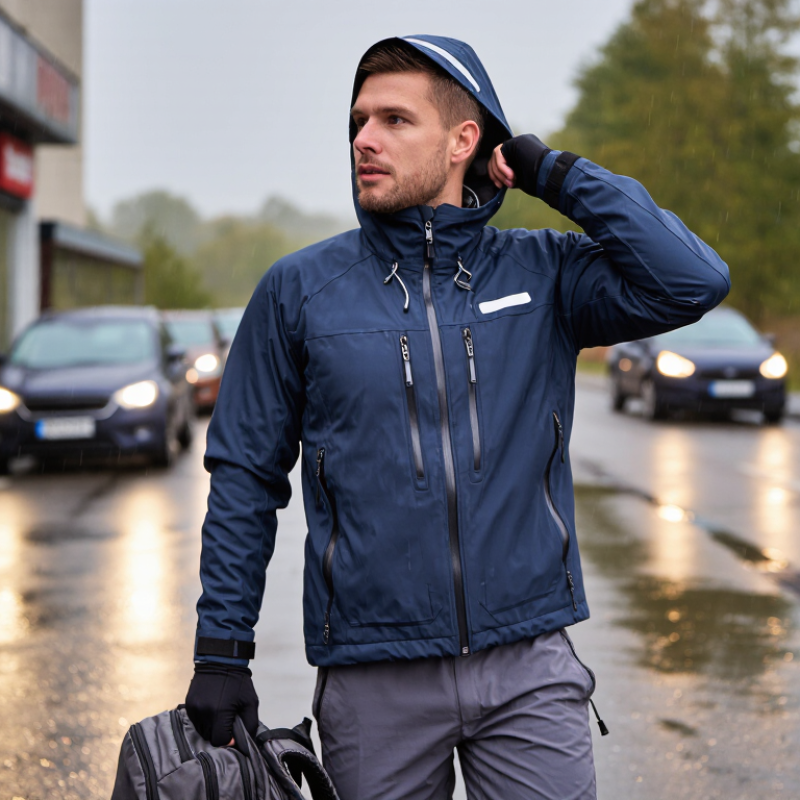
The best men’s raincoat in 2026 is not simply the one with the highest waterproof rating. It should keep water out while allowing heat and moisture to escape. Look for a stated waterproof test method, sealed seams, an adjustable hood, and cuffs that close over gloves. These details matter when rain blows sideways or a backpack presses against the shoulders. Fit matters, too. A coat that restricts movement can make a short walk feel longer.
Breathability deserves equal attention. The European EN 343 standard assesses protective clothing against rain and water-vapour resistance, giving shoppers a more useful comparison than vague “weatherproof” claims. Check the garment’s care instructions as well: worn coatings and neglected durable water-repellent finishes can reduce performance. No rating makes a coat maintenance-free. That is easy to overlook.
Material choices deserve scrutiny, but they do not prove a coat will last. Textile Exchange’s Materials Market Report 2024 estimates that polyester made up 57% of global fibre production in 2023. That figure explains why recycled-content claims are common; it does not measure rain protection or durability. Ask for evidence on both. For daily commuting, prioritize comfortable layering, a secure hood, and pockets you can reach without exposing your hands. A lighter coat may pack neatly, but thin fabric can feel less reassuring in persistent rain. There is no perfect trade-off.
A useful starting point is standardized water-penetration resistance. Higher EN 343 classes indicate stronger resistance to water penetration.
The chart shows EN 343:2019 class minima in kilopascals. Classes 1 and 2 share the same pressure minimum but differ in test requirements. Water resistance is only one part of choosing a raincoat; also consider breathability, sealed seams, fit, and intended use.
For a 2026 men’s rain coat, read the waterproof number as a test result, not a promise of comfort. ISO 811:2018 measures how much hydrostatic pressure fabric withstands before water passes through. A 10,000 mm rating represents pressure comparable to a 10-metre water column in the test. That is not a timer. It does not mean a coat stays dry for a set number of hours in real rain.
Materials behave differently. A polyurethane-coated fabric blocks water with a continuous layer; a membrane laminate uses a thin barrier designed to let some water vapour escape. A durable water-repellent finish helps droplets bead on the face fabric, but it is not the waterproof barrier itself. EN 343:2019 evaluates rain-protective clothing for both water penetration and water-vapour resistance. Those measures matter: taped seams, hood design, and ventilation can affect comfort as much as the headline rating. A high number alone is easy to overvalue.
Tips: For steady, heavy rain, look for a tested waterproof rating, sealed seams, and useful venting. Check whether the rating applies to the fabric or the finished garment. After wear and washing, water may stop beading; that does not always mean the membrane has failed. I still find rating labels a little too neat for messy weather.
A lightweight, packable rain shell suits warm showers, travel, and short walks. Choose a breathable fabric and vents if you expect to move quickly; otherwise, sweat can build up inside. Small detail, big difference. For steady rain on a hike, a sturdier waterproof shell with sealed seams, an adjustable hood, and cuffs that close over gloves offers better coverage. A longer hem helps when sitting on a wet rock, though it may feel awkward on steep climbs.
For city commutes, a raincoat with a clean cut and mid-thigh length can cover office clothes without restricting ordinary walking. Cyclists may prefer a longer back, reflective details, and a hood that stays secure beneath a helmet. In cold weather, a waterproof insulated coat is convenient for standing at a bus stop, while a roomy shell over warm layers works better when activity levels change. Neither option is perfect. Insulation can feel clammy during a brisk walk.
Before choosing, check that you can raise your arms and turn your head comfortably. Try the coat over the layers you actually wear. A snug hood may block rain, but it can also narrow your view; that trade-off is easy to miss online. Consider how long you’ll be outside, not just how heavy the forecast looks.
| Raincoat Style | Best Weather | Suitable Activities | Features to Look For | Main Trade-Off |
|---|---|---|---|---|
| Lightweight packable shell | Showers, variable forecasts, and mild temperatures | Travel, commuting, day hikes, and keeping in a backpack | Low-bulk construction, adjustable hood, secure closures, and a breathable fabric. Check whether seams are fully sealed if sustained rain is expected. | Usually offers less warmth and abrasion protection than a heavier shell. |
| Two-layer rain jacket | Regular wet weather in cool or mild conditions | Everyday walking, commuting, and casual outdoor use | A waterproof outer fabric with a separate lining, adjustable cuffs, and a storm flap or water-resistant front closure. | Can feel heavier and less compact than a simple packable shell. |
| Three-layer technical shell | Prolonged rain, wind, and changeable mountain weather | Hiking, trekking, and other active outdoor use | Waterproof, breathable construction; sealed seams; a hood that adjusts securely; and ventilation options such as pit zips. | Often costs more and may feel less comfortable for low-effort everyday wear. |
| Insulated waterproof coat | Cold rain, wind, and low temperatures | Winter commuting, outdoor spectating, and slow-paced walks | Waterproof outer material, insulation suited to the local climate, a protective hood, and adjustable cuffs or hem. | Can be too warm for strenuous activity or mild, damp weather. |
| Long raincoat or rain parka | Steady rain when extra coverage is useful | Walking, commuting, and standing outdoors | A longer cut, secure front closure, hood adjustment, and a fit that still allows comfortable movement. | Longer hems may restrict movement during cycling or fast-paced activity. |
| Packable emergency poncho | Occasional showers and short periods of rain | Festivals, travel, and keeping a backup layer in a day bag | Coverage over clothing or a small backpack, a hood, and a design that is easy to put on quickly. | Less fitted and less suitable for windy conditions or sustained activity. |
| Rain jacket designed for cycling | Wet, windy rides in cool or mild weather | Commuting and recreational cycling | A cycling-specific cut, a longer back hem, cuffs that work with gloves, visibility details, and ventilation. | The riding-focused fit may be less comfortable when standing or wearing casually. |
| Buying tip: For reliable protection in sustained rain, look for a waterproof garment with sealed seams and a well-adjusted hood. Breathability and ventilation matter more during vigorous activity; insulation is a separate consideration from waterproofing. A water-repellent finish can help water bead on the outer fabric, but it does not by itself make a garment waterproof. | ||||
Choosing a men’s rain coat for 2026 starts with fit, not a feature list. Try it over the layers you actually wear, such as a knit sweater or light fleece. Reach forward, raise both arms, and sit down; the hem should stay useful without pulling across your back. A snug cuff and adjustable hood help keep rain out, but tight shoulders can make a coat frustrating. Small detail, big difference.
Breathability is harder to judge on a shop floor. Look for underarm vents, a mesh lining, or a two-way front zip, then consider your usual pace and climate. On a damp commute, a coat can feel clammy even when rain stays outside. Walk briskly in it if possible, and check whether the fabric sticks to your sleeves. No single rating tells the whole story.
Useful features should solve real problems: a hood that turns with your head, pockets you can reach while wearing a backpack, and a storm flap over the zipper. For price, compare construction and repairability, not just pocket count or a dramatic waterproof claim. A mid-priced coat may suit daily errands better than an expensive shell built for harsher trips. I would still inspect the seams and try the hood in wind; online photos rarely reveal awkward fit. That judgment is imperfect, but it beats buying by specifications alone.
The best men’s raincoat depends less on a universal “waterproof” label than on your local weather and routine. NOAA’s 1991–2020 Climate Normals record roughly 39 inches of annual precipitation for Seattle-Tacoma, compared with about 7 inches for Phoenix Sky Harbor. Those averages suggest different priorities: frequent wet days call for durable fabric, sealed seams, and a hood that stays put; occasional showers may favor a lighter coat that packs easily. Check your own city’s normals, not just national averages.
Rain totals do not tell the whole story. NOAA Atlas 14 estimates rainfall intensity by location, which can help you judge whether brief, heavy downpours are common. For commuting, test the coat with a backpack and raised arms; cuffs should cover your wrists, but the hem should not snag when you sit. For walking or cycling, ventilation matters, too. A coat that traps sweat can feel wet inside, even when rain stays out. Fit matters. One easy mistake is choosing the highest waterproof specification and ignoring comfort. That shortcut is imperfect: if you avoid wearing the coat, its technical rating means little. Check the care label and inspect seams and closures regularly, since wear can reduce protection.
© Copyright 2025 | LittleFirefighter.com | All Rights Reserved | 1EZ Creative: Orange County Web Design

Fusce ut ipsum tincidunt, porta nisl sollicitudin, vulputate nunc. Cras commodo leo ac nunc convallis ets efficitur.

12345 North Main Street,
New York, NY 555555
1.800.555.6789
sale@vibrotools.com
