
China Top Ceramic Radiant Tube Heating Wire Supplier?

Choosing a China-based supplier for Ceramic Radiant Tube Heating Wire is not just a price comparison. It is a decision about heat consistency, service life, and production downtime. The IEA’s Energy Efficiency 2023 report estimates that industry accounts for about 37% of global final energy consumption. That figure does not measure the heating-wire market, but it shows why efficient, reliable process heating matters.

For buyers, supplier claims should connect to verifiable details. Ask about alloy composition, wire diameter tolerance, resistance consistency, rated temperature, and inspection procedures. Request test records and confirm that the proposed wire suits your tube design, furnace atmosphere, and operating cycle. A neat datasheet helps. A sample tested under real operating conditions helps more.

China has manufacturers with different levels of specialization, so “top supplier” needs a clear definition. Compare technical support, production traceability, export experience, and the supplier’s ability to explain failure risks—not only quoted capacity. Industry standards and test methods can guide evaluation, but they do not replace application-specific checks. One detail is easy to overlook: a heating wire may meet its nominal specification and still perform poorly in an unsuitable assembly. No supplier can remove every process risk. This guide examines practical criteria for identifying a dependable Chinese source and asking better questions before placing an order.
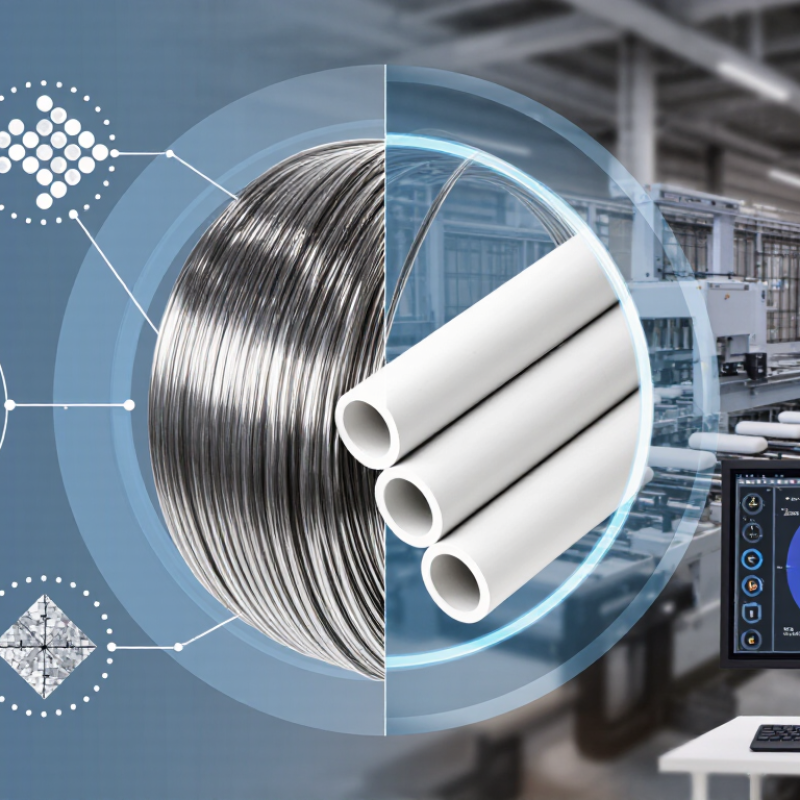
China Top Ceramic Radiant Tube Heating Wire Supplier?

What Is Ceramic Radiant Tube Heating Wire?

Ceramic radiant tube heating wire is the electrical resistance element used in some ceramic tube heating assemblies. It converts electrical energy into heat. Depending on the design, the wire may sit inside or around a ceramic support. The heated assembly then transfers energy as radiant heat toward nearby parts or materials. The ceramic helps support and electrically isolate the element while tolerating high operating temperatures. The term can be a little confusing: the wire and the tube are not the same part. That distinction matters when checking a heater’s construction or replacing an element.

In practice, performance depends on more than the wire alone. Engineers consider operating temperature, voltage, power, wire dimensions, tube geometry, and the surrounding atmosphere. Thermal cycling matters, too. Repeated heating and cooling can stress both the wire and ceramic.

A useful check is to compare the heater’s rated conditions with the actual process, rather than choosing by appearance. Small details count. A tight bend or poor fit may create uneven heating or shorten service life. Specifications are not always complete, so confirming dimensions and operating conditions before installation is sensible.

How Does Ceramic Radiant Tube Heating Work?

An electric current passes through resistance wire housed in or supported by a ceramic radiant tube. The wire converts electrical energy into heat. As the tube warms, its surface emits infrared radiation toward nearby parts. No flame is involved. The workpiece absorbs this energy at its surface, allowing contact-free heating. In a furnace, reflectors and tube spacing help direct the heat, while a controller adjusts power to maintain the set temperature.

Performance depends on more than rated wattage. Tube temperature, distance, part shape, surface finish, and airflow affect heating uniformity. A dark, matte component may absorb radiation differently from a polished one. Ceramic also stores heat, which can slow response after power changes. That trade-off is easy to underestimate. During process testing, compare temperatures at several points on a representative load, not only near the tube. Check the element’s temperature limits and allow for thermal expansion during installation. Actual results vary with the setup.

Tips: Keep the tube surface clean, maintain the specified clearance, and avoid sudden temperature changes. Record warm-up times and load temperatures; a small test can reveal uneven heating early.

What Materials and Specifications Define Heating Wire Quality?

For a ceramic radiant tube, heating wire quality starts with the alloy. FeCrAl wire is often selected for high-temperature oxidation resistance, while nickel-chromium alloys can suit different operating conditions. The right choice depends on temperature, atmosphere, and duty cycle. There is no universally best alloy. Choosing by peak temperature alone is an easy mistake.

Specifications should be concrete: wire diameter, resistance tolerance, rated voltage, maximum operating temperature, and coil dimensions. A consistent coil pitch helps distribute heat along the tube. Surface load also matters; excessive load can shorten service life, even when the alloy is suitable. Small details matter. Ask for material certificates and resistance test records, then compare them with the heater’s actual operating conditions.

Inspect the wire and finished coil for uneven spacing, rough surfaces, and loose connections. These visible checks cannot replace electrical testing, but they can reveal workmanship issues early. Supplier data is useful, yet it may not reflect every furnace cycle. Keep that limitation in view, and confirm performance under representative conditions before specifying a large production run.

How to Evaluate Ceramic Radiant Tube Heating Wire Suppliers in China?

China Top Ceramic Radiant Tube Heating Wire Supplier?

How to Evaluate Ceramic Radiant Tube Heating Wire Suppliers in China?

Choosing a supplier takes more than comparing quoted prices. Ask for the wire’s alloy composition, diameter tolerance, rated temperature, and recommended watt density. These details should match your furnace design and operating cycle. Request a material certificate and a test report for the actual product, not just a generic sample. Small differences matter.

Check how the supplier verifies performance. Ask about resistance testing, insulation checks, and thermal cycling procedures. A clear answer should include test conditions and acceptance limits. If the wire will run inside a ceramic tube, confirm that the supplier understands the tube’s dimensions, installation clearances, and expected heat distribution. A neat catalog is not enough.

Sample testing is useful. Measure resistance before installation, then monitor heating behavior under realistic conditions. Compare results across several pieces, not just one. Also review packaging: coils should be secured against movement and moisture during transport. I would not treat a polished factory audit as proof of consistent quality. Suppliers can still have gaps; their willingness to explain them and agree on corrective tests is worth examining. Ask who handles technical questions after delivery, and how changes to materials or production batches are communicated.

How to Evaluate Ceramic Radiant Tube Heating Wire Suppliers

Typical maximum element temperatures vary by resistance-alloy family. Use the range as a technical screening reference—not as a substitute for checking the supplier’s grade-specific datasheet and operating conditions.

Typical reference ranges: FeCrAl resistance alloys, about 1,300–1,400°C; NiCr resistance alloys, about 1,100–1,200°C. Actual limits depend on alloy grade, atmosphere, element design, and service conditions. When evaluating suppliers, request traceable material specifications and test data for the exact product offered.

What Makes a Supplier a Top Choice for Industrial Applications?

A top supplier for industrial ceramic radiant tubes does more than quote a heating wire by kilowatt. The IEA’s Energy Efficiency 2023 report estimates that industry accounts for about 37% of global final energy consumption. In a continuous furnace, small differences in temperature stability can affect product quality, energy use, and unplanned stops. Details matter.

Ask for resistance tolerance, operating-temperature limits, insulation specifications, and documented test results. Check whether the supplier can match wire design to tube dimensions, furnace atmosphere, and heating cycles. Request traceability from material batch to finished element, plus clear guidance for installation and replacement. A neat datasheet helps, but it cannot show how a component performs after repeated thermal cycling.

Look for practical evidence: sample inspection records, failure-analysis procedures, and realistic lead-time commitments. Ask how the supplier handles early failures, not just routine orders. A candid answer is useful. No supplier is perfect, and a polished brochure may leave important gaps. Compare stated service life with the conditions behind that claim, including temperature, duty cycle, and maintenance practices. The strongest choice is a supplier that explains limits plainly and supports performance with verifiable data.

AVADA IT

Fusce ut ipsum tincidunt, porta nisl sollicitudin, vulputate nunc. Cras commodo leo ac nunc convallis ets efficitur.

RECENT TWEETS

CONTACT US

  • 12345 North Main Street,
    New York, NY 555555

  • 1.800.555.6789

  • sale@vibrotools.com

Go to Top