
Choosing the right Cutout Electric Fuse manufacturer requires more than comparing prices. It requires practical knowledge, verified production control, and dependable technical support. This guide explores how China-based manufacturers and suppliers serve distribution networks, transformers, and overhead electrical systems. It considers fuse ratings, voltage classes, breaking capacity, insulation strength, and installation environments. These details matter when equipment faces rain, dust, vibration, or sudden current surges.
A reliable supplier should provide clear datasheets, traceable materials, and consistent inspection records. Porcelain or polymer housings must resist weather exposure and mechanical stress. Fuse links should match the intended protection requirements. Factory testing may include dimensional checks, dielectric testing, contact resistance measurement, and visual inspection. Ask for evidence.
A strong supplier welcomes technical questions. It should explain production tolerances without hiding behind general claims. Site experience also matters. A fuse that performs well in a controlled test may behave differently on a coastal pole or in a dusty substation. That difference deserves attention.
No manufacturer is perfect. Some product pages appear complete, yet omit service-life data or installation limits. Buyers should review these gaps carefully. They should also confirm certification, quality systems, packaging, lead times, and after-sales communication. Independent inspection can add confidence before shipment.
This overview supports informed sourcing decisions. It focuses on performance, transparency, and long-term value. The best Cutout Electric Fuse supplier is not always the cheapest option. It is the partner that combines engineering discipline, honest documentation, and responsive service. Reliable protection starts with careful selection.
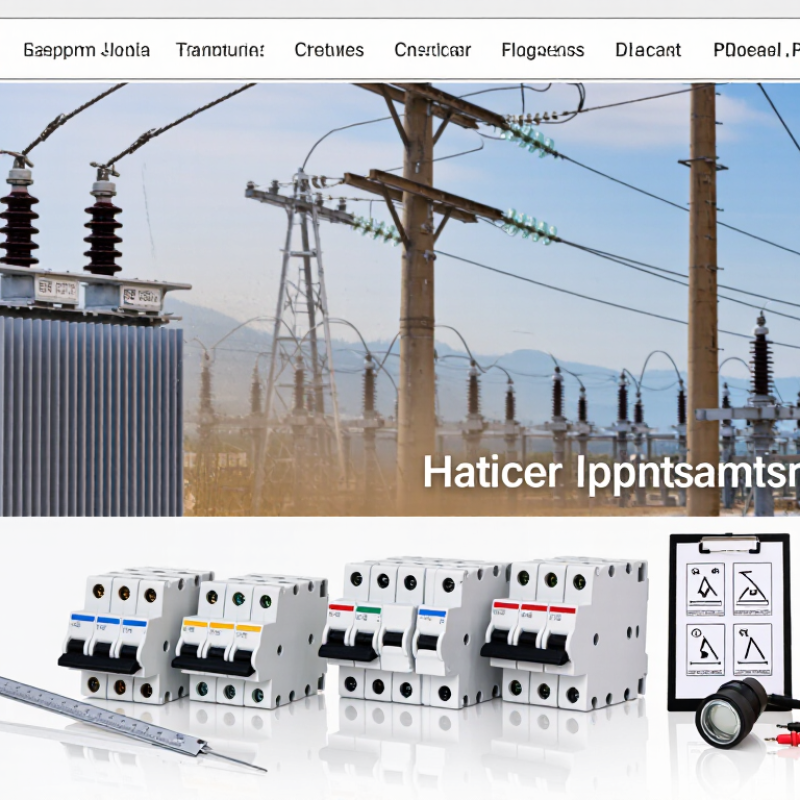
A cutout electric fuse is an outdoor protective device used on medium-voltage distribution lines. It commonly protects transformers, feeder branches, and overhead service equipment. The assembly includes a fuse holder, contact points, and a fusible link inside a tube. Its design is simple, but its duty is critical.
Under normal conditions, current passes through the fuse link. When a fault creates excessive current, the link heats and melts. The circuit opens before severe damage spreads through the transformer or conductor. In many cutout designs, the fuse tube drops visibly after operation. This gives technicians a clear indication from ground level. Some tubes also help control the arc during interruption. The exact performance depends on voltage, fault current, and the fuse rating.
During field inspections, technicians should check for cracked insulation, loose hardware, corrosion, and burned contacts. The fuse rating must match the protected equipment and the system’s coordination plan. A fuse that is too large may respond too slowly. A fuse that is too small may cause unnecessary outages. The cutout must be de-energized and handled with approved procedures and equipment. Never judge its condition by appearance alone. No fuse is perfect. Moisture, contamination, and incorrect installation can reduce reliability, so regular inspection remains necessary.
Cutout electric fuses protect overhead distribution equipment by interrupting fault current before damage spreads. The main type is the expulsion fuse, which uses arc-extinguishing material during operation. It is common on medium-voltage pole-mounted transformers and feeder branches. Current-limiting fuse links respond faster and restrict peak fault energy. They suit compact substations, capacitor banks, and locations with higher available fault current. Fuse links also differ by speed, including fast and slow characteristics. The correct choice depends on transformer inrush, load current, and coordination requirements.
The IEA Electricity 2024 report expects global electricity demand to grow by an average 3.4% annually from 2024 to 2026. More connected loads increase pressure on local distribution networks. Reliable cutouts therefore matter at transformer taps, rural feeders, and industrial service points. IEC 60269 and IEEE distribution protection standards provide essential guidance for ratings, testing, and coordination. A field engineer should verify voltage, continuous current, interrupting capacity, and installation altitude. Small details matter.
A common mistake is selecting a fuse only by transformer size. It may operate unnecessarily during inrush or fail to coordinate with an upstream recloser. Weather, corrosion, and wildlife contact also affect real performance. The IEA data describes demand, not every local failure. That limitation deserves attention. Good application work combines report data, standards, site measurements, and maintenance records.
Selecting a cutout electric fuse requires more than matching the ampere rating. The fuse must suit the system’s rated voltage and expected fault current. A mismatch may cause nuisance operation or unsafe interruption. In field inspections, I have seen small rating errors create repeated outages. The correct choice begins with the equipment load, conductor size, and transformer capacity.
Check the fuse’s time-current curve carefully. Fast-acting protection may suit sensitive equipment, while slower operation can tolerate temporary starting currents. Breaking capacity is equally important. It must exceed the maximum available short-circuit current at the installation point. Also examine insulation levels, contact design, and compatibility with the cutout body. Outdoor units need resistance to rain, dust, ultraviolet exposure, and temperature changes. These details are easy to overlook.
Choosing the best Chinese cutout electric fuse manufacturer requires more than comparing prices. Check factory experience, product range, and quality controls. Ask how long the manufacturer has produced medium-voltage protection equipment. Request production records, material certificates, and recent inspection reports. A reliable supplier should explain its process clearly.
Inspect the fuse body, contacts, arc-extinguishing parts, and mounting hardware. These details affect safety during overload conditions. Confirm ratings for voltage, current, breaking capacity, and environmental use. Test reports should identify standards, test methods, and sample numbers. Independent laboratory evidence is more useful than a polished brochure. Visit the facility when possible. Observe incoming material checks, assembly lines, calibration practices, and final packing. Small details matter.
Communication also reveals manufacturing discipline. Can the technical team answer tolerance and installation questions? Do they provide drawings before production? Check whether samples match the approved specifications. My early mistake was trusting a low quotation without checking replacement parts. That caused delays. Cost matters, but consistency matters more. Ask about traceability, warranty handling, lead times, and corrective actions. A mature manufacturer will discuss failures honestly, although not every answer will be perfect. Suppliers should also provide clear instructions for storage, installation, inspection, and disposal. Evaluate the evidence, not the promises.
| Evaluation Dimension | What to Verify | Relevant Technical Reference or Benchmark | Recommended Weight | Required Evidence |
|---|---|---|---|---|
| Applicable Standards | Confirm that the cutout fuse, fuse link, mounting hardware, and test reports match the intended voltage class and application. | IEC 60282-2 for expulsion fuses; ANSI/IEEE C37.41 and C37.42 may apply to distribution-class fuse equipment. | 15% | Current edition of the applicable standard, clause references, and independent laboratory test report. |
| Electrical Ratings | Check rated maximum voltage, continuous current, power-frequency withstand voltage, lightning impulse withstand voltage, and interrupting capability. | Ratings must be selected for the actual system voltage, insulation level, fault current, frequency, and altitude. | 15% | Complete datasheet, rating plate sample, routine-test records, and type-test documentation. |
| Interrupting Performance | Evaluate the declared interrupting rating, operating sequence, minimum melting current, and coordination with upstream and downstream protection. | The interrupting rating must not be lower than the prospective short-circuit current at the installation point. | 14% | Short-circuit test report, time-current curves, and coordination study data. |
| Materials and Construction | Review the fuse tube, contacts, terminal hardware, hinge, latch, arc-quenching medium, and corrosion protection. | Materials should be suitable for outdoor distribution service, thermal cycling, UV exposure, moisture, and mechanical operation. | 10% | Material specifications, drawings, plating details, incoming inspection records, and sample inspection. |
| Mechanical Reliability | Verify correct fuse-link engagement, reliable latching, drop-out operation, interchangeability, and resistance to vibration. | The device should operate consistently within the specified mechanical operating range without accidental release. | 10% | Mechanical endurance records, dimensional drawings, operating-force data, and pre-shipment inspection results. |
| Environmental Suitability | Assess performance under temperature variation, humidity, rain, salt contamination, sunlight, and high-altitude conditions. | Environmental requirements depend on the installation site; outdoor equipment may require UV-resistant and corrosion-resistant materials. | 8% | Environmental test reports, operating-temperature range, altitude correction data, and corrosion-protection specification. |
| Quality Management | Determine whether the factory controls design changes, traceability, nonconforming products, calibration, and corrective actions. | An ISO 9001 certificate should be valid, scope-specific, and issued by an accredited certification body. | 10% | Valid certificate, audit summary, quality manual excerpts, process-control plan, and batch traceability sample. |
| Production Capability | Check whether the supplier controls critical processes such as fuse-element assembly, ceramic or polymer molding, contact finishing, and final testing. | A capable manufacturer should maintain documented work instructions and defined inspection points for every critical process. | 7% | Factory audit, process flow chart, equipment list, production photographs, capacity statement, and inspection plan. |
| Compliance and Documentation | Verify product labeling, technical files, declarations, restricted-substance control, packaging, and export documentation. | RoHS and REACH requirements may apply depending on the destination market and product composition. | 5% | Declaration of conformity, material declarations, safety data where applicable, labels, manuals, and packing specifications. |
| Commercial and After-Sales Support | Compare lead time, minimum order quantity, warranty terms, spare-part availability, technical response time, and claim handling. | Commercial terms should be documented and consistent with the approved technical specification and inspection plan. | 6% | Signed quotation, warranty policy, approved drawing, sample order plan, service procedure, and reference project evidence without undisclosed branding. |
| Total Evaluation Weight | 100% | Use documented evidence rather than price alone when selecting a supplier. | ||
Quality begins with repeatable testing, not attractive product photos. A reliable cutout fuse supplier checks rated voltage, current, breaking capacity, and contact resistance. Each batch should receive visual inspection and electrical testing before shipment. Weather resistance also matters, especially for outdoor distribution equipment. We examine seals, terminals, fuse carriers, and insulating parts after thermal cycling. Small defects can become serious field failures.
Customization should solve an installation problem. Customers may require specific mounting dimensions, fuse-link sizes, terminal materials, or porcelain and polymer insulation. Our engineering team reviews drawings, operating conditions, and expected fault levels before production. Sample approval helps confirm fit and performance. It also exposes assumptions that were missed on paper. That step takes time.
Supply service must remain practical. We provide batch identification, inspection records, protective packaging, and production updates. Standard models can be prepared for regular demand, while customized models require clearer forecasts. We do not promise perfect delivery in every situation. Material shortages, design revisions, or transport delays can affect schedules. Honest communication is more useful than an unrealistic guarantee. Cadmium-free materials and applicable IEC requirements can be considered according to the destination market.
© Copyright 2025 | LittleFirefighter.com | All Rights Reserved | 1EZ Creative: Orange County Web Design

Fusce ut ipsum tincidunt, porta nisl sollicitudin, vulputate nunc. Cras commodo leo ac nunc convallis ets efficitur.

12345 North Main Street,
New York, NY 555555
1.800.555.6789
sale@vibrotools.com
