
Choosing China’s best Underwater Camera Light manufacturer requires more than comparing brightness numbers. Experienced divers examine how a light performs beside a reef, inside a wreck, or during a night dive. Beam consistency, color rendering, depth rating, battery safety, and heat management can determine whether a camera captures natural detail or flat, green images.
Underwater photographer Alex Mustard has often emphasized, “Light is everything underwater.” That principle remains practical. A reliable Underwater Camera Light should reveal red coral, textured metal, and delicate marine life without harsh hotspots. High color rendering matters, but it is not the only measure. A 90-degree beam, adjustable output, strong seals, and stable performance at depth may be more valuable than impressive laboratory lumens.
The strongest Chinese manufacturers combine engineering experience with repeatable quality control. They test pressure resistance, charging systems, switches, O-rings, and battery compartments before shipment. They should also provide clear technical sheets, realistic runtime data, and traceable inspection records. Ask for independent test reports when possible.
Details matter underwater.
A good supplier can explain why a light overheats, how its driver protects the LEDs, and whether replacement parts remain available. Factory visits, sample testing, and long-term user feedback add useful evidence. Still, no manufacturer is perfect. Some product pages exaggerate brightness, while field performance may change in cold water or after repeated charging. That uncertainty deserves honest discussion. This guide compares leading Chinese options through measurable specifications, practical diving experience, and dependable after-sales support.
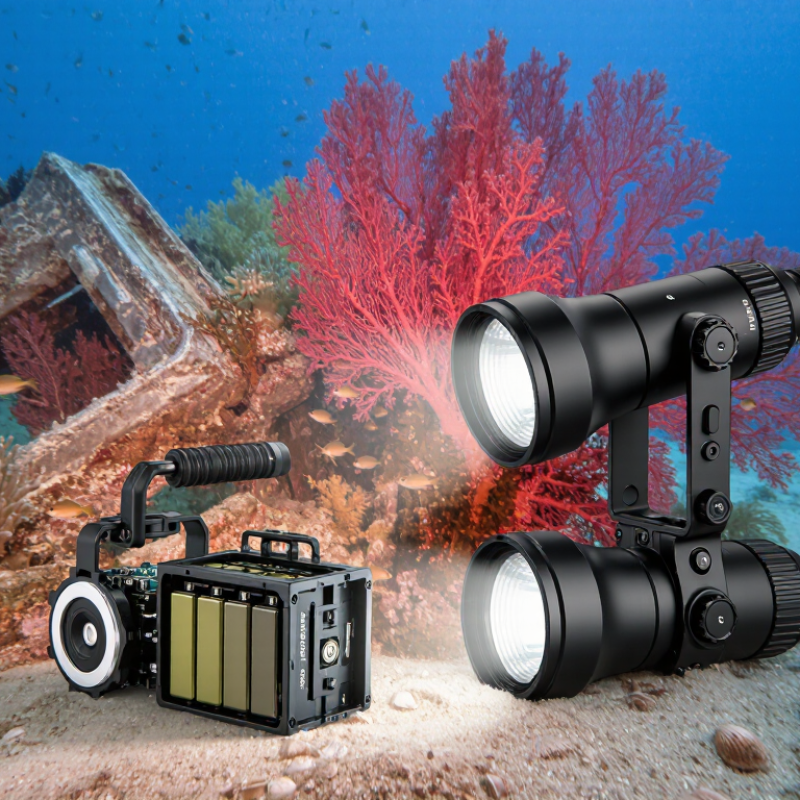
A leading underwater camera light manufacturer in China must understand diving conditions, not only production costs. This is an engineering test. Through hands-on development, engineers learn how saltwater, pressure, cold temperatures, and limited visibility affect lighting performance. Small details matter. A stable beam should reveal skin tones, coral textures, and equipment edges without harsh hotspots. Adjustable brightness and beam angles also help divers control reflections near glass, metal, or suspended particles.
Reliable manufacturers use sealed housings, corrosion-resistant materials, and carefully tested switches. Thermal management is equally important because powerful LEDs can heat a compact body quickly. Battery performance should be tested at different depths and temperatures, not only in a workshop. Each unit needs checks for water resistance, charging safety, output consistency, and operating time. Clear records make quality claims more credible. Testing labels alone are not enough.
Professional support separates a capable supplier from a temporary seller. An experienced manufacturer should provide drawings, sample evaluation, spare parts, and practical troubleshooting. Communication matters underwater, where a failed light can ruin a planned shot. Yet no factory is perfect. A prototype may need several revisions before its buttons work well with gloves. That weakness should be acknowledged, measured, and corrected. Transparent feedback often shows more reliability than polished promises. Consistent quality comes from repeatable processes, trained workers, and a willingness to inspect uncomfortable results.
Core Technologies Used in Professional Underwater Camera Lights
Professional underwater camera lights must solve three problems: pressure, color loss, and unstable exposure. Water absorbs red wavelengths quickly, so skin tones and coral can appear blue or gray. NOAA ocean-color research shows that water clarity and depth strongly change light penetration. A useful fixture therefore needs a balanced spectrum, not simply extreme brightness. High-CRI LEDs, stable color temperature, and optical lenses help preserve natural detail.
Thermal management is equally important. At depth, a sealed housing cannot release heat easily. Professional designs use aluminum cores, conductive paths, and thermal sensors to prevent LED output from falling during long shoots. The U.S. Department of Energy has reported that modern LED systems can exceed 100 lumens per watt, but underwater efficiency is lower after optics, seals, and batteries are considered. Laboratory figures can mislead.
Beam control matters underwater.
Wide beams reduce harsh hotspots. Narrow beams reach distant subjects but expose uneven backgrounds. Pulse-free drivers also protect video footage from flicker at high frame rates. IP and pressure testing should be verified independently, rather than accepted from a product brochure. The 2023 Global Sustainable Development Report stresses the value of measurable, transparent performance data; underwater lighting deserves the same discipline. I have found that battery claims often need questioning. Actual runtime changes with depth, temperature, brightness, and aging cells. That is inconvenient, but honest testing matters more than impressive specifications.
| China Best Underwater Camera Light Manufacturer? - Core Technologies Used in Professional Underwater Camera Lights | |||
|---|---|---|---|
| Technology | How It Works | Importance for Underwater Imaging | What to Check |
| LED light engine | High-power light-emitting diodes convert electrical energy into visible light. Multiple LEDs may be arranged to provide broad, even illumination. | LEDs offer efficient, compact lighting and can provide continuous illumination for video as well as still photography. | Review stated output, beam coverage, color characteristics, and whether performance figures describe the complete light or individual LEDs. |
| Optical beam shaping | Reflectors, lenses, and diffusers direct and spread light from the LED array. | A suitably wide, even beam helps illuminate a scene without creating harsh hotspots or dark edges. | Compare beam angle and underwater coverage. A diffuser can soften the beam but may reduce intensity. |
| Color temperature and color rendering | LED selection and optical design determine the light’s color appearance and how well it reveals subject colors. | Water absorbs and scatters light, so artificial illumination can help restore color in nearby subjects. Results also depend on distance, water clarity, and camera settings. | Check published color-temperature and color-rendering data when available; do not assume that similar-looking lights render colors identically. |
| Thermal management | Heat moves from the LEDs and driver into a heat spreader or housing. The surrounding water can help carry heat away during use. | Controlling heat helps maintain stable operation and reduces the risk of thermal damage or output reduction. | Look for a robust heat-conducting design and clear guidance about operation in and out of water. |
| Pressure-resistant housing | A sealed enclosure protects the light’s electronics from water pressure at its specified operating depth. | Housing strength and sealing are essential for underwater reliability; a depth rating applies only to the tested or specified configuration. | Check the stated depth rating, test conditions, service guidance, and whether accessories affect the rating. |
| O-ring sealing system | Elastomer O-rings create seals at interfaces such as battery compartments and charging ports. | Clean, undamaged, correctly lubricated seals help prevent water ingress during dives. | Confirm seal locations, inspection instructions, replacement availability, and recommended maintenance practices. |
| Battery and power management | A rechargeable battery supplies power through a driver circuit that regulates current to the LEDs. | Regulated power can support consistent illumination, while battery capacity affects runtime and overall system weight. | Compare runtime at each output setting, charging method, battery replacement options, and low-battery indications. |
| Output control and protection | Electronic controls may provide selectable brightness levels and protections such as over-temperature or low-voltage response. | Adjustable output helps manage exposure, conserve battery power, and adapt illumination to different subjects. | Check control usability with gloves, available output settings, and documented protection features. |
| Mounting and camera integration | Mounting interfaces, arms, and compatible adapters attach the light to an underwater camera rig. | Secure mounting allows the photographer to position the beam independently of the camera lens and reduce unwanted reflections. | Verify mount compatibility, adjustment range, and the rig’s balance with the light installed. |
| Quality assurance and validation | Manufacturers may use inspection and functional tests to check illumination, controls, charging, and sealing. | Consistent production and documented testing can help identify defects before equipment is used underwater. | Ask for applicable test procedures, warranty terms, and maintenance instructions. A test claim should specify what was tested and under which conditions. |
Chinese manufacturers design diving lights around pressure, saltwater, darkness, and constant movement. A light that works on a workbench may fail at depth. Engineers therefore test housings in pressure chambers before field trials. They commonly use corrosion-resistant metals, sealed switches, and double O-ring protection. Small details matter. One damaged seal can ruin an expensive dive.
Optical design receives equal attention. Narrow beams help divers illuminate distant subjects, while wider beams reduce harsh shadows underwater. Diffusers are tested with cameras to control backscatter from suspended particles. Color temperature also matters because blue water can weaken warm colors. Some manufacturers calibrate output through repeated measurements, not visual judgment alone. This improves consistency between production batches.
Heat management remains difficult inside a sealed body. Engineers use internal pathways to move heat toward the housing, where surrounding water can remove it. Battery compartments need secure contacts and protection against moisture. In practice, cold water, gloves, and low visibility can expose weak controls. A button may feel acceptable in a laboratory but become frustrating during a real dive. Manufacturers continue refining tactile feedback, charging protection, and impact resistance. Testing is not always perfect; field reports can reveal problems that instruments miss. Experienced teams compare both types of evidence before changing a design. Safety checks should include pressure testing, saltwater exposure, drop testing, and long-duration operation.
Reliable underwater camera lights require more than bright output and attractive specifications. During production, technicians inspect sealing surfaces, cable joints, switches, batteries, and lens alignment. Each housing is checked before assembly. Water finds weakness.
Pressure testing simulates the claimed operating depth under controlled conditions. Extended immersion testing reveals slow leaks that a short inspection may miss. Optical testing measures brightness, beam spread, color consistency, and heat buildup. Electrical checks examine charging safety, insulation, overcurrent protection, and electromagnetic compatibility. Small details matter.
Certification should match the destination market and product design. An experienced manufacturer maintains test reports, material records, calibration documents, and batch traceability. Independent laboratories can verify safety and environmental claims. Quality teams should also repeat sampling after design changes, because one approved sample cannot represent every production unit.
Field experience adds another layer. Divers may report fogging, difficult controls, or reduced brightness in cold water. These observations should influence engineering decisions. No test plan is perfect. A light can pass laboratory checks and still disappoint during rough handling. We have seen this gap before. Better manufacturers investigate failures openly, correct the cause, and document the result. Clear certification evidence, consistent factory testing, and honest limitations help buyers choose underwater lighting with greater confidence.
Choosing a reliable Chinese underwater camera light manufacturer requires more than comparing prices. Begin with practical specifications: depth rating, beam angle, color temperature, CRI, battery capacity, and charging time. A light may look powerful on land but perform poorly underwater. Water absorbs color quickly, and a narrow beam can create harsh hotspots. Request test samples and inspect footage at different depths before placing a large order.
A dependable manufacturer should explain its sealing process, pressure testing, battery protection, and quality control records. Ask how each unit is traced from assembly to final inspection. Factory experience matters, but transparent communication matters more. During practical checks, test switches with wet gloves and inspect the charging port after repeated use. Small weaknesses often appear there. I have learned that a bright light is not always the best light; stable output can matter more during long dives.
Tips: Confirm test reports, sample consistency, warranty terms, spare-part availability, and response times. Ask for clear production photos or a video call with the workshop. Check whether packaging protects the light from impact and moisture. Do not accept vague claims about depth ratings. A cautious manufacturer should welcome technical questions and admit product limits. That honesty is sometimes more valuable than polished sales language.
© Copyright 2025 | LittleFirefighter.com | All Rights Reserved | 1EZ Creative: Orange County Web Design

Fusce ut ipsum tincidunt, porta nisl sollicitudin, vulputate nunc. Cras commodo leo ac nunc convallis ets efficitur.

12345 North Main Street,
New York, NY 555555
1.800.555.6789
sale@vibrotools.com
