Choosing reliable windshield wiper suppliers requires more than comparing factory prices. Global buyers must examine product design, rubber quality, production capacity, testing systems, and export experience. This guide introduces China’s top 10 Flat Wiper manufacturers for international sourcing projects.
Each company is considered through practical purchasing criteria. These include blade flexibility, pressure distribution, connector compatibility, packaging, private-label support, and delivery performance. A well-made Flat Wiper should maintain stable contact across curved glass. It should also resist heat, rain, snow, and road dust during repeated use. Factory certifications, sample testing, customer feedback, and transparent communication provide stronger evidence than attractive product photographs.
Details matter.
However, no supplier ranking can fit every buyer perfectly. A manufacturer serving European aftermarket brands may not suit a fleet distributor in South America. Minimum order quantities, mold costs, replacement policies, and shipping arrangements can change the final decision. Buyers should request current test reports and inspect samples before placing large orders. Some information may also require confirmation directly from the manufacturer. That is an unavoidable limitation.
This overview aims to support careful, informed sourcing. It draws attention to manufacturing strengths, product ranges, customization options, and possible purchasing concerns. The goal is not to praise every supplier equally. It is to help buyers ask better questions, reduce avoidable risks, and identify a dependable China-based partner for long-term Flat Wiper supply.
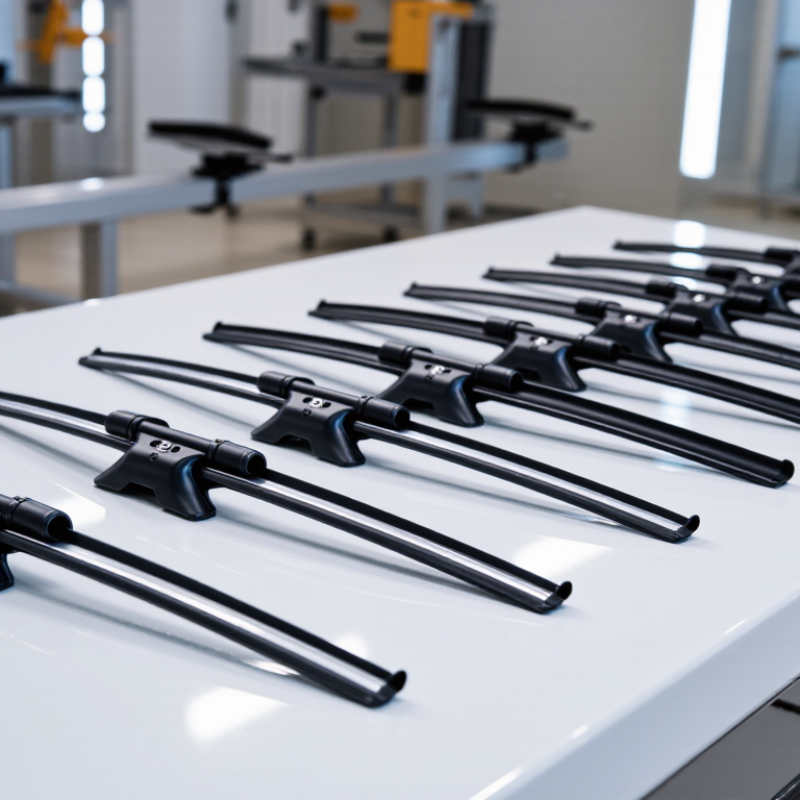
Flat wipers, also called beam wipers, use a flexible spine instead of several exposed metal brackets. This design spreads pressure across the windshield more evenly. It also reduces snow buildup around the blade frame. For buyers in cold or windy markets, that detail matters.
The global vehicle base keeps expanding. OICA recorded 93.5 million motor vehicles produced worldwide in 2023. This large installed base supports steady replacement demand for wiper blades. Flat designs also suit modern curved windshields and can create less aerodynamic noise. Their closed structure may resist corrosion better in humid coastal regions. However, they are not flawless. Poor rubber compounds still cause streaks, even with a premium-looking profile. Buyers should test real wiping performance, not only packaging claims.
Tips: Check connector coverage, blade length, rubber hardness, and pressure distribution before placing a bulk order. Request samples for rain, dust, and light snow testing. A simple night-driving test can reveal glare and skipped areas. Do not ignore local windshield shapes. Fitment errors remain common. WHO vehicle safety guidance links clear visibility with safer road use, while UNECE requirements emphasize effective windshield-cleaning performance. These references support a practical purchasing approach: verify measurable visibility, service life, and installation consistency before comparing unit prices.
How to Evaluate China’s Flat Wiper Manufacturers
China’s flat wiper sector deserves careful supplier screening. The China Association of Automobile Manufacturers reported 30.16 million vehicles produced in 2023. This large production base supports strong component experience, but capacity alone proves little. Evaluate each manufacturer through documented quality systems, export history, and product testing.
Ask for IATF 16949 and ISO 9001 certificates. Verify their validity with the issuing organization. Request test records for wiping performance, ozone resistance, salt spray, UV exposure, and low-temperature flexibility. SAE J903 and relevant national requirements provide useful technical references. The exact test method matters. A glossy sample may hide weak rubber edges, uneven spring pressure, or poor connector fit. Measure wiping clarity after repeated cycles, not after one demonstration. Check whether the factory controls rubber mixing, coating, assembly, and final inspection internally. Outsourcing is not automatically risky, but unclear control creates delays.
Tips: Compare at least three factories using the same specification sheet. Review batch traceability, defect targets, packaging tests, and corrective-action reports. Ask for production samples from different lots. Confirm blade length tolerance and adapter compatibility before ordering. Intertek’s and SGS’s automotive testing guidance both emphasize repeatable sampling and documented inspection, yet many buyers still rely on photographs. That is a mistake. Also inspect response speed. A supplier that avoids technical questions may struggle after shipment. Cost matters, but a low quotation can reflect thinner materials, weaker inspection, or unpriced tooling. Allow room for doubt. Supplier claims should be tested, not simply trusted.
China’s Top 10 Flat Wiper Manufacturers by Product Strength
China’s flat wiper sector is moving from low-cost supply toward measurable engineering performance. Fortune Business Insights valued the global automotive wiper systems market at about USD 7.3 billion in 2023. Asia-Pacific remains a major production and demand center, according to Grand View Research. This supports China’s growing role in global sourcing, but price alone is a weak filter.
The strongest manufacturers usually combine EPDM rubber, flexible spring steel, and low-profile aerodynamic frames. Their blades should maintain contact across curved windscreens, even under heavy rain and highway airflow. Product strength also depends on adapter coverage, ultraviolet resistance, salt-spray testing, and performance below freezing. Some factories report ISO 9001 or IATF 16949 systems, yet certificates cannot replace independent wiping tests. That distinction matters.
For global buyers, the top ten should be judged by evidence: clear test records, stable rubber hardness, consistent edge quality, and verified vehicle fitment. Grand View Research identifies replacement demand and vehicle production as important market drivers, making long service life commercially valuable. Still, supplier comparisons are not always perfect. Published test conditions may differ, and a strong sample can hide weak batch control. Buyers should request production-lot inspections, noise testing, and packaging checks before signing larger orders. Quiet wiping matters. So does repeatability.
| Rank | Product Strength Dimension | Practical Technical Benchmark | Why It Matters to Global Buyers | Recommended Verification |
|---|---|---|---|---|
| 1 | Vehicle Coverage | Support for common passenger cars, SUVs, MPVs, light commercial vehicles, and left- or right-hand-drive applications. | A broad vehicle catalogue reduces SKU gaps and simplifies international sourcing. | Check fitment catalogues, arm-type compatibility, length range, and application references. |
| 2 | Wiping Performance | Uniform contact between the wiping edge and windscreen across normal operating conditions, with limited streaking and skipping. | Consistent wiping directly affects visibility and customer satisfaction. | Request wet-screen wiping tests, visual inspection records, and samples for independent comparison. |
| 3 | Rubber or Synthetic Wiping Element | Use of formulated rubber or synthetic elastomer compounds designed for flexibility, abrasion resistance, and weather exposure. | The wiping edge is the primary wear component and strongly influences service life. | Review material specifications, hardness controls, aging tests, and resistance to ozone, UV, and temperature variation. |
| 4 | Aerodynamic Flat-Profile Design | Low-profile spoiler geometry and a flexible supporting structure intended to maintain screen contact at higher vehicle speeds. | Improved airflow management can help reduce lift, noise, and uneven wiping. | Compare wind-lift behaviour, high-speed wiping results, noise levels, and connector stability. |
| 5 | Connector Compatibility | Availability of widely used adapter types, including hook, side-pin, push-button, bayonet, and top-lock connections. | Correct connection is essential for safe installation and lower return rates. | Verify adapter selection, locking force, dimensional drawings, and installation instructions. |
| 6 | Corrosion Protection | Protected spring strips and metal components using suitable coatings or corrosion-resistant materials. | Corrosion can reduce structural flexibility and shorten product life in humid or salted-road environments. | Request salt-spray or humidity-test records, coating specifications, and visual inspection criteria. |
| 7 | Dimensional and Process Control | Controlled blade length, connector dimensions, rubber profile, spring curvature, and assembly tolerances. | Stable dimensions support repeatable fitment across high-volume purchase orders. | Check inspection plans, calibrated measuring equipment, first-article samples, and batch records. |
| 8 | Environmental Durability | Evaluation under temperature cycling, UV exposure, ozone exposure, water, cleaning fluids, and road contaminants. | Global products may face very different climates and operating environments. | Request test conditions, duration, acceptance criteria, and before-and-after performance results. |
| 9 | Quality Management | Documented quality procedures, traceability, corrective-action processes, and production inspection controls; ISO 9001 certification is a useful reference. | A structured quality system improves consistency and supplier accountability. | Validate certificate scope, issuing body, audit status, inspection reports, and complaint-handling procedures. |
| 10 | Export Readiness and Packaging | Protective packaging, barcode or label customization, multilingual instructions, carton control, and export documentation. | Good packaging reduces transport damage and supports efficient retail or warehouse operations. | Review packaging drawings, drop-test procedures, carton specifications, labelling requirements, and shipping records. |
Buyer’s note: The ranking reflects practical product-strength criteria rather than a claim about any specific company. Buyers should confirm current specifications, test results, certifications, and fitment data directly before placing an order.
For global buyers, China’s top ten flat wiper manufacturers should be assessed beyond price and appearance. OICA’s 2024 production survey reported about 92.5 million motor vehicles worldwide. That scale increases demand for stable wiping performance, reliable packaging, and repeatable supply. ISO Survey 2023 recorded 1,265,216 ISO 9001 certificates globally, but certification alone is not enough. Buyers should verify IATF 16949, ISO 9001, and ISO 14001 certificates through their issuing bodies. Factory audits should examine rubber curing, steel-strip tension, adapter fit, and batch traceability. Small details matter.
Quality evidence should include wiping-cycle tests, low-temperature flexibility, ozone resistance, salt-spray exposure, and noise checks. SAE J903 can help buyers evaluate windshield-wiping system performance, although it may not cover every product design. REACH and RoHS declarations are also useful for material screening where applicable. A certificate is not proof of every shipment. That assumption fails. Random pre-shipment inspections and retained samples can reveal uneven rubber edges or weak connectors.
Export capability requires more than a large production line. Experienced suppliers should provide HS 8512.40 documentation, commercial invoices, packing lists, certificates of origin, and destination-specific labels. They should also explain container loading, carton compression limits, and replacement procedures. UN Comtrade trade data can help buyers compare export patterns under this HS code. Still, customs data may combine different automotive electrical products. The numbers need careful reading. Clear English documentation, stable lead times, and responsive corrective-action reports often separate dependable exporters from merely capable factories.
This reference chart highlights the main management-system certifications and product-performance standards that global buyers commonly review when evaluating flat wiper suppliers. The index reflects the number of due-diligence areas directly addressed by each standard, not a ranking of any manufacturer.
Selecting among China’s top ten flat wiper manufacturers requires more than comparing website photos. Global buyers should verify production experience, engineering capacity, and export records. Ask for a factory video call, current product catalogue, and references from similar markets. A supplier that explains rubber formulation, steel rail tolerances, and adapter compatibility usually understands the product beyond sales language. Request samples from the same production line, not special showroom pieces. Small detail, big difference.
Test each sample on several windshield shapes, including curved glass and dusty surfaces. Check wiping noise, contact pressure, connector security, and performance after heat and cold exposure. Ask for material specifications, inspection reports, and batch traceability. Confirm whether testing follows the regulations required in your destination markets.
Do not accept vague claims such as “premium quality.” Measurable criteria matter. A perfect sample proves little if mass production varies.
Commercial terms deserve equal attention. Compare minimum order quantities, tooling charges, lead times, packaging strength, and replacement policies. Confirm carton dimensions before calculating freight; oversized packaging can quietly damage margins. Use a written specification sheet with tolerances, labeling, barcode rules, and approval stages. Communication speed is useful, but clear answers are more important. Some buyers choose the lowest quote and later pay through delays, rework, or customer complaints. That mistake is avoidable, though not always immediately visible.
© Copyright 2025 | LittleFirefighter.com | All Rights Reserved | 1EZ Creative: Orange County Web Design

Fusce ut ipsum tincidunt, porta nisl sollicitudin, vulputate nunc. Cras commodo leo ac nunc convallis ets efficitur.

12345 North Main Street,
New York, NY 555555
1.800.555.6789
sale@vibrotools.com
