
China Top 10 Aerogel Ceramic Fiber Paper Suppliers?

China has become a major sourcing destination for advanced insulation materials, but a supplier’s product page is only the beginning of due diligence. Grand View Research estimated the global aerogel market at USD 1.1 billion in 2023 and projected a 10.9% compound annual growth rate from 2024 to 2030. That figure describes the broader aerogel market, not ceramic-fiber paper alone. Numbers need context.

This guide compares ten China-based suppliers offering aerogel and ceramic-fiber insulation products, including Aerogel Ceramic Fiber Insulation Paper HP-CF-010. It focuses on practical checks: stated service temperature, thickness tolerance, thermal-conductivity test conditions, product dimensions, and sample availability. A datasheet can look precise; the test method behind it matters just as much. Ask for current reports and confirm that quoted results match the product grade being offered.

The material’s history offers a useful reminder. In his 1931 Nature paper, aerogel pioneer Samuel S. Kistler wrote, “The object of this investigation was to determine whether it is possible to replace the liquid in a jelly by a gas with no appreciable shrinkage.” The challenge today is different, but careful material characterization still matters. No supplier should be treated as the best fit on name or price alone. This comparison is a starting point, not a substitute for technical review, sample testing, and clear purchasing specifications.
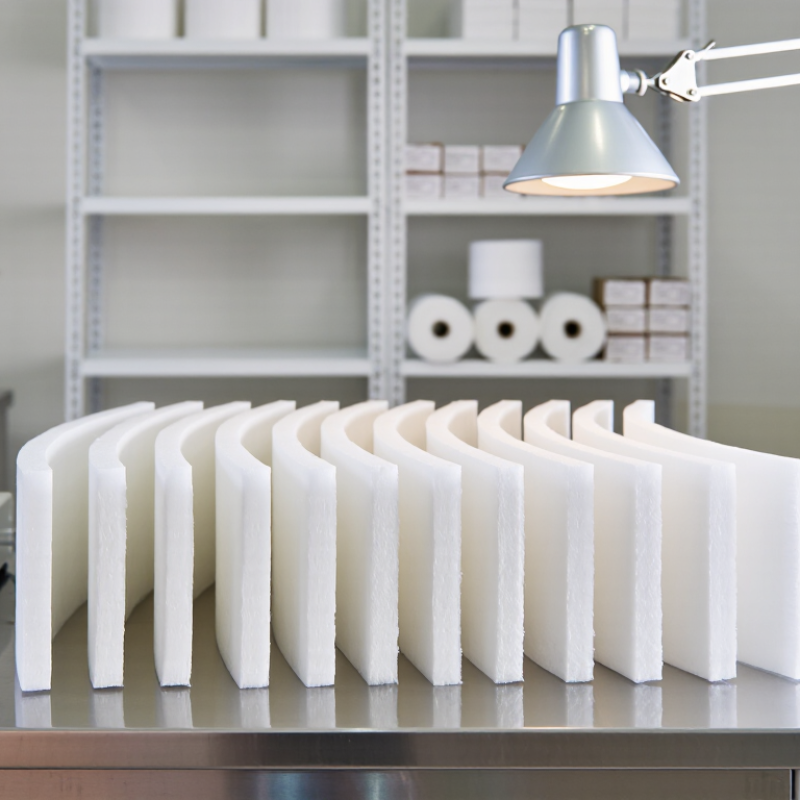
China Top 10 Aerogel Ceramic Fiber Paper Suppliers?

What Is Aerogel Ceramic Fiber Paper?

Aerogel ceramic fiber paper is a thin, porous insulation sheet combining ceramic fibers with an aerogel-based insulating phase. The fibers help the sheet hold its shape; nanoscale pores slow heat transfer. It may look like ordinary pale paper, but it is designed for hot equipment, narrow gaps, and thermal barriers. The exact composition and temperature limit vary by grade.

The data needs context. Pierre and Pajonk’s 2002 Chemical Reviews article reports silica-aerogel thermal conductivity across roughly 0.004–0.03 W/m·K, depending on material and conditions. That range describes aerogel, not every finished ceramic-fiber sheet. ASTM C892-19 classifies high-temperature fibrous insulation by service-temperature class, a useful reminder to check a product’s own rating rather than assume one universal limit.

That distinction matters. In practical use, installers should also check thickness, edge fit, compression, and exposure to moisture or vibration. A tight bend around a pipe can leave a small gap, weakening the barrier.

“Paper” can be a misleadingly tidy label; real sheets differ in flexibility, handling, and performance. Used carefully, the material can provide compact insulation where bulky blankets do not fit.

Key Properties and Industrial Applications

Aerogel ceramic fiber paper combines a lightweight fibrous structure with highly porous insulation. Its low thermal conductivity helps limit heat transfer in compact spaces. The material can also be thin, flexible, and easy to cut, which is useful around pipes, furnace doors, and uneven surfaces. Performance varies by composition, density, thickness, and service temperature. Check the supplier’s test data rather than relying on a general product description.

Industrial applications include kiln linings, furnace seals, heat-treatment equipment, and thermal barriers in process systems. In practice, engineers may choose this paper where conventional insulation is too bulky. It can help reduce heat loss, but it is not automatically suitable for every high-temperature installation. Compression, vibration, moisture, and repeated heating can affect service life. A small edge detail can matter. Installation gaps may create local hot spots, even when the main surface is well covered.

Tips: Confirm maximum service temperature and thermal conductivity at the intended operating conditions. Ask for thickness and density tolerances, and inspect sample sheets for tears or uneven edges. Wear suitable protective equipment when cutting; fine fibers may irritate skin or airways. One point deserves a second look: published laboratory values may not match performance after years of cycling.

Aerogel–Ceramic Fiber Paper: Key Thermal Property

Typical thermal conductivity of selected high-temperature insulation materials near ambient conditions

Lower thermal conductivity generally means better insulation. Aerogel–ceramic fiber paper is used where thin, lightweight thermal barriers are needed, including industrial furnace insulation, equipment seals, and thermal protection in transport and energy systems. Values are indicative typical figures, not product specifications; actual performance varies with composition, density, temperature, and test method.

How to Evaluate Chinese Aerogel Ceramic Fiber Paper Suppliers

When evaluating Chinese aerogel ceramic fiber paper suppliers, compare technical data under matching test conditions. Check thickness, density, thermal conductivity, service temperature, shrinkage, and tensile strength. Ask for test methods and batch-specific records, not just a general product sheet. Ask for evidence. Details matter. A small sample can reveal uneven edges, loose fibers, dusting, or inconsistent flexibility. Measure several points with a caliper, and record the results. One sample is not enough to confirm stable production, but it can help identify obvious differences.

Review how the supplier controls raw materials, production checks, and lot traceability. Request a sample from a regular production batch and ask whether its specifications match the quoted material. Confirm packaging, available sheet sizes, lead times, and how defects are handled. A stated maximum temperature alone tells little about performance in a real assembly; clarify exposure time, atmosphere, and compression conditions. If possible, have a qualified laboratory verify key properties. Supplier comparisons are not perfectly neat: test methods and reporting detail may differ, and buyers can overlook practical fit. I would treat a polished datasheet as a starting point, not proof. Ask precise questions, and keep written answers for later review.

Profiles of Ten Leading Suppliers in China

China’s aerogel ceramic fiber paper suppliers vary in production scale, product range, and technical support. A useful profile looks beyond catalog claims. It checks whether a supplier can provide consistent thickness, clear density data, and documented thermal conductivity. Small details matter. A roll that is difficult to cut or sheds dust can complicate installation, even when its insulation figures look strong.

When comparing ten leading suppliers, review their manufacturing processes, sample availability, and responses to application questions. Ask for test conditions, not just headline temperature ratings; performance depends on thickness, exposure time, and installation method. Check whether custom dimensions are available and how products are packaged for transport. Some suppliers may offer broader material choices, while others focus on flexible paper formats. That difference can affect lead times and technical guidance. Supplier profiles should also note what remains unclear. Public information is not always enough to verify production consistency, and a polished specification sheet is not a substitute for testing a sample in the intended assembly.

How to Compare Suppliers and Verify Product Quality

China Top 10 Aerogel Ceramic Fiber Paper Suppliers?
How to Compare Suppliers and Verify Product Quality

Supplier comparisons should begin with test conditions, not headline claims. Ask for thermal conductivity at stated mean temperatures, plus density, thickness, tensile strength, and loss on ignition. A value measured at one temperature cannot fairly compare with a result measured at another. ASTM C177 describes a guarded-hot-plate method for measuring steady-state thermal transmission; request the method and actual test report, not just a brochure figure. The IEA’s Energy Efficiency 2023 report estimates that industry uses about 37% of global final energy, making insulation performance a practical cost and efficiency concern.

Tips: Request certificates tied to the production batch, then compare them with an independent laboratory test. Check whether samples represent the delivered roll, not a specially prepared piece. For aerogel ceramic fiber paper, inspect a cut edge: note thickness variation, dust, and whether the sheet bends without cracking. Confirm the operating-temperature rating and chemical composition in writing. Small differences matter.

Ask suppliers how they control raw materials and document production changes. Compare lead time, packaging, and the consistency of results across several batches. I would not accept one impressive conductivity number as proof of reliability; test conditions and sample details are easy to overlook. A second test costs time. It can prevent a poor fit in a real furnace lining.

China Top 10 Aerogel Ceramic Fiber Paper Suppliers? - How to Compare Suppliers and Verify Product Quality

Supplier comparison checklist: request the same documents and test data from each candidate. No supplier-specific claims or rankings are implied.

No. Comparison dimension Information to request How to verify product quality Buyer’s record
1 Product construction Confirm whether the product is ceramic-fiber paper, an aerogel-containing composite, or a layered assembly. Request a composition statement and product datasheet. Check that the stated composition, product name, datasheet, sample, and purchase specification describe the same construction. ________________
2 Service temperature Request the manufacturer’s stated maximum service temperature and the conditions or test basis for that value. Do not treat a classification or short-term exposure temperature as a guaranteed continuous-use temperature. Confirm suitability for the actual atmosphere, load, and operating cycle. ________________
3 Thermal conductivity Request conductivity values at specified mean temperatures, with specimen thickness, density, conditioning, and test method stated. Compare like-for-like test conditions. For suitable flat specimens, methods such as ASTM C177 or ASTM C518 may be applicable; confirm the method’s suitability for the product and temperature range. ________________
4 Thickness and tolerance Request nominal thickness, permitted tolerance, measurement procedure, and available roll or sheet dimensions. Measure samples at multiple points using an agreed procedure and compare the results with the written purchase specification. ________________
5 Bulk density and uniformity Request target density, tolerance, specimen dimensions, and the method used to calculate density. Check sample mass and dimensions using a documented procedure; assess variation across the sheet or roll rather than relying on a single measurement. ________________
6 Permanent linear change Request test temperature, exposure duration, atmosphere, specimen details, and measured dimensional change after heating. Compare results only when test conditions match. ASTM C356 is a method for measuring permanent linear change of preformed high-temperature thermal insulation; confirm applicability to the specific paper or composite. ________________
7 Mechanical integrity Request tensile or handling-strength data, test direction, specimen conditioning, and any stated limits for dusting or edge damage. Inspect representative samples and agree on an application-relevant test method and acceptance criteria before ordering. ________________
8 Moisture and packaging Request moisture or conditioning information, packaging specification, storage guidance, and protection against water ingress during shipment. Inspect packaging on receipt and document any wet, crushed, torn, or contaminated material. Agree how moisture-related claims will be assessed. ________________
9 Batch traceability and quality records Request a sample certificate of analysis, lot identification format, inspection records, and a process for handling nonconforming products. Verify that sample documents identify the product and batch and that delivered packaging can be traced to the corresponding quality records. ________________
10 Sample-to-order consistency Request pre-production or production samples, a signed specification, and written confirmation of change-control procedures. Retain an approved reference sample and compare it with incoming goods for dimensions, appearance, packaging, and agreed test results. ________________

Note: Test standards may not apply to every aerogel-containing ceramic-fiber paper construction. Confirm the method, specimen preparation, and acceptance limits with a qualified testing laboratory and specify them in the purchase agreement.

AVADA IT

Fusce ut ipsum tincidunt, porta nisl sollicitudin, vulputate nunc. Cras commodo leo ac nunc convallis ets efficitur.

RECENT TWEETS

CONTACT US

  • 12345 North Main Street,
    New York, NY 555555

  • 1.800.555.6789

  • sale@vibrotools.com

Go to Top