How to Choose the Best Natural Gas Water Heater?

Choosing a natural gas water heater involves more than comparing tank prices. The right model must match household demand, available gas supply, venting, and installation space. The U.S. Department of Energy estimates that water heating accounts for about 20% of residential energy use. That makes efficiency important, but the estimate is broad; a household’s actual costs depend on its hot-water habits and local utility rates.

Technology changes the comparison. ENERGY STAR guidance reports that qualifying tankless models can be 24–34% more energy efficient than conventional storage models in homes using 41 gallons or less of hot water daily. That figure is not a guarantee for every home. A family filling a deep bathtub, for example, may need a different capacity than a couple taking short showers. Check the first-hour rating for tank models, and compare flow rates for tankless units. Also ask a qualified installer to assess venting and gas-line capacity before you buy. Small details matter.

This guide explains how to weigh efficiency ratings, household size, upfront cost, and maintenance needs. It also highlights where product claims can be hard to compare. I would not choose by fuel cost alone; that shortcut misses installation and usage. A careful fit is usually more useful than the “best” specification on a box.
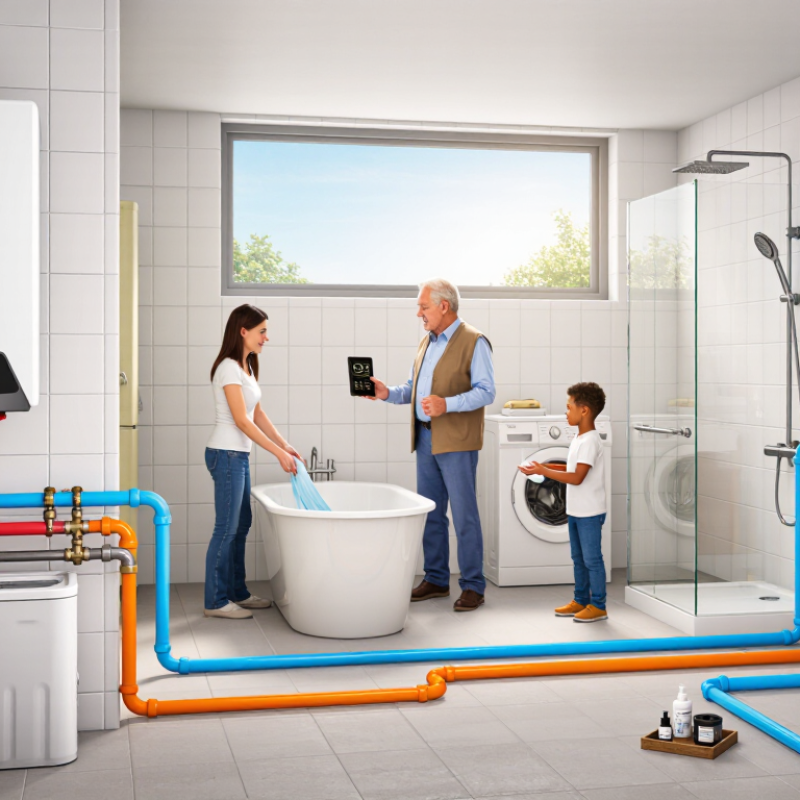
How to Choose the Best Natural Gas Water Heater?

Determine Your Household’s Hot-Water Needs

Determine your household’s hot-water needs by watching how water is used during the busiest hour. Count showers, baths, handwashing, and appliances that may run together. A household of three can still have a sharp peak if two showers overlap with laundry. Write down the usual shower length and whether anyone fills a deep tub. Small details matter.

For a storage heater, compare peak demand with the unit’s first-hour rating, not just its tank size. For a tankless model, check its flow rate at the temperature rise your climate requires. Cold winter inlet water can reduce how many fixtures it serves at once. A simple test helps: run the shower and kitchen tap together, then note any temperature or pressure changes. Real life varies. If that test feels inconvenient, a week of brief notes can reveal patterns. Be honest about occasional guests, too, but avoid sizing only for rare events. Oversizing can add cost and waste energy; undersizing can mean a cold shower. A qualified installer can verify your estimates and check the home’s gas supply and venting requirements.

How to Choose the Best Natural Gas Water Heater? — Determine Your Household’s Hot-Water Needs
Household Profile Likely Peak-Hour Activities Estimated Peak-Hour Hot-Water Demand Suggested First-Hour Rating (FHR) Target Typical Storage-Tank Size to Compare
1–2 people One shower, handwashing, and occasional dishwasher use Approximately 16–25 gallons Compare models with an FHR of about 25–35 gallons or more About 30–40 gallons
3–4 people Two showers, handwashing, and dishwasher use within the same hour Approximately 26–40 gallons Compare models with an FHR of about 35–45 gallons or more About 40–50 gallons
5 or more people Several showers plus dishwasher or laundry use during the same hour Approximately 41–66 gallons Compare models with an FHR of about 50–70 gallons or more About 50–75 gallons; higher-demand homes may need more capacity or recovery
Any household with frequent overlapping use For example, showers running while laundry or a dishwasher is operating Calculate from the activities most likely to occur together Choose an FHR that meets or exceeds the estimated peak-hour demand Check both tank size and the heater’s recovery performance
Planning notes: These figures are approximate, not code requirements. Actual demand varies with shower duration, fixture flow rate, appliance cycle, incoming water temperature, and household habits. The first-hour rating describes the amount of hot water a fully heated tank can deliver during the first hour; tank capacity alone does not determine hot-water availability. Check the product’s FHR and recovery information, and consider professional sizing for unusually high demand.

Compare Storage-Tank and Tankless Heater Designs

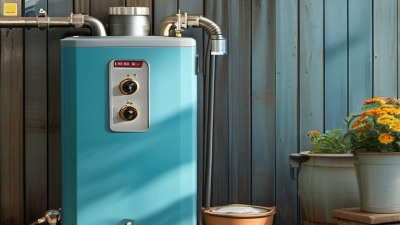
Storage-tank heaters keep a ready supply of hot water in an insulated vessel. That feels reassuring on a cold morning. Yet heat escapes while water waits, even when no tap is running. A tankless unit heats water on demand, reducing standby losses, but its flow rate can limit simultaneous use. A shower and kitchen sink may compete for capacity.

The U.S. Department of Energy estimates that tankless heaters can be 24–34% more energy-efficient than conventional storage models in homes using up to 41 gallons daily. For homes using about 86 gallons daily, the estimated advantage falls to 8–14%. These figures describe energy use, not guaranteed bill savings; fuel prices, installation, and household habits matter. The comparison is not perfectly tidy.

Think about a real morning routine: two showers, then laundry. A properly sized tank may handle short bursts well, while a tankless model needs enough heating capacity and gas supply for peak demand. Check the manufacturer’s flow-rate chart, local inlet-water temperature, venting needs, and available installation space with a qualified installer. Tankless systems can cost more to install, and scaling may require periodic flushing. Less obvious, but important. DOE’s Energy Saver guidance also notes that tankless models generally last longer than storage heaters, though maintenance and water conditions affect service life.

Assess Capacity, Efficiency, and Performance

How to Choose the Best Natural Gas Water Heater?

Assess capacity, efficiency, and performance before comparing models. Estimate how much hot water your household uses during its busiest hour, not across an average day. A family that runs a shower, dishwasher, and laundry cycle together needs more peak-hour capacity than its headcount alone suggests. For a storage heater, check the first-hour rating. For a tankless unit, compare its flow rate with the number of fixtures likely to run at once. A neat estimate can still miss real habits; track usage for a few days if you are unsure.

Efficiency affects long-term fuel use. Compare the uniform energy factor, or UEF, within the same heater type, and consider the insulation and venting requirements. A higher rating can help reduce energy consumption, but installation conditions matter too. Performance depends on recovery rate, incoming water temperature, and household demand. On cold mornings, a unit may deliver less hot water than expected if it is undersized. Check the manufacturer’s capacity tables, and ask a qualified installer to assess gas supply and venting before purchase.

Tips: Measure the space and note existing vent locations. Record how many showers run at once. Leave room for maintenance access; that detail is easy to overlook.

Check Installation Requirements and Safety Features

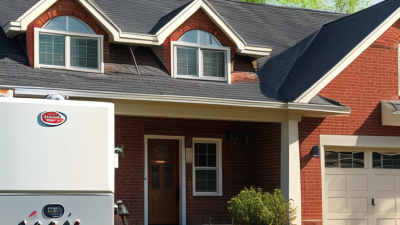
Before choosing a natural gas water heater, check the installation space, vent route, and gas supply. Measure the doorway and floor area, then note nearby windows, storage, and service access. Measure twice. A replacement may need different venting or combustion-air provisions, even when the old heater fit neatly. Have a qualified installer confirm gas-line capacity and clearances against the unit’s instructions and local requirements. A tight closet can look workable until a technician needs room to inspect a connection.

Look for practical safety features, including flame-failure shutoff and over-temperature protection. Confirm the temperature-and-pressure relief valve has a correctly routed discharge pipe; it must not be capped or blocked. Install carbon monoxide alarms as directed by their instructions, and keep the vent unobstructed. Small details matter. I would also ask who will inspect the vent and connections after installation, rather than treating startup as the final check. If you smell gas, leave the area and contact the gas utility or emergency services from a safe location. A careful site review can feel fussy, but it may uncover a problem that a product comparison alone misses.

Compare Purchase Costs, Warranties, and Maintenance Needs

The purchase price is only part of a natural gas water heater’s cost. Ask for an itemized estimate covering the unit, installation, venting changes, gas-line work, and removal of the old heater. A lower-priced model may cost more if it needs substantial upgrades. Still, estimates are estimates; an installer may find an unexpected venting issue once the old unit is removed. That matters.

Compare heaters with similar capacity and efficiency ratings before judging their prices. Then check each warranty’s length and coverage. Some warranties cover the tank but not labor, and exclusions may apply if installation or maintenance requirements are missed. Read the terms, not just the headline number. Keep the paperwork.

Maintenance depends on the heater type and your water conditions. Tank models may need periodic flushing to remove sediment, while some tankless models require descaling and filter cleaning. Hard water can make buildup more likely. Ask an installer what schedule fits your home, and follow the owner’s manual. Also keep vents clear and arrange prompt inspection if you notice unusual smells, soot, or inconsistent hot water. Maintenance takes time, and it is easy to put off. Compare expected service needs alongside the warranty and purchase cost.

AVADA IT

Fusce ut ipsum tincidunt, porta nisl sollicitudin, vulputate nunc. Cras commodo leo ac nunc convallis ets efficitur.

RECENT TWEETS

CONTACT US

  • 12345 North Main Street,
    New York, NY 555555

  • 1.800.555.6789

  • sale@vibrotools.com

Go to Top