
Choosing the right Uav Drone Jammer can be challenging. Many factors influence your decision. It’s essential to recognize what you really need from such a device.
UAV drone jammers come in various models and features. Each option has its strengths and weaknesses. Understanding these can lead to better choices. Are you looking for portability? How about range and battery life? These details matter.
Expert advice suggests testing different jammers before a purchase. Field tests provide hands-on experience. Consider your specific use case, like security or hobbyist needs. It’s vital to make an informed choice. Reflecting on your priorities will lead you to the best UAV drone jammer for your situation.
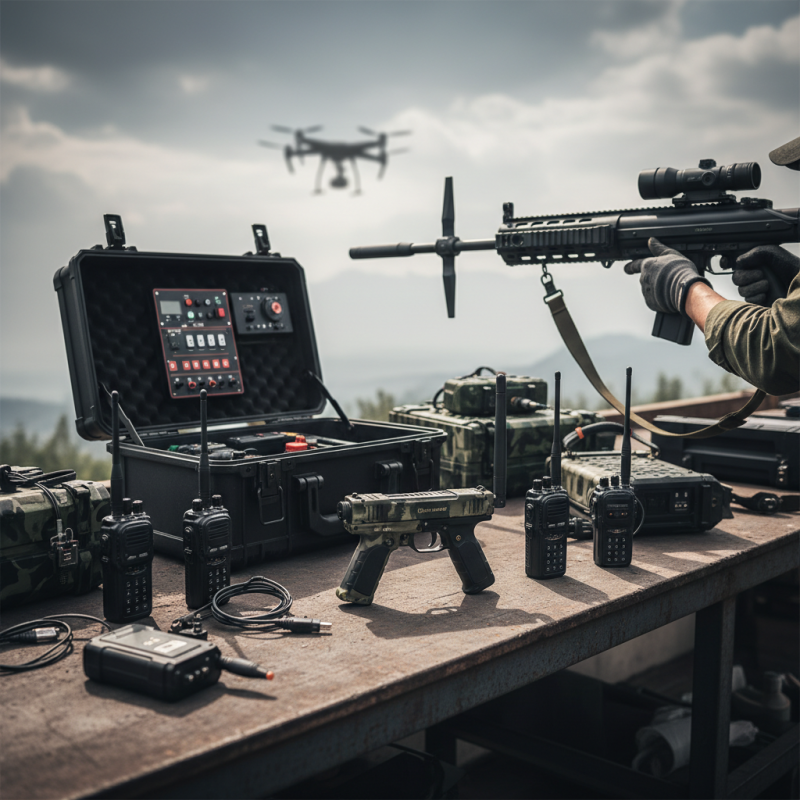
UAV drone jammers are essential tools in safeguarding airspace from unauthorized drones. Understanding how these devices work is crucial for selecting one that suits your needs. A drone jammer typically relies on radio frequency interference to disrupt communication between a drone and its operator. This interruption can help prevent potential threats but also raises questions about its ethical use.
Key concepts include frequency range and targeting capabilities. Each drone operates on specific frequencies, and a jammer must match these to be effective. Targeting precision is also vital. A more focused jammer might only disrupt a specific drone, while a wider range can affect multiple units within proximity. Knowing the limitations and effectiveness of these devices is essential for responsible usage.
It’s important to realize that not all jammers are created equal. Their performance can vary significantly based on environmental factors. Reflect on how often you may need to adjust your approach. Over-reliance on a single device can lead to vulnerability. A deeper understanding allows for better decision-making and effectiveness in drone management.
When considering the use of drone jammers, understanding the legal framework is essential. Regulations can vary significantly by region. According to the Federal Aviation Administration (FAA), using jammers can interfere with legitimate drone operations. In many places, this could lead to penalties or legal repercussions. Countries like the United States do not permit individual use of drone jammers, contrasting sharply with some other nations.
Legal considerations also include the potential for unintended consequences. For instance, jammers could disrupt emergency services or critical infrastructure. A 2021 report from the International Telecommunication Union highlights that unauthorized jamming could create safety risks. Any entity looking to deploy such technology must weigh the implications carefully.
Moreover, there are also ethical considerations to ponder. Could using a drone jammer infringe on the privacy of others? It is crucial to ensure that the intended use matches local laws and ethical standards. Engaging with legal experts familiar with telecommunications law can aid in navigating these complex issues. Ultimately, awareness and cautious evaluation are key steps before engaging with any jammer technology.
When choosing a UAV drone jammer, understanding the technical specifications is essential. The frequency range determines the types of drones you can effectively disrupt. Most consumer drones operate within specific bands. A jammer that covers a wider range will be more versatile. Look for jammers that specify the frequency bands they target. This will ensure compatibility with various drone models.
Signal interference is another critical aspect. A good jammer not only emits signals but also does so effectively against different drones. Consider how strong the interference signal is. A low-power jammer may not be effective, especially in urban areas where noise and other signals can interfere. Testing the jammer's performance in various environments can provide insights.
Perceived effectiveness can vary widely. Many users report mixed results based on the environment. Some jammers falter in densely populated areas while performing well in open spaces. Researching user experiences and feedback can be enlightening. Ensuring the right balance between power and frequency coverage may require multiple tries. Not every solution fits every scenario.
In various industries, drone jammers play a crucial role in enhancing security and protecting sensitive areas. For instance, in military applications, jammers can prevent unauthorized surveillance. This ensures operational integrity during missions. In critical infrastructure, like power plants, jammers protect against potential drone threats. They help mitigate risks associated with reconnaissance by rival entities.
Tips: When considering a jammer, assess the range of frequency it covers. Choose one that fits your specific needs. It's also important to evaluate the portability of the device. A lightweight unit can be deployed easily in different locations.
In public events, drone jammers safeguard the privacy of attendees. They mitigate risks posed by unauthorized drone flights, enhancing safety. However, the implementation of these devices must be thoughtful. Jamming signals can disrupt essential communications nearby. Thus, understanding the operational environment is key. Always consider the potential impacts of using a drone jammer in your specific context.
When exploring the effectiveness of UAV drone jammers, it’s essential to compare leading brands based on their features and performance data. Many reports indicate that jammers can vary significantly. For example, range, frequency coverage, and signal interference levels are crucial for effectively disrupting unwanted drone activity. A recent study highlighted that over 70% of users favor jammers with a broader frequency range for flexibility in diverse environments.
Performance metrics also play a vital role. Some industry analyses reveal that top-performing jammers can disrupt signals at distances of up to 2 kilometers. However, not all systems are created equal. A study from the UAV Safety Institute found that many devices fail to maintain consistent interference, especially in urban areas packed with signals. Users often report mixed results, reflecting the need for careful comparison and testing in real-world settings.
Evaluating user feedback can provide valuable insights. While some jammers excel in specific conditions, others struggle. Online reviews frequently discuss issues like battery life and ease of use. Moreover, ongoing advancements in drone technology mean that a jamming solution today may not be as effective tomorrow. Keeping abreast of industry trends is crucial for making an informed choice in this ever-evolving field.
| Model | Frequency Range (GHz) | Effective Jammer Range (m) | Power Output (W) | Battery Life (hrs) | Weight (kg) | Price (USD) |
|---|---|---|---|---|---|---|
| Model A | 2.4-2.5 | 100 | 8 | 4 | 1.5 | 1500 |
| Model B | 5.725-5.875 | 80 | 10 | 5 | 2.0 | 2000 |
| Model C | 1.2-1.3 | 150 | 12 | 3 | 2.5 | 1800 |
| Model D | 2.4-2.48 | 70 | 5 | 6 | 1.2 | 1200 |
© Copyright 2025 | LittleFirefighter.com | All Rights Reserved | 1EZ Creative: Orange County Web Design

Fusce ut ipsum tincidunt, porta nisl sollicitudin, vulputate nunc. Cras commodo leo ac nunc convallis ets efficitur.

12345 North Main Street,
New York, NY 555555
1.800.555.6789
sale@vibrotools.com
