
How to Choose Compact Track Loader Track Rollers in 2026?

Choosing a Compact Track Loader Track Roller in 2026 is not a cosmetic decision. It affects undercarriage wear, ride quality, and downtime. A roller that looks correct may still have the wrong flange profile, bearing design, or fit. Measure carefully.

Industry data can help frame the decision, but it has limits. AEM’s equipment-market reporting tracks broader machinery trends, while EquipmentWatch’s Cost of Ownership resources examine operating and maintenance costs. Neither should be treated as a universal track-roller failure database. That distinction matters. A machine’s soil, workload, tension, and maintenance history can change roller life substantially. Mud packed around a roller, for example, can hide seal damage until the machine begins running rough.

This guide compares fitment, construction, sealing, load capacity, and supplier documentation. It also explains what to inspect before ordering, including serial-number compatibility and bearing play. The goal is practical: fewer mismatched parts and clearer maintenance decisions. Not a magic fix.

A verifiable, named expert quotation specifically about compact track loader rollers was not supplied or confirmed, so I will not invent one. That caution is part of sound buying advice. Ask suppliers for test details, warranty terms, and application-specific recommendations; then check those claims against your machine manual and service records. A polished product page is not proof. The right roller is the one whose specifications match the machine and its actual working conditions.
How to Choose Compact Track Loader Track Rollers in 2026?

Understanding the Role of Track Rollers in Compact Track Loaders

How to Choose Compact Track Loader Track Rollers in 2026?

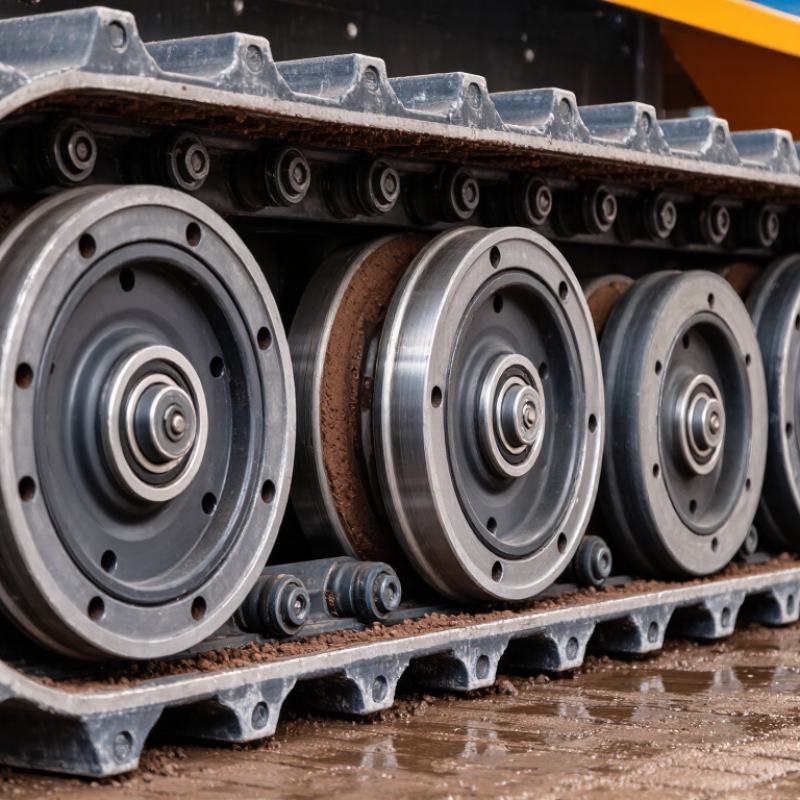
Track rollers support the loader’s weight and guide the track along the undercarriage. Their condition affects track alignment, vibration, and how smoothly the machine travels over rough ground. A worn roller may show a flat spot, a damaged seal, or uneven play. Look closely after work in mud or abrasive soil; packed debris can hide early damage. Small parts matter.

Grand View Research’s 2024 construction equipment market report valued the global market at about $145.5 billion in 2023 and forecast continued growth. This broad market figure is not a compact track loader forecast, but it underlines why dependable undercarriage maintenance matters across heavy equipment. When choosing replacement rollers, match dimensions, mounting points, and load requirements to the machine’s service documentation. Check seal design and material quality, too. A low purchase price can be misleading if poor sealing lets grit enter the bearing. Inspection intervals vary with terrain and workload, so a fixed schedule may not fit every site. I would not rely on appearance alone; slight looseness can be difficult to spot by eye. Keep inspection notes, compare wear across rollers, and investigate unusual noise before it becomes track damage.

How to Choose Compact Track Loader Track Rollers in 2026: Understanding Their Role

What this shows: Track rollers support and guide the track as it circulates. The chart estimates roller rotational speed at different travel speeds, assuming a 100 mm effective roller diameter and no track slip. Actual roller dimensions and operating speeds vary by machine, so use your loader’s specifications when selecting replacement rollers.

Matching Roller Specifications to Loader Models and Work Conditions

Choosing compact track loader track rollers in 2026 starts with fit, not price. Match roller diameter, tread width, flange layout, shaft dimensions, and mounting pattern to the loader’s parts manual. Check whether the machine uses single or double flanges; the wrong profile can guide the track poorly. Verify load rating and seal design, especially when using heavier attachments. Small details matter.

Work conditions should shape the choice. Mud and standing water can challenge seals, while abrasive soil may accelerate wear on roller surfaces. Frequent travel over hard ground puts different demands on the undercarriage than slow work on soft terrain. Inspect the old roller for uneven wear, looseness, or damaged seals, and check track tension before ordering. A worn roller may be a symptom of misalignment, not just age. Measurements taken in a hurry can be slightly off, so confirm them against the machine’s service information.

Tips: Record the loader model and serial details, then compare the replacement’s key dimensions before installation. Check nearby rollers, idlers, and sprockets for uneven wear. If the specifications remain unclear, pause and verify them rather than guessing.

Comparing Roller Designs, Materials, and Sealing Features

Compact track loader track rollers differ in flange shape, bearing layout, steel treatment, and seal design. Single-flange rollers guide the chain with less side contact, while double-flange designs constrain it more firmly. The right profile depends on the undercarriage layout and expected side loading. Look for hardened running surfaces and a tough core; excessive hardness without impact resistance can invite cracking. Check the roller face for uneven wear, pitting, and mud packed around the seals. Small clues matter.

Sealing often decides service life. Labyrinth paths and multi-lip seals help block water, grit, and fine clay, but no seal stays effective when damaged or installed poorly. ISO 281:2007 sets basic bearing rating life at 90% reliability under defined conditions; that is a calculation benchmark, not a promise for a muddy jobsite. ISO 4406:2021 codes hydraulic-fluid particle contamination at three sizes: 4, 6, and 14 micrometres. It does not rate roller grease, but it underlines how small particles can matter. Compare seal protection, grease retention, and replacement access alongside purchase price. Field conditions are messy. A clean specification sheet can still miss them. Check service records and inspect rollers after wet, abrasive work.

How to Choose Compact Track Loader Track Rollers in 2026? - Comparing Roller Designs, Materials, and Sealing Features

General selection guidance for compact track loader undercarriages. Specifications and compatibility vary by machine model and undercarriage design.
Selection factor Option or feature Typical characteristics Advantages Trade-offs and checks Best suited to
Roller flange design Single-flange track roller Uses one guiding flange to help control track-chain alignment. The required position and orientation depend on the undercarriage layout. Can provide effective guidance where the machine design calls for a single-flange roller. Confirm flange position, roller width, shaft dimensions, and mounting arrangement against the machine’s parts information. Machine positions specifically designed for single-flange rollers.
Roller flange design Double-flange track roller Has flanges on both sides of the tread to guide the track chain. Provides bilateral guidance at locations designed to use this configuration. Requires correct clearance and alignment; a double-flange roller is not a universal substitute for a single-flange unit. Undercarriage positions specified for double-flange rollers.
Roller construction One-piece or assembled roller body Construction varies by design. Track rollers commonly contain a load-carrying shell, shaft or axle, internal bearing surfaces, and seals. Designed to carry machine and track loads while rolling along the track system. Compare the complete assembly, including bearing arrangement, dimensions, lubrication method, and service requirements—not appearance alone. Replacement selection when matching an existing roller assembly.
Roller material Heat-treated steel tread or shell Steel surfaces may be heat-treated to improve resistance to wear and contact stresses. Treatment depth and hardness vary by manufacturer and design. Offers a wear-resistant rolling surface for repeated contact with the track chain. Hardness alone does not establish service life; steel quality, heat treatment, geometry, loads, and operating conditions also matter. General-purpose work where durable track contact surfaces are required.
Roller material Alloy-steel components Alloy steels may be used for loaded components such as shafts or roller bodies, often with heat treatment appropriate to their function. Can be engineered to balance strength, toughness, and wear resistance. Material descriptions are not a substitute for verified dimensions, load suitability, and quality information. Applications where component strength and resistance to repeated loading are important.
Sealing system Floating metal face seal Commonly uses precision metal seal rings with elastomer elements to keep lubricant in and contaminants out. Designed for demanding, dirty undercarriage conditions and repeated rotation. Seal performance depends on correct installation, clean mating surfaces, and the condition of the seal components. Frequent exposure to mud, dust, water, or abrasive material.
Sealing system Elastomer lip seal Uses a flexible sealing lip; the arrangement and protection level vary between roller designs. Can provide a compact sealing solution where the design and working conditions are suitable. Check the intended contamination level and service conditions; do not assume all lip-sealed designs provide equivalent protection. Applications matched to the roller manufacturer’s specified sealing arrangement.
Lubrication and service Sealed, lubricated roller assembly Many track rollers are supplied as sealed assemblies with internal lubricant; serviceability depends on the specific design. Helps protect internal bearing surfaces and reduces the need for routine internal lubrication. Do not add lubricant or attempt disassembly unless the service instructions specifically allow it. Replace damaged or leaking units promptly. Routine replacement and maintenance when the original roller is a sealed assembly.
Fit and compatibility Model-specific dimensions and mounting Key checks include roller diameter and width, flange configuration, shaft or bore dimensions, mounting points, and track-chain compatibility. Correct fit helps maintain alignment and distribute loads as intended. Visually similar rollers may differ in critical dimensions. Verify the machine serial range and parts information before ordering. Every replacement decision, especially when the undercarriage has been modified.
Operating conditions Worksite and maintenance assessment Abrasive soil, frequent turning, heavy loads, poor track tension, and packed debris can increase undercarriage wear. Matching inspection and maintenance practices to actual conditions can help identify wear before secondary damage occurs. Check for unusual noise, rough rotation, visible lubricant leakage, looseness, uneven wear, and abnormal heat; follow the machine service schedule. All machines, with inspection frequency adjusted to duty cycle and site conditions.

Selection note: Use the machine manufacturer’s parts information or a qualified undercarriage specialist to confirm fitment. Roller construction, materials, seal design, and serviceability differ across machines and suppliers.

Verifying Compatibility, Wear Limits, and Installation Requirements

How to Choose Compact Track Loader Track Rollers in 2026?

Verifying Compatibility, Wear Limits, and Installation Requirements

A track roller can look correct and still fit poorly. Check the machine’s model and serial information against the parts catalog, then compare roller width, diameter, shaft dimensions, and mounting points. Confirm clearance around the track frame and compatibility with the existing track system. Small details matter.

Before ordering, inspect the installed rollers for flat spots, uneven wear, damaged flanges, looseness, or oil leaks. Measure wear at several points, not just the easiest-to-reach spot. Use the service manual’s limits for that machine; there is no single wear threshold for every loader. A quick visual check helps, but it cannot replace measurement. I have seen wear look minor from outside, while a measurement told a different story.

Installation requirements deserve equal attention. Verify the specified fasteners and tightening torque, and check whether seals or related hardware should be replaced. Support the machine securely and follow the service procedure for track tension and roller removal. Keep mounting surfaces clean; trapped grit can affect seating. If the old roller failed unusually early, inspect alignment and neighboring components before fitting a new one. That extra check takes time, and sometimes the cause is not obvious.

Evaluating Service Life, Cost, and Supplier Support in 2026

When comparing compact track loader track rollers in 2026, assess service life by operating hours and inspection history, not price alone. Check for uneven wear, seal leakage, rough rotation, and metal debris around the roller. Record the machine’s hours, ground conditions, and load pattern; rocky sites can change wear rates sharply. Small details matter. Ask suppliers for documented service-life ranges under comparable conditions, plus warranty exclusions and lead times. A confident estimate without operating assumptions is not useful.

Compare total cost per operating hour: purchase price, installation, expected replacement interval, and downtime. The U.S. Army Corps of Engineers’ EP 1110-1-8 equipment-cost guidance separates repair and maintenance costs from other ownership expenses, a useful model for fleet comparisons.

The 2024 True Cost of Downtime report estimated that unplanned stoppages cost large global companies about $1.4 trillion in 2022. That figure is not loader-specific, but it shows why availability belongs in the calculation.

Request written stock levels, response times, technical help, and parts coverage from each supplier. One weakness in this method: replacement intervals are hard to predict when soil and operator habits vary.

Keep a small service log, then revisit the estimate after each inspection.

AVADA IT

Fusce ut ipsum tincidunt, porta nisl sollicitudin, vulputate nunc. Cras commodo leo ac nunc convallis ets efficitur.

RECENT TWEETS

CONTACT US

  • 12345 North Main Street,
    New York, NY 555555

  • 1.800.555.6789

  • sale@vibrotools.com

Go to Top