
Choosing PVD Coating Equipment is a production decision, not simply a search for the largest chamber or lowest quote. The right system must match your parts, coating requirements, and daily output. A toolmaker coating small carbide inserts has different needs from a manufacturer finishing large decorative panels. The difference shows up in chamber dimensions, fixture design, cycle time, and maintenance demands.
Grand View Research’s Physical Vapor Deposition Market report estimated the global market at USD 2.3 billion in 2022 and forecast a 6.9% compound annual growth rate from 2023 to 2030. These are market-wide figures, not a guarantee of demand for any one coating line. Still, they point to expanding interest in PVD across industrial applications. That matters.
Before comparing suppliers, document your actual workload: part size, substrate material, coating type, batch volume, and acceptable downtime. Ask vendors for application-specific results, including coating thickness uniformity and repeatability across a fully loaded fixture. Request references from plants running similar parts, not just polished sample coupons. Also check vacuum-pump service access, target replacement time, recipe controls, and operator training. Small details become expensive.
A larger system can raise throughput, but only when demand supports it. Underused capacity is costly. And a brochure rarely shows the awkward parts: changeovers, troubleshooting, and the learning curve. This guide outlines how to assess equipment fit, supplier claims, operating costs, and future capacity before making a purchase.
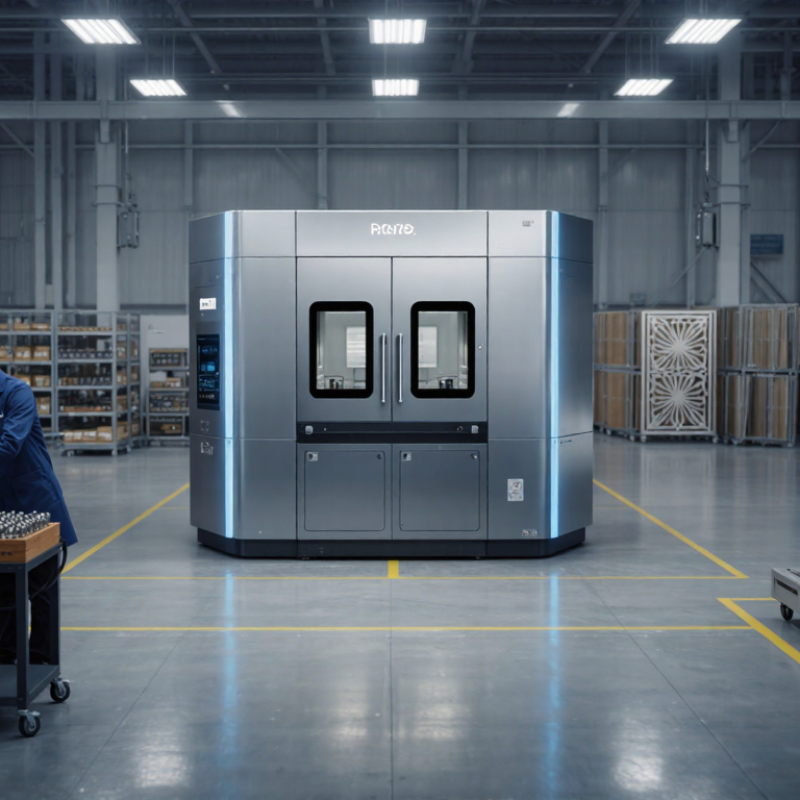
Before comparing PVD coating equipment, define what the coating must do. Is the priority wear resistance, corrosion protection, a specific color, or a consistent decorative finish? The answer affects coating materials, process options, and acceptable film thickness. Identify the substrates, part dimensions, and surfaces that must remain uncoated. A small threaded hole can matter as much as a broad visible surface. Small details count.
Then describe real production, not just your best-case target. Record typical batch size, parts per shift, loading time, and expected changeovers. A chamber may fit the parts but still require awkward fixtures or excessive spacing. Consider whether operators need to switch recipes often, and whether the equipment can handle your busiest product mix. Leave room for maintenance and unexpected delays. That matters.
Set measurable acceptance criteria before requesting equipment proposals. Specify finish consistency, coating thickness ranges, inspection methods, and the percentage of parts that must pass. Ask how sample parts will be tested, and use representative components rather than idealized coupons alone. One planning mistake is choosing capacity around a forecast that has not been checked against actual orders. I would revisit that number. The final equipment choice should match today’s needs while allowing realistic growth, without paying for capacity your production may never use.
How to Choose PVD Coating Equipment for Your Business?
Choosing equipment starts with the part, not the machine. Magnetron sputtering offers controlled film composition and suits decorative or functional coatings. Cathodic arc deposition can deliver dense, strongly adhered films, though droplets may affect surface finish. Thermal evaporation is simple and fast for line-of-sight coatings, but complex shapes can be challenging. These differences matter on the shop floor: a recessed edge may coat unevenly, even when a flat test coupon looks excellent. Grand View Research estimated the global PVD market at about USD 20.6 billion in 2023 and projected 7.1% annual growth through 2030. This is market context, not proof that one process fits every business.
Equipment configuration changes the economics. Batch chambers allow flexible scheduling and varied part sizes, but loading and unloading can limit output. Inline systems support higher, steadier throughput, yet need more floor space and consistent production volume. Compare usable chamber capacity, fixture density, pump-down time, target life, and maintenance access—not just the advertised cycle time. Request coating trials on your own parts, including edges and recesses. Small details matter.
Tips: Ask suppliers for coating uniformity data across a fully loaded fixture. Check utility needs and operator training. Leave room for change; forecasts can be wrong.
PVD equipment should fit your actual production mix, not an optimistic sales forecast. Grand View Research estimated the global PVD market at about USD 21.5 billion in 2023 and forecast continued growth through 2030. That market figure signals demand, but it does not tell you which chamber size your operation needs. Measure twice.
Compare usable chamber volume with the largest parts, fixture spacing, and planned batch size. Ask suppliers for cycle-time data using comparable materials and coating thicknesses. Then calculate output across loading, pump-down, deposition, cooling, and unloading—not deposition time alone. A larger chamber can still become a bottleneck if changeovers take hours. Leave room.
Automation should match labor availability and process consistency needs. Review recipe control, alarm logging, substrate handling, and how operators recover from interrupted cycles. Automation can reduce repetitive handling, but it adds maintenance and training requirements. Check the facility before signing: floor loading, ceiling height, electrical supply, cooling water, exhaust routing, and service access all matter. The U.S. Department of Energy’s Better Buildings guidance identifies compressed-air leaks as a common source of wasted energy; verify utility demand rather than assuming existing services are adequate. A site survey may reveal an awkward constraint—sometimes the doorway is the problem, not the production floor.
| Equipment Configuration | Typical Chamber Size | Indicative Usable Load | Automation Level | Facility Requirements to Check | Best Suited For | Key Selection Consideration |
|---|---|---|---|---|---|---|
| Compact batch system | Approximately 0.3–0.6 m internal diameter | Small or mixed batches; often a few trays of parts, depending on fixture design | Manual loading; recipe-based process control is commonly available | Confirm door clearance, floor loading, electrical supply, cooling-water capacity, and exhaust connection | Prototyping, job shops, laboratories, and low-volume production | Check whether the usable chamber area and fixture layout accommodate the largest parts—not just the chamber’s stated volume |
| Medium batch system | Approximately 0.7–1.2 m internal diameter | Multiple fixtures or production batches; part count varies substantially by size and spacing | Recipe control with operator loading; optional automated handling may be available | Review transport route, ceiling height, service access, utility connections, cooling, and process-gas storage provisions | Established production with recurring part families and moderate batch volumes | Compare expected parts per load and cycle time, including loading, heating, coating, cooling, and unloading |
| Large batch system | Approximately 1.3–2.0 m internal diameter or larger | High-volume or large-part batches; capacity depends on fixture geometry, part spacing, and coating requirements | Programmable process control; automated handling can reduce repetitive manual work | Check foundation and floor loading, crane or rigging access, electrical demand, cooling-water flow, exhaust, and maintenance clearance | High-throughput production or parts that require large fixtures and a substantial coating area | Validate that the site can support installation and maintenance, not only the equipment’s operating footprint |
| Inline or continuous system | Configuration varies; chamber size is designed around the conveyor and product envelope | Measured by line throughput, such as parts per hour; rate depends on product spacing and process time | High; conveyor movement and process stages are integrated into the line | Assess line length, material flow, ceiling height, conveyor access, utilities, exhaust, and integration with upstream and downstream operations | Stable, repeatable production of high volumes with consistent part geometry | Confirm that product mix and production scheduling justify continuous operation and that the line can be balanced with surrounding processes |
Planning note: Chamber dimensions and load descriptions are indicative only, not guaranteed production capacities. Actual throughput depends on part geometry, fixture design, coating recipe, required uniformity, cycle time, and changeover frequency. Request a layout review and sample-part trial before selecting equipment.
When comparing PVD systems, look beyond the purchase quote. Build a five-to-ten-year ownership estimate covering electricity, cooling water, target utilization, chamber cleaning, seals, gauges, and technician travel. Ask for maintenance intervals, spare-part lead times, and the cost of a vacuum-pump rebuild. Small delays add up. Not cheaply. The U.S. Department of Energy’s Operations & Maintenance Best Practices guide reports that effective maintenance programs can commonly save 5–20% on energy bills. This is a facility-wide benchmark, not a PVD-specific promise.
After-sales support deserves a measurable place in the quotation. Request written response-time targets, remote diagnostics, commissioning hours, operator training, and local stock details for critical components. McKinsey’s analysis of predictive maintenance has cited potential maintenance-cost reductions of 10–40% and downtime reductions of up to 50% across industrial applications. Treat these as broad estimates, not guaranteed coating-line results. Ask for service records from comparable systems, including repeat faults and mean repair time. A quick phone response may still leave a chamber idle if parts must cross borders. I would also budget for training; it is easy to undercount, and early estimates can be optimistic.
A supplier’s experience matters most when it matches your production needs. Ask how many systems they have installed for similar parts, coating materials, and batch sizes. Request references you can contact, not only polished case studies. A short discussion with an existing operator may reveal how often the chamber needs maintenance and how quickly support arrives.
Equipment performance should be supported by test data. Review coating-thickness measurements across a loaded chamber, deposition-rate records, and sample results on your own substrate. Ask how the supplier measures uniformity and what process conditions were used. A test sheet without those details is hard to compare. No test proves everything.
Check practical operating details, too. Confirm chamber dimensions, power requirements, vacuum-pump specifications, and controls for recipe repeatability. If possible, watch a sample run and inspect the finished parts under consistent lighting. Ask what happens when readings drift or a component fails. The answer should name a process, not just promise quick service. A small hesitation is healthy: impressive numbers may not reflect your actual workload, so verify claims against your parts and shift schedule.
Verify supplier experience and equipment performance before making a purchase.
Suggested evaluation weights for a supplier review—not industry statistics. Adjust them to reflect your coating process, production needs, and service requirements. Verify experience with relevant references and assess equipment performance using application-specific trials.
© Copyright 2025 | LittleFirefighter.com | All Rights Reserved | 1EZ Creative: Orange County Web Design

Fusce ut ipsum tincidunt, porta nisl sollicitudin, vulputate nunc. Cras commodo leo ac nunc convallis ets efficitur.

12345 North Main Street,
New York, NY 555555
1.800.555.6789
sale@vibrotools.com
