
How to Choose a Multi Hole Drilling Machine?

Choosing a Multi Hole Drilling Machine starts with the workpiece, not the machine catalogue. A cabinet panel with repeated shelf-pin holes needs different setup priorities from a thick steel plate. Hole diameter, spacing, depth, material, and daily output all shape the right choice. Small details matter. A spindle layout that looks efficient on paper may not match your actual hole pattern.

Check spindle count and spacing, motor capacity, feed control, table size, and clamping options. Ask whether the machine can maintain consistent hole positions across a full production run. Look closely at the fixture. A panel that shifts even slightly can turn a neat row of holes into costly rework. Ask for a trial using your material, tooling, and target pattern. Then inspect the results—not just the first hole, but the entire row. Practical evidence beats a polished brochure.

The supplied material does not identify a verifiable industry expert or provide an attributable quotation, so I will not invent a name or quote. A useful selection principle is simple: “Match the machine to the hole pattern, not the other way around.” Treat that as a practical guide, not a sourced expert statement. There is room for judgment, too. A machine with more spindles is not automatically better if changeovers are frequent or floor space is tight. Compare setup time, operator access, maintenance needs, and support availability. The best choice is the one that fits your real production routine—and still leaves you asking what could be improved.
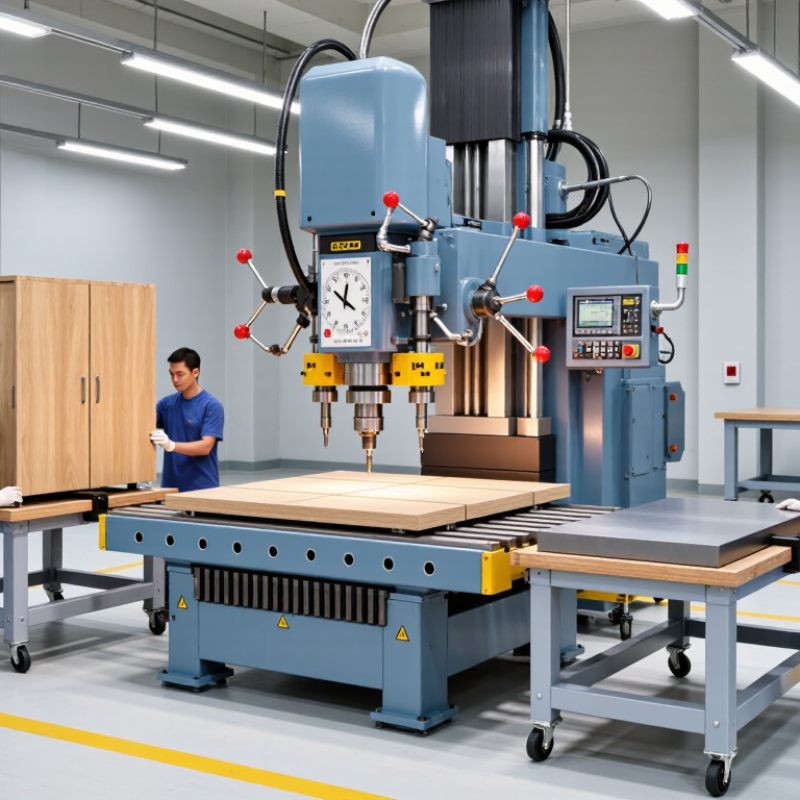
How to Choose a Multi Hole Drilling Machine?

Identify the Workpieces and Hole Patterns to Be Drilled

How to Choose a Multi Hole Drilling Machine?

Identify the Workpieces and Hole Patterns to Be Drilled

Start with the actual parts, not the machine catalog. Record each workpiece’s material, thickness, length, and clamping surface. A softwood panel behaves differently from an aluminum plate, even when both need matching holes. Note whether parts arrive flat, curved, or with finished edges that must not be marked. Measure hole diameters, spacing, edge distance, and depth. A simple drawing helps. So does a sample part.

Then check the pattern across several pieces. Are holes repeated in one straight row, mirrored on both sides, or grouped at uneven intervals? A multi-spindle setup can drill several positions at once, but only if its layout matches the part. Consider whether patterns change between batches. Adjustable heads may suit varied work, while fixed spacing can be faster for steady production. Clamp clearance is easy to overlook: the pattern may fit, yet leave too little room to load the workpiece. It is a practical detail worth checking.

Tips: Mark hole centers on a real workpiece and test the setup before choosing a machine. Check tool access, clamp positions, and chip removal. Bring more than one sample if dimensions vary. If the drawing is still changing, allow room for adjustment. It may take extra time now, but can help prevent rework later.

Determine Required Capacity, Spindle Layout, and Hole Spacing

How to Choose a Multi Hole Drilling Machine?

Choosing a multi-hole drilling machine starts with the workpiece, not the machine’s maximum spindle count. Measure the largest panel, note its thickness, and estimate the smallest batch you expect to run. Then calculate the holes per part and your usual daily output. Allow room for setup changes and new jobs; a machine sized exactly for today may become a bottleneck. Not every shop needs more speed. Check the clamp.

Next, map each hole center from a clear reference edge. Compare that layout with the spindle head’s adjustment range, spindle spacing, and drill diameter. A fixed layout can be efficient for repeat parts, while adjustable spindles suit changing patterns but may take longer to set. Confirm that the required spacing can be held across the full workpiece, not just near the center. Small errors matter. It is easy to focus on spindle count and overlook access for loading, clamping, or changing tools. Before choosing, test a representative part and inspect the hole positions, edges, and finish. Recheck the layout after setup; a drawing can look precise while a real panel reveals an awkward clamp or an unreachable hole.

How to Choose a Multi Hole Drilling Machine? - Determine Required Capacity, Spindle Layout, and Hole Spacing

Use this comparison as an initial planning guide. Drilling capacities are indicative for low-carbon steel with suitable tooling; actual limits depend on material, drill type, spindle power, feed, and duty cycle.

Typical Configuration Indicative Drill Diameter in Low-Carbon Steel Common Spindle Layout Indicative Adjustable Hole Pitch Suitable Work What to Confirm Before Selection
Compact, 2–3 spindles About 3–10 mm One straight row; fixed or adjustable spindle positions Approximately 20–100 mm center-to-center Small plates, brackets, and repeated hole patterns with modest production volume Minimum spindle spacing, workpiece clamping area, and whether the machine can drill all holes in one cycle
General-purpose, 4–6 spindles About 3–13 mm Single row, or two rows where the head design permits Approximately 25–150 mm center-to-center Flanges, mounting plates, and medium-sized parts with recurring patterns Maximum drilling depth, spindle speed range, and available adjustment for each required hole position
Production, 8–12 spindles About 3–12 mm per spindle, subject to simultaneous-load limits One or more rows; common patterns may use a dedicated multi-spindle head Approximately 30–200 mm center-to-center, depending on layout High-volume components with several holes drilled in the same operation Total motor power and torque, chip clearance, coolant access, and whether all spindles can cut at once
High-output, 16–24 spindles About 3–10 mm per spindle; smaller diameters may be needed for dense simultaneous drilling Multiple rows or a custom pattern-specific head Often about 25–150 mm; dense patterns may require a purpose-designed head Large batches of parts with a stable, repeatable hole pattern Power per spindle, head rigidity, fixture repeatability, tool-change access, and total cycle time
Custom pattern or mixed operation Set by the largest required hole and the combined cutting load Custom spindle coordinates; drilling and tapping may be combined if designed for the process Defined from the part drawing; confirm minimum and maximum center distances Parts with non-standard spacing, different hole sizes, or a specialized production sequence Provide hole coordinates, tolerances, material, thickness, annual volume, and required cycle time for engineering review

Hole pitch is the center-to-center distance between holes. Fixed-pitch heads are generally suited to stable, repeated patterns; adjustable layouts offer more flexibility but should be checked for spacing limits and setup time.

Compare Machine Types, Controls, and Tooling Options

How to Choose a Multi Hole Drilling Machine?

Machine types suit different hole patterns and production needs. A fixed multi-spindle head drills several holes at once, making repeatable layouts faster. It works well when spacing stays constant. For frequent pattern changes, a CNC machine can reposition between holes, but setup and programming may take longer. Gang drilling stations offer another option: parts move from one drilling stage to the next. Check whether that workflow matches your batch size and floor space.

Controls affect consistency and operator workload. Basic manual controls can be practical for simple jobs, though results depend more on careful setup. PLC-based systems coordinate feed and cycle timing. CNC controls add programmable positions and can reduce changeover time across varied parts. Ask how settings are stored and how errors are displayed. A clear screen helps. It is still worth testing a real part; a polished interface cannot compensate for a weak fixture.

Tooling matters as much as the machine. Match spindle count and spacing to the drawing, then choose drills suited to the material and hole depth. Guide bushings can help keep drills aligned, while a rigid fixture prevents the workpiece from shifting under feed pressure. Coolant access and chip clearance also deserve attention, especially with deep holes. Compare maintenance access and replacement-tool availability. One detail is easy to overlook: a machine built for speed may be a poor fit if each new part needs extensive adjustment.

Evaluate Accuracy, Safety, Power, and Maintenance Needs

How to Choose a Multi Hole Drilling Machine?

Accuracy starts with the holes your work actually requires. Check the specified spacing, diameter, and depth, then compare them with the machine’s adjustment range. A rigid table and secure workpiece stops help keep repeated holes aligned. Small errors compound. Before buying, drill a sample piece and measure the spacing with calipers. A specification sheet can look reassuring, but a real test reveals vibration and setup limits.

Safety deserves equal attention. Look for suitable guards, a clearly placed emergency stop, and clamps that hold stock firmly. Keep hands clear. Never rely on holding a workpiece by hand, especially when several bits engage at once. Consider how easily operators can adjust the machine without reaching near moving parts. A safer setup may take slightly longer; that trade-off is worth considering.

Match motor power and spindle speed to your materials and workload. Dense stock or frequent production may need stronger torque and a motor rated for sustained use. Ask whether the machine supports the feed rate your process needs. Also check routine maintenance: lubrication points should be accessible, and belts, bearings, and chips should be easy to inspect or clear. Record alignment checks and unusual noise. I would not skip them, even when the machine seems to run smoothly.

Match the Machine to Your Budget and Production Volume

How to Choose a Multi Hole Drilling Machine?

Match the Machine to Your Budget and Production Volume

A multi hole drilling machine should fit the work you actually run, not an optimistic sales forecast. Estimate holes per part, daily batches, changeover frequency, and available operator time. A compact manual or semi-automatic machine may suit short, varied runs. For repeat orders, compare automatic feeding, spindle count, and cycle time against the extra purchase and maintenance costs. More spindles are not automatically better.

Build a simple cost-per-part estimate. Include tooling, setup labor, electricity, coolant, maintenance, and downtime—not just the quote. The U.S. Department of Energy’s 2014 motor-systems sourcebook reports that motor-driven systems use about 54% of electricity in U.S. manufacturing; this is a sector-wide figure, not a machine-specific prediction. Still, it supports checking motor efficiency and idle-running habits. Staffing matters, too. The 2024 Deloitte and Manufacturing Institute workforce report projects 3.8 million manufacturing jobs may be needed by 2033, with 1.9 million potentially unfilled. If skilled operators are hard to retain, simpler controls and reliable workholding may justify added cost. Run sample parts before committing. Measure hole position, cycle time, and tool wear across a realistic shift. Estimates can be wrong. A supplier’s best-case cycle time may not survive your actual material, fixtures, or changeovers.

AVADA IT

Fusce ut ipsum tincidunt, porta nisl sollicitudin, vulputate nunc. Cras commodo leo ac nunc convallis ets efficitur.

RECENT TWEETS

CONTACT US

  • 12345 North Main Street,
    New York, NY 555555

  • 1.800.555.6789

  • sale@vibrotools.com

Go to Top