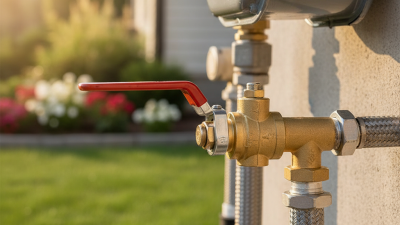
Choosing the right water shut off valve in 2026 is a small decision with serious consequences. A reliable valve can stop a burst pipe before water reaches flooring, cabinets, or electrical equipment. A poor choice may corrode, seize, or fail when your hand is already wet.
Plumbing expert Richard Trethewey has long emphasized a practical rule: “Know where your water shutoff is before you need it.” That advice applies directly to valve selection. The best water shut off valve must match your pipe material, connection size, pressure rating, and installation location. A quarter-turn ball valve often provides fast operation and clear visual positioning. Gate valves can work in older systems, but they may become stiff after years without movement. Check the details.
Material matters, too. Brass offers strength and broad compatibility, while stainless steel can provide stronger corrosion resistance in demanding environments. Plastic valves may suit selected applications, but they require careful checking for temperature and pressure limits. Indoor and outdoor conditions are not identical.
Installation space deserves attention. A valve hidden behind a packed cabinet is technically accessible, yet practically useless. Leave room for a hand, a wrench, and a flashlight. Test the valve gently after installation, then inspect it periodically. No product is perfect. Even a premium valve can fail when neglected. This guide examines the features, mistakes, and real-world trade-offs that help homeowners and professionals choose with greater confidence.
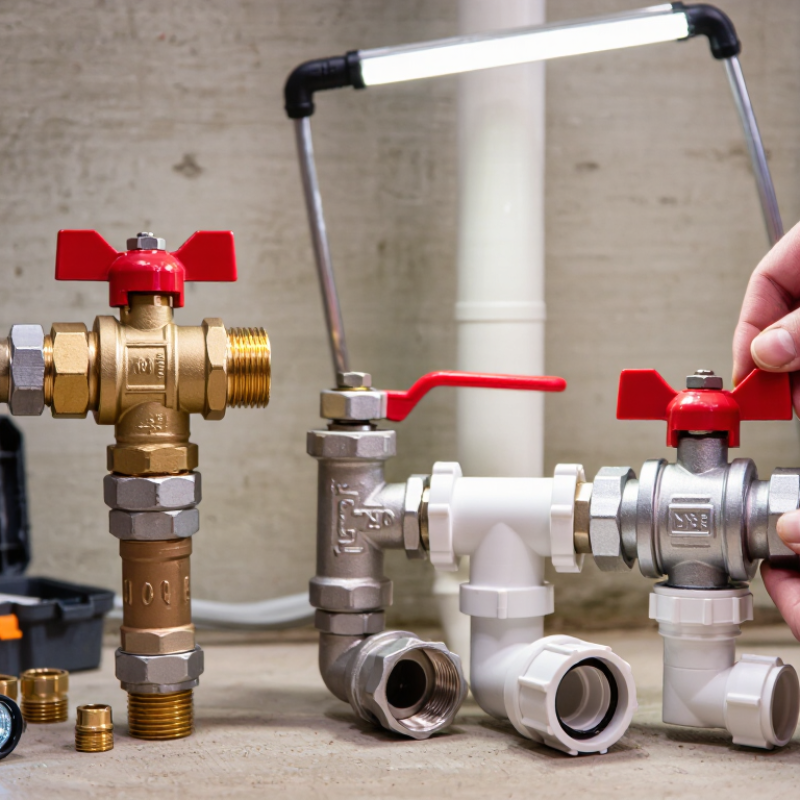
EPA estimates that nearly 1 trillion gallons of water are lost through leaks each year. That figure is national, but the warning begins under your sink. A toilet valve that drips overnight can waste water silently for weeks. A loose hose connection may leave a dark crescent on the cabinet floor. Before choosing a valve, identify the leak risk, pipe size, pressure, and access space. The right shutoff must stop flow quickly and remain reachable.
For a sink, a quarter-turn angle valve is usually practical. It provides fast isolation during a burst supply line. For a main service line, select a valve rated for the system’s pressure and pipe material. Check connection standards, temperature limits, and corrosion resistance. Do not rely on appearance alone. A heavy handle does not prove dependable sealing. A licensed plumbing professional can verify sizing and installation, especially in older homes. Local requirements may also affect placement and backflow protection.
Test the valve twice a year by closing it slowly, then reopening it fully. Watch for seepage around the stem and joints. It should move without forcing. If it sticks, waiting is risky. Label the valve with its fixture or zone. That small note can save minutes during a nighttime leak. Automatic shutoff systems can help, but batteries and internet connections can fail. A simple manual valve may still be the most reliable backup. I once assumed any new valve improved safety. That was too simple; compatibility and regular testing matter more.
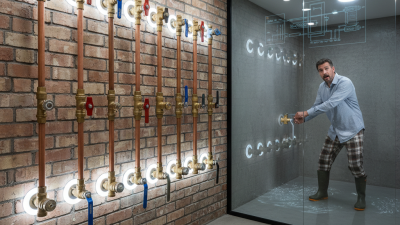
How to Choose the Right Water Shut Off Valve in 2026?
Match Valve Types to Applications Using AWWA C509 and C515 Standards
Valve selection should begin with the application, not the price tag. AWWA C509 covers resilient-seated gate valves for general water supply service. AWWA C515 addresses reduced-wall gate valves where space, weight, and installation access matter. Both standards address pressure ratings, materials, testing, and performance requirements. Check the project pressure first. Then confirm the connection size, operating method, burial depth, and water chemistry. Field conditions rarely match the drawing.
The U.S. Environmental Protection Agency’s 7th Drinking Water Infrastructure Needs Survey and Assessment estimates $625 billion in drinking water infrastructure needs from 2021 through 2040. That scale makes dependable shutoff equipment more than a purchasing detail. A properly selected C509 valve may suit a large transmission main with demanding structural requirements. A C515 valve can be practical for distribution networks with tighter installation limits. Not every reduced-wall design fits every site. That is where some specifications become unclear. Engineers should review manufacturer test records, coating requirements, torque data, and installation guidance before approval. AWWA’s State of the Water Industry reports also continue to identify aging infrastructure and workforce shortages as major sector concerns. Simple maintenance access matters. Leave room for operation, inspection, and future replacement. Performance on paper is useful, but field verification is better.
How to Choose the Right Water Shut Off Valve in 2026?
A potable-water valve must protect water quality, not only stop flow. Look for current NSF/ANSI/CAN 61 certification for the complete valve or each wetted component. This standard evaluates material extraction and potential health effects under defined use conditions. A valve marked “lead-free” may satisfy lead-content rules, yet lack NSF/ANSI 61 certification. These are different checks.
The need is practical. In 2024, the U.S. Environmental Protection Agency estimated about 9.2 million lead pipes and service lines nationwide. The agency also strengthened replacement requirements through its Lead and Copper Rule Improvements. That pressure makes material verification more important during repairs and upgrades. Check the certification listing, product scope, pressure rating, temperature range, and connection material. A certificate can be misread. I have seen specifications copied without confirming whether the listed model included the actual seal or coating. That small detail deserves another look.
Tips: Ask for the certification record, not only a printed logo. Confirm NSF/ANSI/CAN 61 coverage for potable-water contact. Review NSF/ANSI/CAN 372 separately for lead-content compliance. Keep the approval document with the project file. Local plumbing rules may add requirements, so confirm them before installation. WHO guidance also emphasizes that lead exposure should be minimized, especially for children. Water safety is rarely improved by guessing.
Verify Potable-Water Materials Under NSF/ANSI 61 Certification Requirements
Choosing the right water shutoff valve starts with pressure, not handle shape. A valve must match both static pressure and working pressure. Pressure spikes matter.
The 2024 International Plumbing Code limits building water pressure to 80 psi before pressure reduction is required. However, local plumbing authorities may adopt stricter limits or amendments. Check the adopted code, permit notes, and utility requirements before selecting a valve. Do not assume the national model code applies unchanged.
ASSE 1001 needs careful reading. It covers atmospheric-type vacuum breakers, not ordinary shutoff-valve pressure ratings. If the valve assembly includes a vacuum breaker, verify its ASSE 1001 compliance, installation position, and local backflow requirements. Mixing these standards is a common mistake. I have seen specifications that list ASSE 1001 as proof of pressure capacity. That interpretation is weak.
Measure pressure with a gauge during quiet periods and peak demand. Then compare the reading with the valve’s marked maximum working pressure, allowing for sudden surges. EPA WaterSense reports that household leaks waste more than 9,000 gallons yearly, while nationwide losses approach 1 trillion gallons. Those figures do not prove a valve will fail, but they show why small defects deserve attention. Recheck pressure after installation; the first reading is not always representative.
How to Choose the Right Water Shut Off Valve in 2026?
A valve should match the building’s pressure, pipe material, and access conditions. In maintenance work, I inspect the handle, stem, and connection before comparing prices. A low purchase price can hide extra adapters, wall repairs, or emergency labor. Measure twice.
Service life matters, but published years are only estimates. Ask for tested cycle results, not vague claims such as “built to last.” A cycle usually means opening and closing under defined conditions. Check the test pressure, water temperature, load, and failure criteria. Those details change the meaning of the number. A valve rated for 10,000 cycles may not perform similarly in a hard-water apartment.
Warranty terms deserve the same attention. Confirm coverage length, proof-of-purchase rules, labor exclusions, and replacement procedures. A five-year parts warranty may offer little help if removal requires opening tile. Keep the installation receipt and inspection photos. Small records can prevent large disputes.
Calculate total installation cost before choosing. Include the valve, fittings, isolation equipment, labor, access panels, disposal, and leak testing. I once selected a compact valve to save space, then paid more for difficult tool access. That shortcut was not clever. Leave room for a wrench, label the shutoff clearly, and test it after installation. A cheaper valve can be reasonable in a dry utility room, but a frequently used main shutoff deserves stronger cycle evidence and easier servicing.
| Valve Type | Typical Residential Use | Common Size | Typical Pressure Rating | Typical Temperature Range | Expected Service Life | Representative Tested Cycles | Typical Warranty Range | Estimated Total Installed Cost | Best Selection Criteria |
|---|---|---|---|---|---|---|---|---|---|
| Quarter-Turn Ball Valve | Main supply lines, branch lines, water heaters, and equipment isolation | 1/2 to 2 in. | 125 to 600 psi, depending on material and connection | 32°F to 180°F for common potable-water designs | 15 to 30 years in normal indoor service | About 5,000 to 25,000 on-off cycles for tested designs | 5 to 10 years is common; varies by product and application | US$175 to US$450 for a typical accessible residential replacement | Best general-purpose choice when quick shutoff, low maintenance, and full flow are important |
| Gate Valve | Older main lines and applications requiring low pressure drop when fully open | 1/2 to 4 in. | 125 to 300 psi for common plumbing models | 32°F to 180°F for typical potable-water models | 10 to 25 years; poor operation can shorten life | About 1,000 to 10,000 cycles, depending on stem and wedge construction | 1 to 10 years is typical | US$250 to US$650, especially when replacement requires pipe cutting | Suitable for infrequent operation; not preferred where regular throttling or fast shutoff is required |
| Globe Valve | Flow regulation and equipment isolation where throttling is needed | 1/2 to 2 in. | 125 to 300 psi for common plumbing configurations | 32°F to 180°F for standard water-service models | 10 to 20 years in properly maintained service | About 1,000 to 10,000 cycles | 1 to 10 years is typical | US$225 to US$600 | Choose when controlled flow matters more than minimum pressure loss |
| Butterfly Valve | Large-diameter mains, risers, tanks, and commercial water systems | 2 to 24 in. and larger | 125 to 300 psi for common resilient-seated designs | 32°F to 180°F for many water-service models | 15 to 30 years with periodic inspection | About 5,000 to 20,000 cycles for tested resilient-seated designs | 1 to 10 years is typical | US$500 to US$2,000 for common commercial installations | Most cost-effective for larger pipe sizes where compact installation is valuable |
| Angle Stop Valve | Toilets, sinks, faucets, dishwashers, and other individual fixtures | 3/8 in. outlet with 1/2 in. inlet is common | Typically 125 to 150 psi | 32°F to 180°F, depending on the seal material | 8 to 20 years under normal fixture use | About 5,000 to 10,000 cycles for tested quarter-turn models | 1 to 10 years is typical | US$120 to US$300 per accessible fixture valve | Choose quarter-turn construction for frequent maintenance access and quick emergency shutoff |
| Compression Stop Valve | Fixture connections where soldering or threaded work should be avoided | 3/8 to 1/2 in. | Typically 125 to 150 psi | 32°F to 180°F for standard potable-water products | 8 to 15 years, depending on water quality and installation | About 1,000 to 5,000 cycles | 1 to 5 years is typical | US$100 to US$250 per accessible fixture valve | Useful for simple retrofits; verify that the existing pipe is round, clean, and undamaged |
© Copyright 2025 | LittleFirefighter.com | All Rights Reserved | 1EZ Creative: Orange County Web Design

Fusce ut ipsum tincidunt, porta nisl sollicitudin, vulputate nunc. Cras commodo leo ac nunc convallis ets efficitur.

12345 North Main Street,
New York, NY 555555
1.800.555.6789
sale@vibrotools.com