
Urban land is becoming more valuable, while vehicle ownership continues to pressure limited parking space. The United Nations projects that nearly 68% of the world’s population will live in urban areas by 2050. This trend makes vertical parking increasingly relevant for apartments, offices, hotels, and transport facilities.
Electric mobility adds another layer of complexity. The International Energy Agency reported that global electric car sales exceeded 14 million in 2023, with China, Europe, and the United States leading adoption. An Electrical Parking Lift must therefore support more than vehicle storage. Buyers should examine electrical capacity, charging compatibility, platform dimensions, noise levels, drainage, emergency lowering, and maintenance access.
Small details matter.
A lift installed in a coastal garage may face corrosion, humidity, and salt exposure. A basement system may require careful attention to ceiling height, ventilation, fire protection, and water drainage. Local building codes and recognized safety standards, such as EN 14010 or applicable ASME requirements, should guide the technical review. Requirements vary by country, so a supplier’s certificate alone may not prove local compliance.
The following ten buying tips focus on practical decisions that global buyers often underestimate. Total cost includes installation, inspection, spare parts, downtime, and electricity consumption. A low purchase price can become expensive after repeated service visits. Catalog images also hide weaknesses. They do not show platform movement, control-panel usability, or recovery procedures during a power failure.
That is the uncomfortable part.
No single lift suits every site. Buyers should compare verified load tests, warranty terms, factory quality records, and local service capability before signing a contract. A careful, evidence-based purchase protects safety, investment value, and daily convenience.
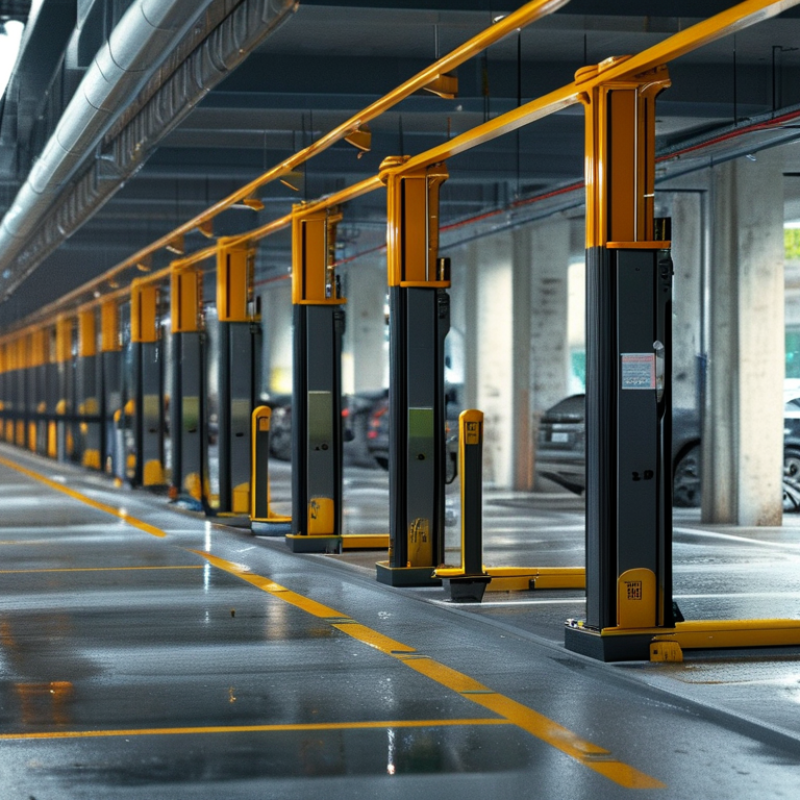
Before comparing an electrical parking lift, define the vehicles it must serve. Record each vehicle’s length, width, height, wheelbase, and weight. Do not rely on catalog averages. A family SUV can exceed a compact car’s height by several hundred millimeters. Measure the tallest vehicle with roof rails installed. Small details matter.
Inspect the proposed installation area carefully. Measure ceiling height, doorway width, turning space, and the distance from nearby walls. Leave room for doors, mirrors, drainage, and routine maintenance. Check the floor slab’s thickness and condition with a qualified structural professional. Electrical capacity also needs confirmation. The lift may require a dedicated circuit, suitable protection, and reliable grounding. Local electrical and building requirements should guide the design.
Think about daily operation, not only maximum capacity. Will drivers park at night? Is lighting adequate? Can users safely reach the controls? Consider water, dust, temperature, and possible flooding in the garage. A lift installed near a drain may need additional protection. I have seen planning errors caused by measuring the vehicle but ignoring the driver’s walking path. That mistake is easy to repeat. Recheck every dimension on site, preferably with the vehicles present. Record measurements in writing and allow practical clearance, because a design that fits on paper may feel cramped in real use.
| No. | Buying Dimension | What to Check | Practical Benchmark or Data | Recommended Action |
|---|---|---|---|---|
| 1 | Define the number of vehicles | Confirm how many vehicles must be stored, whether they will be parked simultaneously, and whether the system is intended for private, residential, commercial, or public use. | A two-level lift generally creates one additional parking position above the floor-level position. Higher-capacity systems require more structural and operational planning. | Prepare a vehicle inventory and calculate the required number of parking spaces before comparing lift models. |
| 2 | Measure the available footprint | Measure clear length, width, columns, walls, doors, ramps, drainage channels, and the access route into the installation area. | Passenger-car parking spaces are commonly planned at approximately 2.4–2.7 m wide and 4.8–5.5 m long, but local codes and the selected lift platform determine the final requirement. | Measure the usable area, not the nominal room size, and add clearance for doors, controls, and vehicle alignment. |
| 3 | Verify total height and lifting clearance | Check ceiling height, beams, lighting, sprinklers, ventilation ducts, garage doors, and the height of the vehicle on the upper platform. | Required height varies with vehicle height and lift design. A compact car may be about 1.5 m high, while SUVs and vans can exceed 1.8 m; the platform must also provide safe overhead clearance. | Measure from the finished floor to the lowest obstruction and compare it with the lift supplier’s minimum ceiling-height requirement. |
| 4 | Match platform size to the vehicle fleet | Compare platform length and width with the longest, widest, and highest vehicles, including mirrors, roof rails, spoilers, and accessories. | Typical passenger vehicles range from approximately 1.7–2.0 m in body width and 4.0–5.3 m in length, excluding certain commercial vans and specialist vehicles. | Use the largest intended vehicle as the design reference and maintain the manufacturer’s stated edge and wheel-position clearances. |
| 5 | Confirm rated load capacity | Check the maximum permitted vehicle mass, axle-load distribution, loading position, and whether the rating includes accessories or stored cargo. | Many passenger-car lifts are offered in capacity classes around 2,000–3,500 kg, while heavier vehicles require equipment specifically rated for that load. | Select a rated capacity above the heaviest planned vehicle and never rely on average vehicle weight. |
| 6 | Assess electrical compatibility | Review supply voltage, frequency, phase configuration, circuit capacity, grounding, isolation, and the electrical regulations in the destination country. | Electrical systems commonly use regional supplies such as 220–240 V or 110–120 V, with 50 Hz or 60 Hz frequency depending on the country. Exact requirements depend on the lift motor and control system. | Have a qualified local electrician verify the supply and install the required protective devices before commissioning. |
| 7 | Check floor strength and foundation conditions | Inspect concrete thickness, compressive strength, cracks, reinforcement, levelness, drainage, and anchoring conditions. | Required foundation specifications differ by lift type, load rating, anchor design, and local construction rules; surface appearance alone cannot confirm suitability. | Obtain the installation drawings and arrange a structural assessment before drilling, anchoring, or placing concentrated loads. |
| 8 | Review safety and access features | Look for mechanical locks, anti-fall protection, emergency stop controls, obstruction detection, overload protection, non-slip surfaces, and controlled descent. | Safety functions should prevent unintended lowering and should remain effective during power interruption. Emergency procedures must be available to operators. | Request the complete safety-function list, operating instructions, inspection schedule, and conformity documents for the destination market. |
| 9 | Plan traffic flow and operating time | Determine how often vehicles will enter and exit, whether the upper position must be accessed first, and whether queues or shared access lanes are possible. | A lift may increase parking density but can reduce convenience when one vehicle blocks another. Frequent commercial use places greater demands on controls, duty cycle, and maintenance. | Map the entry, exit, turning, and waiting areas, then choose a layout that suits the actual daily parking sequence. |
| 10 | Budget for installation and lifecycle costs | Include transport, unloading, foundation work, electrical installation, permits, commissioning, inspections, spare parts, and periodic maintenance. | Total ownership cost is more than the equipment price. Local labor, taxes, standards, site preparation, and service availability can materially change the final budget. | Request a site-specific quotation with a clear scope of supply, warranty terms, maintenance intervals, response times, and excluded costs. |


© Copyright 2025 | LittleFirefighter.com | All Rights Reserved | 1EZ Creative: Orange County Web Design