
Buying Viscose Filament is not just a matter of choosing a glossy yarn. The right grade must suit the fabric, machine, and end use.
Global fiber figures show why careful sourcing matters. Textile Exchange’s Materials Market Report 2024 estimates global fiber production at 124 million tonnes in 2023. It places man-made cellulosic fibers, including viscose, at roughly 7.2 million tonnes. That is a broad category, not a measure of filament supply. A useful distinction. Filament availability and specifications vary by producer and market.
Buyers should compare denier, filament count, tenacity, elongation, luster, and finish against actual production needs. A sample cone can reveal uneven sheen, fuzz, or winding trouble before a large order arrives. Ask for current technical data sheets, test methods, tolerances, and lot-to-lot records. When sustainability claims matter, request traceability documents and check what each certificate covers. Textile Exchange’s standards and reporting resources can help frame those questions, but they cannot verify every shipment. That part needs checking.
Price deserves scrutiny too: a low quote may exclude testing, packaging, or consistent shade control. A polished sample is not always a reliable forecast. This guide sets out seven practical checks, from confirming fiber specifications to assessing supplier communication and delivery consistency. No single checklist replaces a trial run. A small production test may expose friction, breakage, or dye variation that a brochure cannot show. The goal is a sound purchase decision, with evidence in hand and assumptions clearly marked.
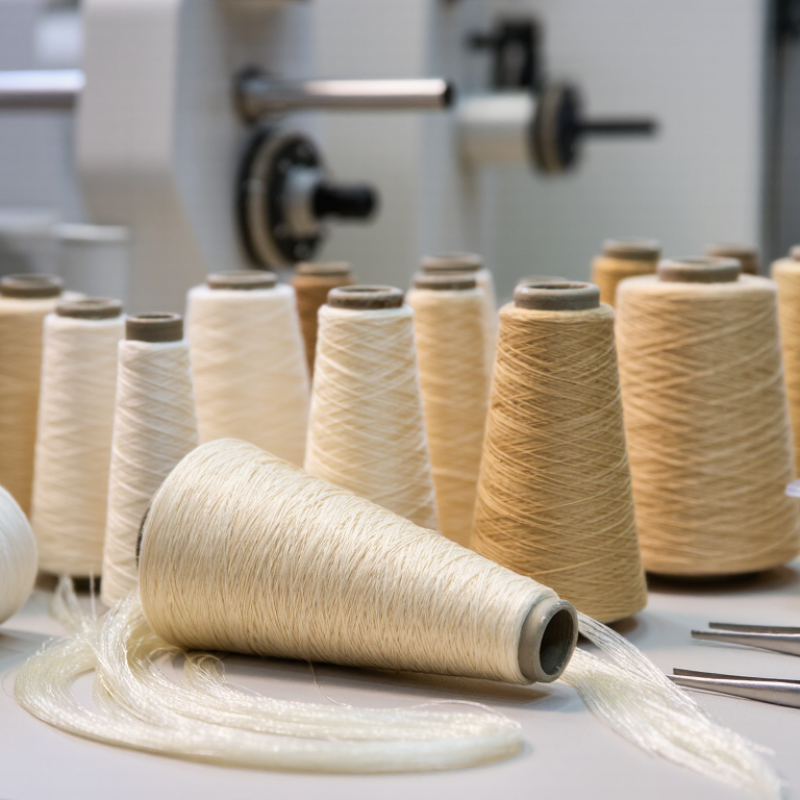
Viscose filament is a continuous regenerated-cellulose yarn, unlike staple viscose, which is spun from short fibers. Filament yarns may be bright, semi-dull, or dull, depending on their finish and intended appearance. They also vary in denier, filament count, and twist. These details affect drape, surface shine, strength, and how fabric behaves during sewing.
Applications range from flowing dresses and blouse fabrics to linings and lightweight scarves. Bright filament can create a smooth, lustrous surface; duller options suit a quieter look. Textile Exchange’s Materials Market Report 2024 estimates global man-made cellulosic fiber production at about 7.9 million tonnes in 2023. That figure includes several fiber types, not viscose filament alone, so it shows market scale rather than filament demand.
Tip: Match yarn specifications to the fabric, not just the sample’s shine. Check denier, filament count, twist, and finish, then request a trial lot. A tiny swatch can mislead. I would test the yarn after washing and sewing, too; that step is easy to overlook.
| Type or Specification | Typical Characteristics | Common Applications | What to Check Before Buying |
|---|---|---|---|
| Bright filament | A lustrous appearance created by using little or no delustrant in the filament. | Shiny apparel fabrics, decorative textiles, linings, and embroidery yarns. | Confirm the desired sheen using a sample, since fabric construction and lighting affect the appearance. |
| Semi-dull filament | A moderate luster that is less reflective than bright filament. | Apparel fabrics, blouses, dresses, scarves, and blended woven or knitted fabrics. | Ask for the finish description and compare a sample with the intended fabric design. |
| Full-dull filament | A subdued, matte appearance, generally produced with a higher level of delustrant than bright grades. | Matte-finish apparel, linings, and textiles where a less shiny surface is preferred. | Check shade and surface appearance under the lighting conditions relevant to the finished product. |
| Continuous filament yarn | Made from continuous filaments rather than short staple fibers; available in different filament counts and yarn sizes. | Woven and knitted fabrics, including apparel and some furnishing fabrics. | Specify yarn size, number of filaments, and whether the yarn is intended for weaving or knitting. |
| Twisted or plied filament yarn | Filaments or yarn ends are twisted together; twist level affects yarn character and processing behavior. | Woven fabrics, knitting, decorative applications, and other uses requiring a specified yarn construction. | Confirm the number of plies and twist direction or level where these are important to the process. |
| High-tenacity viscose rayon filament | A specialized filament grade made for higher strength requirements than regular textile grades; performance depends on the specified grade and test conditions. | Selected technical and industrial textile uses where the required strength is specified. | Request documented tensile properties and test methods; do not assume values from a general apparel-yarn specification. |
| Colored or dope-dyed filament | Color is introduced during fiber production for dope-dyed grades; availability and colorfastness depend on the grade and process. | Colored apparel and decorative fabrics where a specified shade is needed. | Confirm shade standards, lot consistency, and relevant colorfastness requirements with test data. |
| Buying note: Viscose filament properties vary by yarn size, construction, finish, and grade. Confirm the intended end use, request a representative sample, and compare the supplier’s specification with your processing and testing requirements. | |||
When buying viscose filament, start with the job it must perform. A smooth, lightweight scarf needs a different yarn from a tightly woven lining or decorative cord. Check filament fineness, usually listed in denier, and compare it with the fabric weight you want. Finer filaments can create a soft, fluid surface, but they may need careful handling during weaving. Ask for elongation and breaking-strength data, too. Numbers help, but they do not replace a trial. Feel a sample. Look closely.
The finish matters as much as the fiber. A filament may be bright or dull, twisted or untwisted, and those choices affect sheen, drape, and processing. If the fabric will be dyed, ask how the yarn responds to your planned dyeing conditions; shade consistency can vary between lots. Check shrinkage and dimensional stability after washing, especially for garments or home textiles. A small test run is worth the extra time. I would also compare samples under the actual machine settings, not just under showroom lights. That step is easy to skip, and sometimes a sample behaves differently at production speed. Keep the specification sheet and lot details with your order.
A specification sheet is useful only when its figures match the yarn you will actually receive. Check denier, filament count, tenacity, elongation, and any stated finish. Compare the test methods too; two suppliers may report similar numbers using different conditions. Ask for acceptable tolerances, not just target values. Small differences matter.
Request samples from more than one production lot when consistency is important. Lay the packages side by side under neutral light and compare shade, winding density, and package weight. Then unwind a few meters from each. Watch for snarls, uneven tension, or broken filaments. In a receiving check, record the lot number and measurements, so later problems can be traced to a specific shipment. Keep the results simple and repeatable. A basic checklist beats memory.
It is easy to focus too much on one impressive strength figure. I would also ask how the supplier controls variation between lots and what happens when a result falls outside tolerance. The answer may reveal more than a polished sample. Still, a small test cannot predict every production issue. Check your own equipment and process before rejecting a batch; sometimes the yarn is not the only variable.
Textile Exchange’s Materials Market Report 2024 estimates global fiber production reached 124 million tonnes in 2023, including about 7.9 million tonnes of manmade cellulosic fibers. That scale makes traceability worth checking. Ask for mill details, pulp origin, batch records, and current chain-of-custody documents. FSC or PEFC certification can support responsible-forestry claims, but it does not prove filament performance. Ask for the paperwork.
OEKO-TEX Standard 100 tests textile products for specified harmful substances; it is not proof of lower environmental impact. Request the certificate scope and expiry date. Then compare technical data sheets for denier, tenacity, elongation, and moisture regain. Suppliers may use different test methods, so confirm that results are comparable.
Test them on your own equipment, not only by touch. Check package unwinding, tension, breakage, dye uptake, and fabric appearance. Ask whether sample lengths and trial quantities are available, and record lot numbers. A small swatch can look excellent while behaving poorly at machine speed. That is easy to miss. Keep notes, and ask how the supplier handles a failed trial.
A low price per kilogram can hide costly differences. Compare viscose filament offers by denier, filament count, lustre, twist, and package weight. Ask whether quoted prices include packing, testing, and inland transport. Convert each offer into a delivered cost per usable kilogram, not just a mill-gate rate. Small lots cost more. The surcharge may come from custom dyeing, winding, or a production run below the mill’s efficient batch size.
Minimum order quantities need careful reading. Confirm whether the minimum applies per color, specification, or total order, and ask how much extra stock may remain after production. Textile Exchange’s Materials Market Report 2024 estimates global fiber production reached 124 million tonnes in 2023, including about 7.9 million tonnes of man-made cellulosic fibers. That figure covers a broad fiber category, not viscose filament alone, so it gives market context rather than a filament price benchmark. Request a recent sample and check it under your actual knitting or weaving conditions.
Delivery terms can change the comparison. Record the named delivery point, shipment method, lead time, and responsibility for freight and insurance. Ask when the lead-time clock starts: order confirmation, deposit, or sample approval. A promised four-week dispatch is less useful if approval takes ten days. Request milestone dates and written notice of partial shipments. I have seen buyers overlook this detail; it is easy to do. Keep a small buffer for inspection and transit delays, but avoid ordering excess stock without checking storage and color-lot risks.
Compare pricing, minimum orders, and delivery terms before choosing a supplier.
How to use this chart: The bars count the seven tips by topic; they are not supplier benchmarks. Compare written quotations for price basis, minimum order quantity, lead time, shipping terms, and other conditions.
© Copyright 2025 | LittleFirefighter.com | All Rights Reserved | 1EZ Creative: Orange County Web Design

Fusce ut ipsum tincidunt, porta nisl sollicitudin, vulputate nunc. Cras commodo leo ac nunc convallis ets efficitur.

12345 North Main Street,
New York, NY 555555
1.800.555.6789
sale@vibrotools.com
