
A Fuse Terminal Block combines two jobs inside a control panel: it connects a conductor and holds a replaceable fuse in series with the circuit. If current exceeds the fuse’s rated limit long enough, the fuse element melts and opens the circuit. The small component can make a large difference. But it cannot correct poor wiring, incorrect fuse selection, or loose terminals.
NFPA’s 2022 report Electrical Fires, by researcher Marty Ahrens, estimated 46,700 U.S. home fires annually involving electrical failure or malfunction during 2015–2019. The report does not attribute those fires specifically to fuse terminal blocks. Still, it shows why sound electrical protection and installation deserve careful attention. IEC 60947-7-3 sets safety requirements for fuse terminal blocks, giving engineers a relevant technical reference when evaluating products.
A useful engineering principle is: “Make the protection rating clear, and make the connection secure.” This is practical guidance, not a verified quotation from a named industry expert. In real panels, designers check voltage and current ratings, conductor size, fuse characteristics, available fault current, and heat buildup. They also leave enough space to inspect or replace a fuse safely. Small details matter. A terminal that looks firmly seated may still be loose, and a fuse that fits physically may not be suitable electrically. This guide explains what a Fuse Terminal Block does, how current flows through it, and what to check before selecting one.
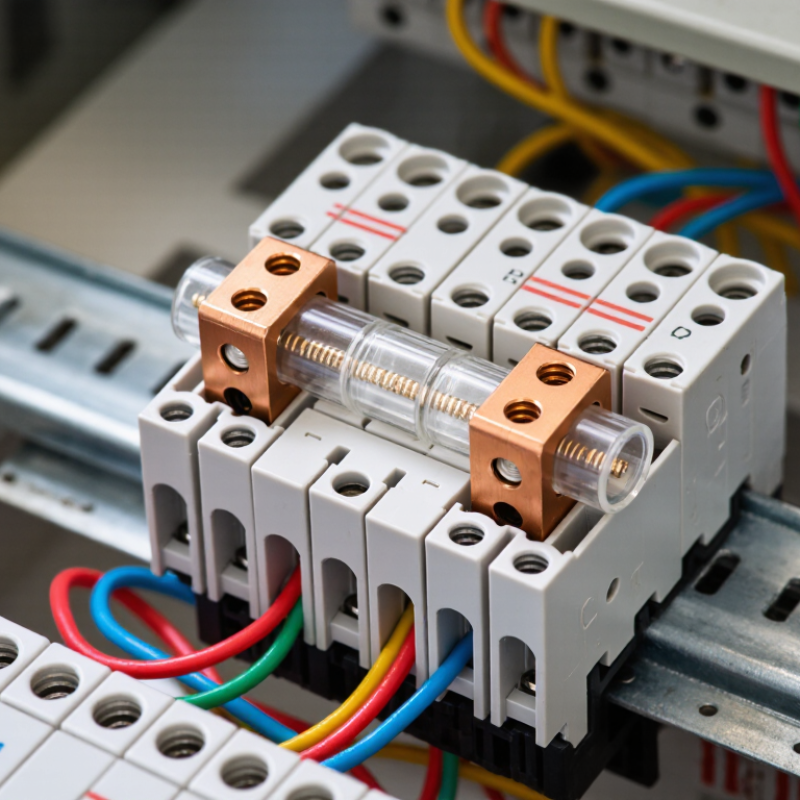
A fuse terminal block combines a wire connection point with a holder for a replaceable fuse. It mounts on a control-panel rail, keeping conductors organized while placing overcurrent protection close to the circuit. Inside, current passes through the fuse element. If current exceeds its rated limit long enough, the element melts and opens the circuit. The load stops receiving power. Simple, but not foolproof: the wrong fuse rating can leave equipment underprotected or cause nuisance interruptions.
NFPA’s 2021 analysis of U.S. data from 2015–2019 estimated an annual average of 32,620 home structure fires involving electrical distribution or lighting equipment. It also reported 430 civilian deaths and $1.3 billion in direct property damage each year. These figures cover many electrical causes; they do not measure fuse-terminal-block performance. Still, they underline why correct protection and secure connections matter. A loose conductor can heat at its terminal, while a correctly selected fuse helps interrupt excess current before wiring is damaged.
Tips: Check the block’s rated voltage, current, wire range, and fuse type against the circuit design. Isolate power before servicing, then inspect for discoloration, loose screws, or a blown fuse. Follow the manufacturer’s torque specification; guessing is not good practice.
A fuse terminal block combines a connection point with a replaceable fuse in one insulated housing. Its housing separates live conductive parts and helps prevent accidental contact. Inside, metal terminals connect incoming and outgoing wires, while clips or a holder grip the fuse. Some models mount on a DIN rail; others use different mounting arrangements.
During normal operation, current flows through one terminal, the fuse element, and the other terminal to the connected circuit. If current exceeds the fuse’s rated limit for long enough, the element melts and opens the circuit. The downstream equipment is then disconnected from that supply. The fuse does not correct the fault, and the block itself is not a substitute for checking wire size or circuit requirements. Details vary by design.
Tips: Match the fuse type and rating to the equipment specifications, and confirm the block’s voltage and current ratings. Before replacing a fuse, isolate power and verify the circuit is de-energized. Look for heat discoloration, loose wiring, or damaged clips; a fuse that repeatedly blows points to a fault worth investigating. Small parts, real consequences. A cramped panel can make a correct inspection harder, so leave enough room to work safely.
In a fuse terminal block, current travels from the incoming conductor into a metal clamp or terminal. From there, it passes through a conductive link to the fuse, then continues through the fuse element and output terminal to the connected load. The fuse sits in series with the circuit, so the load’s current must pass through it. That is the key.
During normal operation, the fuse element carries the circuit’s expected current and warms slightly. If current rises beyond the fuse’s rating for long enough, the element heats and melts, opening the path. A short circuit can make this happen very quickly. The downstream equipment then loses its supply. A small link.
The exact layout varies: some blocks use a removable fuse carrier, while others hold the fuse between spring clips. Loose conductors or weak contact pressure can create heat at the terminals, even when the fuse itself is correctly selected. That detail is easy to overlook. Check the block’s current and voltage ratings, confirm the fuse matches the circuit design, and follow the equipment instructions for conductor preparation and tightening. Before inspection or replacement, isolate power and have a qualified person verify the circuit is de-energized. The path looks simple, but contact points matter.
| Stage or Component | What Happens | Electrical Significance |
|---|---|---|
| Supply-side terminal | The incoming conductor connects the power source to the fuse terminal block. | In a typical DC circuit, conventional current enters from the supply side. Follow the wiring diagram and terminal markings for the specific block. |
| Fuse element | Current passes through the fuse element installed in the holder or fuse carrier. | Under normal operating conditions, the intact element conducts current. The fuse does not regulate or reduce normal current. |
| Load-side terminal | Current leaving the fuse travels through the outgoing conductor to the connected load. | The fuse is connected in series with the circuit it protects, so opening the fuse interrupts the current path to that load. |
| Normal operation | The fuse remains intact while the circuit operates within its designed conditions. | The block provides a connection point and fuse holder; the fuse’s resistance and voltage drop are generally small but depend on the selected fuse and operating current. |
| Overcurrent condition | If current and its duration exceed the fuse’s time-current characteristics, the fuse element heats and melts. | The opened element breaks the circuit and helps limit damage from overloads or short circuits. A fuse may not clear every fault instantly. |
| After the fuse opens | The circuit path through that fuse is interrupted until the cause of the fault is addressed and the fuse is replaced. | Use a replacement with the required current rating, voltage rating, fuse class or type, and interrupting rating specified for the application. Never bypass the fuse. |
| Block selection and installation | The block is selected for the conductor size, mounting method, environment, and compatible fuse format. | Check the block’s rated voltage and current, terminal capacity, wiring instructions, and applicable equipment requirements. De-energize the circuit before installation or servicing. |
A fuse terminal block combines a fuse holder with terminals for connecting conductors. When excessive current flows, heat builds in the fuse element. Once its calibrated limit is exceeded, the element melts and opens the circuit. Simple, but precise.
The resulting gap stops current, while the fuse’s internal construction helps contain or extinguish the arc. Some current-limiting fuses also reduce peak current and let-through energy; performance depends on the fuse type and fault level. Fast, but not magic. NFPA’s Home Electrical Fires report analyzed 2015–2019 data. It estimates 46,700 U.S. home fires yearly involved electrical failure or malfunction. That is not a fuse-failure rate, but it illustrates why correctly selected protection matters.
Tips: Match the fuse’s current and voltage ratings to the circuit and follow the terminal block maker’s instructions. A blown fuse is a clue, not a diagnosis; repeated replacements can hide an overload or fault. Check the cause before fitting a new fuse, and never assume the block is de-energized just because the fuse has opened.
A fuse terminal block combines a wire connection point with a replaceable fuse. If current exceeds the fuse’s rating, its element melts and opens the circuit. This helps limit damage to downstream equipment, but it does not replace correct system protection or careful design.
Common types include standard fuse terminal blocks, disconnect-style blocks, and models with blown-fuse indicators. Standard blocks suit compact control panels, where each sensor or relay branch may need separate protection. Disconnect versions let technicians isolate a circuit for testing or fuse replacement. Indicator models use a small light to show an open fuse, which can save time in a crowded cabinet.
Small detail, big help.
These blocks are common in industrial machinery, HVAC controls, building automation, and instrumentation panels. For example, a panel may protect a low-voltage pressure sensor on its own branch, so a fault does not interrupt unrelated controls.
Selection depends on the fuse format, voltage and current ratings, conductor size, and available fault current. DIN-rail mounting is typical, though layouts vary.
Labels are easy to overlook, yet unclear circuit identification can slow troubleshooting. Check the manufacturer’s ratings and wiring instructions; a familiar-looking block is not automatically suitable for every circuit.
© Copyright 2025 | LittleFirefighter.com | All Rights Reserved | 1EZ Creative: Orange County Web Design

Fusce ut ipsum tincidunt, porta nisl sollicitudin, vulputate nunc. Cras commodo leo ac nunc convallis ets efficitur.

12345 North Main Street,
New York, NY 555555
1.800.555.6789
sale@vibrotools.com
