
Choosing the China best resilient butterfly valve manufacturer requires more than comparing prices or polished factory photographs. A dependable supplier must understand water, wastewater, fire-protection, and industrial service conditions. The valve should open smoothly, seal consistently, and tolerate repeated operation without damaging its elastomer seat.
Greg Johnson, a respected valve-industry educator and former United Valve president, often emphasizes, “Selection must start with service conditions, not price.” That principle remains practical. Buyers should examine body materials, disc finish, shaft design, EPDM or NBR seat quality, pressure ratings, and operating torque. Certifications matter, but traceable test records matter more.
Look closely.
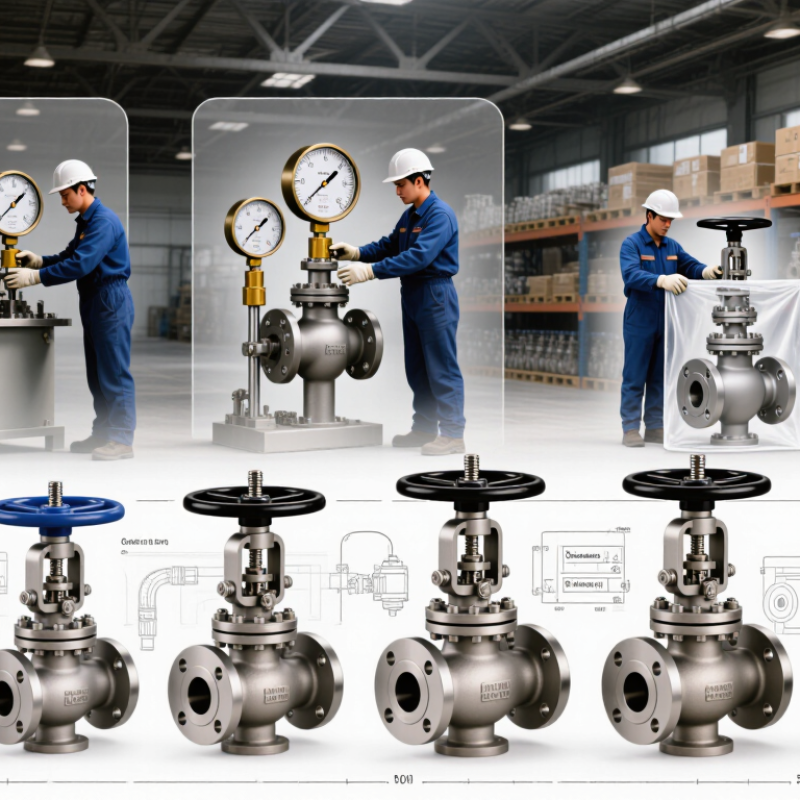
A serious Chinese manufacturer should provide dimensional inspections, hydrostatic testing, seat-leakage results, coating details, and clear product documentation. Factory experience also appears in small details. Do operators protect the sealing edge during assembly? Are finished valves stored away from sunlight and moisture? Can the supplier explain replacement-seat availability five years later?
No factory is perfect. That is worth admitting. Even a strong resilient butterfly valve can fail through poor installation, contaminated pipelines, incorrect flange alignment, or neglected maintenance. Therefore, this guide will assess Chinese manufacturers through evidence, not marketing claims. It will compare engineering capability, production control, customization, international standards, delivery consistency, and after-sales support. The goal is not to declare one supplier universally superior. The goal is to identify which manufacturer best matches a project’s pressure, temperature, media, actuation, and service expectations.
What Is a Resilient Butterfly Valve?
A resilient butterfly valve uses a flexible elastomer seat to shut off fluid flow. The valve has a circular disc mounted on a rotating stem. Turning the stem rotates the disc inside the pipeline. At full opening, the disc aligns with the flow path. At closing, it presses against the resilient seat and creates a tight seal.
This design is compact, lightweight, and practical. It commonly serves water treatment, irrigation, HVAC, and general utility systems. Common seat materials include EPDM, NBR, and PTFE, depending on temperature and fluid compatibility. A technician should check pressure ratings, media conditions, flange standards, and operating frequency before selection. Small details matter.
From field experience, resilient butterfly valves perform well when installed correctly. The pipe must be aligned, and the disc needs enough clearance during operation. Dirt, excessive heat, or unsuitable chemicals can damage the seat. That assumption is not always correct. A lower purchase price may create higher maintenance costs later. Reliable manufacturers should provide test records, material information, dimensional drawings, and clear quality controls. Their production experience also matters, especially for consistent seat compression and smooth disc movement. A suitable valve is not simply the cheapest option. It must match the system’s actual working conditions.
China Best Resilient Butterfly Valve Manufacturer?
How Does a Resilient Butterfly Valve Work?
A resilient butterfly valve controls flow with a circular disc mounted on a central stem. When the stem turns 90 degrees, the disc opens or blocks the passage. Its elastic seat presses tightly around the disc edge, creating a practical bubble-tight seal. This design uses fewer parts than many gate valves. It also needs less installation space.
During operation, the stem transfers torque through the disc. In the closed position, fluid pressure pushes the disc toward the seat. This pressure can improve sealing, but excessive torque may accelerate wear. The seat material must match the medium, temperature, and pressure. EPDM often suits water service, while NBR may support selected oil applications. Always verify compatibility.
The global industrial valves market was valued at approximately USD 78.4 billion in 2023, according to Grand View Research’s Industrial Valves Market report. Water treatment, energy, and process industries remain important demand areas. API 609 and EN 593 provide recognized requirements for butterfly valve design and testing. ISO 5211 also helps match actuators with valve mounting interfaces.
Field experience shows that alignment matters greatly. A scratched seat can leak after only a few cycles. Dirt near the disc edge causes similar trouble. Resilient valves are efficient, but they are not universal. That limitation deserves more attention. A reliable manufacturer should provide pressure tests, material certificates, torque data, and traceable inspection records before shipment.
| Evaluation Dimension | Typical Specification or Feature | How It Works and Why It Matters |
|---|---|---|
| Valve Type | Resilient-seated butterfly valve | A quarter-turn isolation valve that uses a circular disc mounted on a rotating shaft to control fluid flow through the pipeline. |
| Operating Principle | Disc rotation through approximately 90° | When the disc is aligned with the pipeline, the valve is open. When the disc rotates across the flow path, it closes and stops the fluid. |
| Seat Sealing | Elastic liner around the disc perimeter | The resilient seat is compressed by the disc during closure, creating a tight seal. Common seat materials include EPDM, NBR, and PTFE, selected according to the medium and temperature. |
| Flow Control | Isolation and throttling service | The valve is highly effective for on/off service. It can also regulate flow, although prolonged throttling may increase turbulence, noise, and seat wear. |
| Actuation | Manual, electric, pneumatic, or hydraulic | Manual handles or gear operators are common for smaller valves. Larger or automated systems may use electric or pneumatic actuators for remote and repeatable operation. |
| Typical Pressure Range | Commonly PN 6 to PN 16 or Class 150 | The allowable pressure depends on the valve design, body material, seat material, size, and applicable standard. The product nameplate and manufacturer data sheet should always be checked. |
| Typical Temperature Range | Approximately −20°C to 120°C for many EPDM-seated designs | Actual limits vary by seat compound. EPDM is commonly used for water and some mild chemicals, while NBR is often selected for oil-containing media. Temperature ratings must be confirmed for the specific seat. |
| Common Body Materials | Ductile iron, cast iron, carbon steel, or stainless steel | Ductile iron is widely used for water applications because of its strength and cost balance. Stainless steel is preferred when corrosion resistance or chemical compatibility is more demanding. |
| Common Disc Materials | Ductile iron, stainless steel, aluminum bronze, or coated alloys | The disc material should be compatible with the fluid. Stainless steel and aluminum bronze can provide improved resistance to corrosion compared with unprotected carbon steel. |
| Connection Options | Wafer, lug, double-flanged, or grooved designs | Wafer valves fit between pipeline flanges and are compact. Lug valves allow more flexible installation and may be used for dead-end service when specifically rated for it. |
| Nominal Size Range | Frequently available from DN 50 to DN 1200 or larger | Butterfly valves are especially practical for medium and large pipelines because they require less space and generally have lower weight than comparable gate or globe valves. |
| Flow Characteristics | Low pressure drop when fully open | The disc remains in the flow path, so a butterfly valve may produce more pressure loss than a fully open gate valve. However, its compact design provides efficient flow in many water and HVAC systems. |
| Industry Standards | EN 593, API 609, ISO 5752, and ISO 5211 | These standards address areas such as butterfly valve design, face-to-face dimensions, testing, and actuator mounting. The required standard depends on the project specification and market. |
| Leakage Performance | Resilient-seat tight shutoff | A properly selected and maintained resilient seat can provide reliable bubble-tight or near-zero visible leakage performance under the conditions defined by the applicable test standard. |
| Main Applications | Water treatment, HVAC, irrigation, fire protection, and general utilities | These applications typically require compact isolation, moderate pressure ratings, and reliable shutoff. Special seat and body materials are needed for corrosive, abrasive, toxic, or high-temperature media. |
| Key Advantages | Compact, lightweight, economical, and quick to operate | Quarter-turn operation reduces actuation time. The short face-to-face length and low weight can simplify installation, reduce support requirements, and lower overall system cost. |
| Important Limitations | Seat and disc compatibility are critical | Resilient seats may be unsuitable for high temperatures, severe abrasion, or certain aggressive chemicals. The disc can also restrict flow and may not be ideal for applications requiring completely unobstructed passage. |
| Selection Checklist | Size, pressure, temperature, medium, seat, body, disc, and actuation | A reliable selection should compare line size, operating pressure, maximum and minimum temperature, fluid composition, flow velocity, installation orientation, end connection, control requirements, and applicable standards. |
| Maintenance Considerations | Periodic inspection and correct operating torque | Inspect the seat, shaft, disc, fasteners, actuator, and flange alignment. Avoid forcing the valve beyond its designed travel, and verify that debris does not prevent the disc from reaching the fully closed position. |
China Best Resilient Butterfly Valve Manufacturer?
What Makes a Butterfly Valve Manufacturer the Best?
A strong butterfly valve manufacturer proves performance through repeatable engineering, not attractive claims. Resilient seat selection should match the medium, temperature, and pressure conditions. EPDM, NBR, and PTFE each behave differently in service. The manufacturer should explain these differences clearly. That shows practical knowledge. It also helps buyers avoid premature seat damage. A reliable factory checks body dimensions, stem alignment, disc movement, and sealing surfaces. Every valve should receive documented pressure and leakage testing before shipment.
Experience appears in small details. Machined surfaces should feel clean, without sharp edges or uneven coating. Material certificates and inspection records should follow each production batch. Clear torque data helps operators choose suitable actuators. The best supplier also investigates failed samples instead of blaming installation immediately. No workshop is flawless. However, honest corrective action builds greater trust than perfect-sounding promises. Ask for evidence.
Tips: Request test reports, material information, cycle-test results, and recommended maintenance intervals. Confirm the valve’s pressure rating under your actual temperature conditions. Check whether replacement seats and seals remain available. Ask how the manufacturer handles dimensional complaints and field feedback. A short factory audit can reveal more than a polished catalog. Look at testing equipment, calibration labels, and operator procedures. Details matter. Finally, compare lifecycle value rather than purchase price alone, because a cheaper valve may require more downtime, labor, and replacement parts.
China Best Resilient Butterfly Valve Manufacturer?
Comparing China’s leading resilient butterfly valve manufacturers requires more than checking price lists. Start with the factory’s actual production capability. Review machining equipment, rubber lining processes, pressure-testing stations, and final inspection records. A reliable supplier should explain how seat materials are selected for water, wastewater, or industrial service. Ask for material certificates and batch traceability. Small details matter.
Request a sample valve and inspect its body finish, disc movement, shaft sealing, and flange alignment. Test the handwheel or actuator connection for smooth operation. Confirm the stated pressure rating through documented hydrostatic and shell tests. Independent inspection can add confidence, especially for large orders. However, certificates alone are not enough. A neat document cannot correct poor assembly.
Compare lead times, spare-part support, packaging, and response speed after technical questions. Visit the facility when possible, or arrange a live video inspection of production and testing. Speak with recent customers, but treat every reference carefully. A low quotation may hide thinner coatings, limited testing, or weak after-sales support. No checklist is perfect. Price still influences decisions, and that is understandable. Yet the best comparison balances engineering evidence, consistent quality, transparent communication, and the manufacturer’s willingness to admit limitations.
Which Industries Use Resilient Butterfly Valves?
Resilient butterfly valves serve industries that need reliable flow isolation with moderate pressure and temperature. Water treatment plants use them on raw water, filtered water, and wastewater lines. Municipal pipelines also value their compact design and low operating torque. In HVAC systems, these valves control chilled water and cooling tower circuits. Their rubber seat helps reduce leakage during routine operation.
Food processing facilities may use them for water, air, and non-aggressive liquid services. Chemical plants can apply them to compatible fluids, but material selection requires careful review. Mining operations often install them in slurry-related water systems, although abrasive solids can shorten seat life. Power stations, irrigation networks, and fire protection systems also use resilient butterfly valves. They are not universal. High temperatures, severe abrasion, or aggressive chemicals may require another valve design.
Tips: Check the medium, temperature, pressure, and pipe size before selecting a valve. Confirm the seat and disc materials with technical documents. Field inspections often reveal damaged seats caused by poor alignment or excessive tightening. Installation space matters, especially near pumps and pipe supports. A common mistake is choosing by price alone. That decision can increase maintenance costs later. Some applications need testing under real operating conditions, not only catalog values.
Resilient butterfly valves are commonly used in water conveyance, cooling-water, wastewater, irrigation, and industrial process systems because they provide compact flow isolation and regulation. The chart uses the U.S. Geological Survey's 2015 estimated freshwater withdrawal distribution as a factual proxy for the scale of industries and infrastructure where these valve applications are relevant. It is not a valve market-share estimate.
© Copyright 2025 | LittleFirefighter.com | All Rights Reserved | 1EZ Creative: Orange County Web Design

Fusce ut ipsum tincidunt, porta nisl sollicitudin, vulputate nunc. Cras commodo leo ac nunc convallis ets efficitur.

12345 North Main Street,
New York, NY 555555
1.800.555.6789
sale@vibrotools.com
