
What is a Planetary Gear Motor and How Does it Work?

The Planetary Gear Motor is a crucial component in many industries. It offers high efficiency and reliability for mechanical systems. According to a recent report by Global Market Insights, the planetary gear market is projected to grow significantly. This indicates a strong demand for advanced engineering solutions.

Understanding how a planetary gear motor operates is essential. Its design provides a compact structure while delivering high torque. With roots in precision engineering, these motors engage seamlessly in applications like robotics and automotive systems. They balance power and size effectively.

However, not all planetary gear motors are crafted equally. Variations in construction and materials can affect performance outcomes. Selection must be precise to ensure longevity and efficiency. In the evolving tech landscape, engineers often face challenges in optimizing these systems. A deeper understanding could reveal hidden potentials.
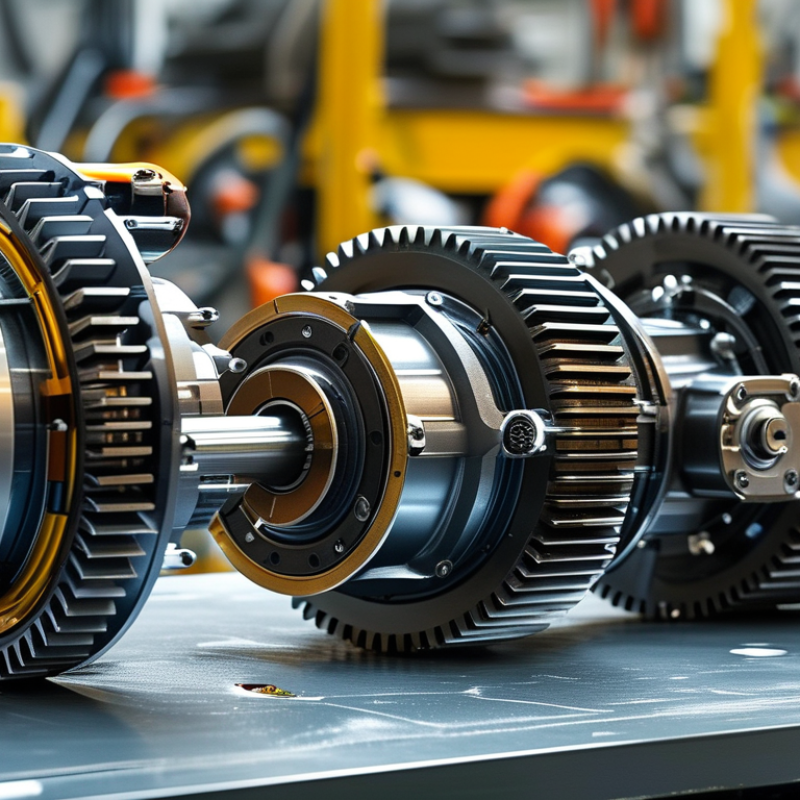
What is a Planetary Gear Motor and How Does it Work?

Definition and Components of a Planetary Gear Motor

A planetary gear motor is a compact mechanism that combines a gear system and a motor. It is composed of several key parts: the sun gear, planet gears, and a ring gear. The sun gear is the central gear, while the planet gears rotate around it. The ring gear encircles the planet gears and provides support. This arrangement allows for high torque output in a small space.

The design of a planetary gear motor offers several advantages. It can achieve a high gear reduction ratio, allowing for efficient motor performance. This means less energy is wasted, which is vital in many applications. Planetary gears distribute loads evenly, enhancing durability. However, the complexity of assembly can pose challenges. Each gear must be precisely aligned for optimal performance.

Maintenance is essential for longevity. Regular inspection can identify wear and tear issues early. A common oversight in usage is to underestimate the motor's thermal limits. Overheating can lead to failures. Thus, understanding the components and their roles is crucial for successful operation. Adopting a mindful approach to usage and care will ultimately enhance the reliability of planetary gear motors.

Understanding the Efficiency of Planetary Gear Motors

This bar chart illustrates the efficiency of planetary gear motors across different torque levels. As the torque increases, the efficiency of the motor also improves, reaching up to 95% at ultra-high torque levels. This showcases the advantage of planetary gear systems in terms of performance and energy consumption.

How Planetary Gear Motors Work: The Mechanics Explained

Planetary gear motors are fascinating devices that maximize torque and efficiency. They consist of three main components: the sun gear, planet gears, and the ring gear. These gears work in harmony within a compact structure. The sun gear is at the center, surrounded by planet gears, which rotate within the ring gear. This design allows for high reduction ratios and excellent torque characteristics.

The mechanics of planetary gear motors are simple yet effective. When the sun gear turns, it drives the planet gears. As these gears rotate, they carry the ring gear with them. The output speed decreases while the torque increases. This combination is ideal for applications that require both power and precision. Observing this process can reveal some complexities. For instance, one must consider the lubricants used, as they can affect performance.

While planetary gear motors are reliable, they are not without challenges. Misalignment during installation could lead to increased wear. Selecting the correct gear ratio is crucial, as an inappropriate choice can affect efficiency. Understanding these mechanics ensures better application in real-world scenarios.

Advantages of Using Planetary Gear Motors in Various Applications

Planetary gear motors are widely recognized for their efficiency and reliability. These motors incorporate a unique design that allows for a significant reduction in speed while increasing torque. This mechanism makes them ideal for numerous applications across various industries, such as automotive and robotics. In fact, a recent industry report stated that the global planetary gear motor market is expected to reach $5.5 billion by 2025, reflecting a strong demand driven by advanced automation.


The advantages of planetary gear motors include compact size and high power density. This compactness allows for installation in space-constrained environments. Industries often leverage these motors where weight and space are critical, such as in aerospace applications. Furthermore, their ability to maintain high efficiency under load contributes to reduced energy consumption. A study noted that planetary gear motors can achieve up to 95% efficiency. However, they might require careful alignment and assembly, which poses a challenge in some situations.


Another notable aspect is their durability. The robust construction of planetary gear motors ensures a long operational life. These motors can withstand high loads and harsh conditions, making them suitable for demanding environments like industrial machinery. Despite these advantages, manufacturers must consider maintenance and potential wear in their designs. Balancing performance with longevity remains a crucial challenge within the industry.

Common Applications and Industries Utilizing Planetary Gear Motors

Planetary gear motors are widely used across various industries due to their compact design and high torque output. These motors excel in applications that require precise control and efficiency. One common application is in robotics, where they provide the necessary motion for robotic arms and mobile platforms. Their ability to maintain a high torque at low speeds makes them ideal for intricate tasks in automated systems.

Another significant sector utilizing planetary gear motors is the automotive industry. They are employed in electric vehicles for optimal power transmission. The precise gearing helps enhance vehicle performance and energy efficiency. Additionally, industrial machinery often relies on these motors for conveyor systems and other automated equipment. Their reliability in handling heavy loads under continuous operation is crucial in manufacturing settings.

While planetary gear motors offer many advantages, they also come with challenges. The complexity of their design can lead to higher initial costs. Maintenance can be tricky, as wear and tear may not be easily noticeable. Understanding these factors is essential for industries considering their implementation. Balancing performance with cost-effectiveness requires careful planning and assessment of operational needs.

What is a Planetary Gear Motor and How Does it Work? - Common Applications and Industries Utilizing Planetary Gear Motors

Application Industry Advantages of Planetary Gear Motors Typical Gear Ratio Range
Robotics Manufacturing High efficiency, compact size 3:1 to 100:1
Automated Conveyors Logistics High torque output, durability 5:1 to 300:1
CNC Machines Aerospace Precision motion control, low backlash 10:1 to 50:1
Electric Vehicles Automotive Lightweight, space-efficient 4:1 to 100:1
Wind Turbines Renewable Energy Robustness, reliability 30:1 to 120:1

Maintenance and Troubleshooting Tips for Planetary Gear Motors

Planetary gear motors are widely used in various applications due to their compact design and efficiency. However, like all mechanical systems, they can experience issues over time. Regular maintenance is essential to ensure optimal performance. This involves checking for any signs of wear and tear in the gears and ensuring proper lubrication. Neglecting these aspects may lead to increased friction and reduced lifespan.

Troubleshooting common problems can save time and money. Listen for unusual noises when operating the motor. Grinding sounds may indicate gear damage or misalignment. If the motor overheats, check for adequate cooling and lubrication. Inadequate lubrication can cause severe damage. Finally, ensure that the motor is properly mounted. Loose connections might result in vibrations, affecting performance.

When addressing issues, always prioritize safety. Disconnect power before performing any checks or repairs. Being proactive in maintenance and troubleshooting can prevent severe malfunctions. Experience often reveals that early intervention leads to better outcomes.

AVADA IT

Fusce ut ipsum tincidunt, porta nisl sollicitudin, vulputate nunc. Cras commodo leo ac nunc convallis ets efficitur.

RECENT TWEETS

CONTACT US

  • 12345 North Main Street,
    New York, NY 555555

  • 1.800.555.6789

  • sale@vibrotools.com

Go to Top