
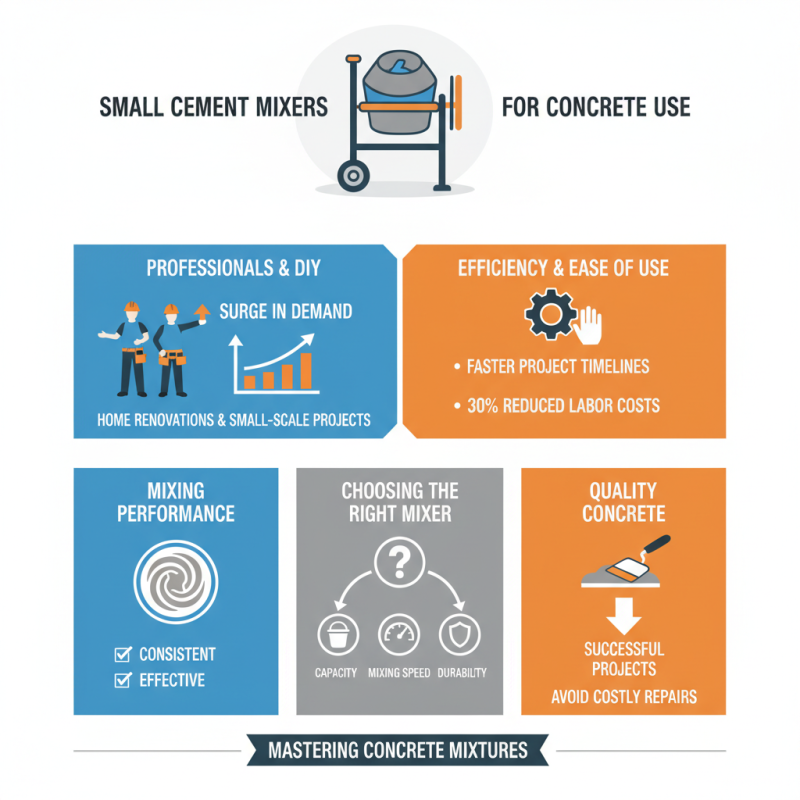
In the realm of construction, the "Small Cement Mixer Concrete" has emerged as a vital tool for both professionals and DIY enthusiasts. According to recent industry reports, the demand for compact mixers has surged, driven by the growing trend of home renovations and small-scale construction projects. These mixers provide a solution that combines efficiency and ease of use, catering to individuals looking to tackle concrete tasks without investing in larger, costlier equipment.
Small cement mixers have shown a remarkable performance in mixing concrete consistently and effectively. Studies indicate that using a small mixer can enhance project timelines and reduce labor costs by approximately 30%. However, it is essential to recognize that not all small mixers are created equal. Users often face challenges in selecting the right model, as market availability can sometimes lead to confusion over quality and longevity.
The choice of a small cement mixer can directly impact the quality of the concrete produced. Users must consider factors like capacity, mixing speed, and durability. It’s vital to research and reflect on various options. Ensuring the right balance of features can be the difference between a successful project and one that requires costly repairs down the line. With proper guidance, anyone can master the art of using a small cement mixer to create high-quality concrete mixtures.
A small cement mixer is essential for anyone involved in concrete projects. These mixers are typically portable and can handle small to medium batches of concrete efficiently. They make mixing concrete easier, ensuring a consistent and high-quality result. According to a report by the American Concrete Institute, using a proper mixer can improve concrete quality by up to 15%. This demonstrates the importance of selecting the right equipment for your specific needs.
When using a small cement mixer, consider the type of projects you undertake. Homeowners often need mixers for patio installations, small repairs, or landscaping projects. Construction professionals may find small mixers valuable for quick jobs that require mobility. A reliable mixer saves time and can reduce labor costs significantly. Keep in mind that mixing can be tricky. Too much water can weaken the concrete. Aim for the right water-to-cement ratio, typically around 0.5.
**Tips:** Always check the capacity of your mixer. Underusing or overloading can lead to poor mixing. Additionally, if the mixer struggles to complete the job, it may need servicing. Keep it clean after use to maintain efficiency. Regular maintenance ensures a longer lifespan, saving money in the long run. Mixers are not infallible; improper use can lead to unsatisfactory results. Consider taking a short training course to maximize efficiency and gain confidence in your mixing skills.
Small cement mixers are essential tools for various concrete projects. They offer a perfect solution for homeowners and contractors who need to mix small batches of concrete efficiently. These mixers typically come with a drum capacity ranging from 1 to 3 cubic feet. Such sizes make them ideal for small-scale renovations, landscaping, or DIY projects. They are portable, making them easy to move around job sites.
Key features to look for include strong construction and reliable motors. Most small cement mixers have a heavy-duty steel frame that withstands wear and tear. The mixing drum should be designed for optimal mixing with a conical shape. This shape ensures the materials blend smoothly. Additionally, many models feature tilting capabilities for easy unloading. A safety switch is also crucial to prevent accidental starts.
It's important to consider the power source. Electric models are quiet and great for indoor use, while gas-powered versions provide more mobility outdoors. However, electric models may struggle in wet conditions. It's essential to choose a mixer that balances power and convenience. Remember, smaller mixers can have limitations. They may not handle large jobs well. Assessing your project's needs helps you choose the right mixer for the task.
Small cement mixers come in various types, each suited for different applications. One common type is the drum mixer. It has a cylindrical drum that rotates to combine the materials. This type is ideal for small construction projects. It's user-friendly and portable, making it a popular choice for DIY tasks. However, it may not mix uniformly for larger batches.
Another type is the vertical mixer. This design features a vertical orientation that helps mix concrete thoroughly. It's often used in workshops and for small-scale industrial purposes. While it can efficiently handle specific mixes, its size can be a limitation for homeowners.
When selecting a small cement mixer, consider the project's scale. A drum mixer might suffice for small patios or repairs. For larger, more complex jobs, a vertical mixer may be necessary. Each type has its pros and cons. They offer convenience but also require maintenance and careful operation. Be aware of these aspects when using a cement mixer. Proper usage ensures safety and quality in your concrete work.
Small cement mixers are essential tools for mixing concrete efficiently. They are compact, making them perfect for tight spaces. Using a small cement mixer saves time and effort. You can mix smaller batches as needed. This is ideal for DIY projects and home repairs.
One major advantage of using a small cement mixer is portability. You can easily move it around your site. It allows you to mix concrete precisely when and where you need it. Plus, they are often lighter than larger models, which eases transportation. Depending on your project size, this flexibility can be invaluable.
Tips: Always clean your mixer after each use for longevity. Be cautious with the mixing time; over-mixing can harm the concrete’s final strength. Also, make sure to wear appropriate safety gear to protect yourself during the mixing process. A small cement mixer can save you effort and time, but they require careful handling and maintenance. Pay attention to the mixing ratios for the best results.
| Feature | Description |
|---|---|
| Portability | Small cement mixers are lightweight and easy to transport, allowing for use in various locations. |
| Ease of Use | Designed for simple operation, enabling both professionals and DIY enthusiasts to use them effectively. |
| Time Efficiency | Reduces mixing time compared to manual methods, allowing for quicker project completion. |
| Consistency | Ensures a uniform mixture of concrete, improving the quality of the final product. |
| Versatility | Can be utilized for various mixing tasks beyond concrete, such as mortar and stucco. |
Operating a small cement mixer can greatly enhance concrete projects, but maintenance is key. Regularly check for wear and tear on the mixer drum and motor. A build-up of concrete can cause damage over time. Clean the drum after each use. This simple step prevents hardened debris from affecting future mixes.
Lubrication is crucial for smooth operation. Apply grease to bearings and moving parts regularly. This can help prolong the life of your mixer. If the mixer struggles to turn, it might be time to inspect the motor or wiring. Don't ignore unusual noises. It may indicate a deeper problem needing attention.
Storing the mixer properly is also important. Keep it in a dry place to prevent rust. Cover it when not in use. This will protect it from moisture and debris. Remember, ignoring small issues can lead to larger, costlier repairs later on. Take the time to care for your mixer, and it will perform better when you need it.
© Copyright 2025 | LittleFirefighter.com | All Rights Reserved | 1EZ Creative: Orange County Web Design

Fusce ut ipsum tincidunt, porta nisl sollicitudin, vulputate nunc. Cras commodo leo ac nunc convallis ets efficitur.

12345 North Main Street,
New York, NY 555555
1.800.555.6789
sale@vibrotools.com
