
Voltage fluctuations can disrupt sensitive equipment, shorten component life, and interrupt everyday operations. An Inverter Voltage Stabilizer helps regulate output when incoming power changes. Yet choosing one is not as simple as comparing prices. Capacity, response time, voltage range, protection features, and service support all matter.
This guide introduces ten suppliers serving markets around the world. It considers the products they offer, the applications they address, and the practical details buyers should verify. For example, a workshop running a motor may need different capacity and protection than a clinic using diagnostic equipment. Installation conditions matter, too. A stabilizer suited to one site may not perform well in another.
No supplier is the best choice for every buyer. Product specifications and regional availability can change, so confirm current details directly with each manufacturer or authorized distributor. Ask about warranty terms, technical support, certifications relevant to your market, and access to replacement parts. Small details count. A clear datasheet helps, but it cannot answer every question about real-world performance. This overview offers a starting point for comparison, not a substitute for engineering advice. Where specifications are unclear, pause and ask for clarification. That extra step can prevent a costly mismatch.
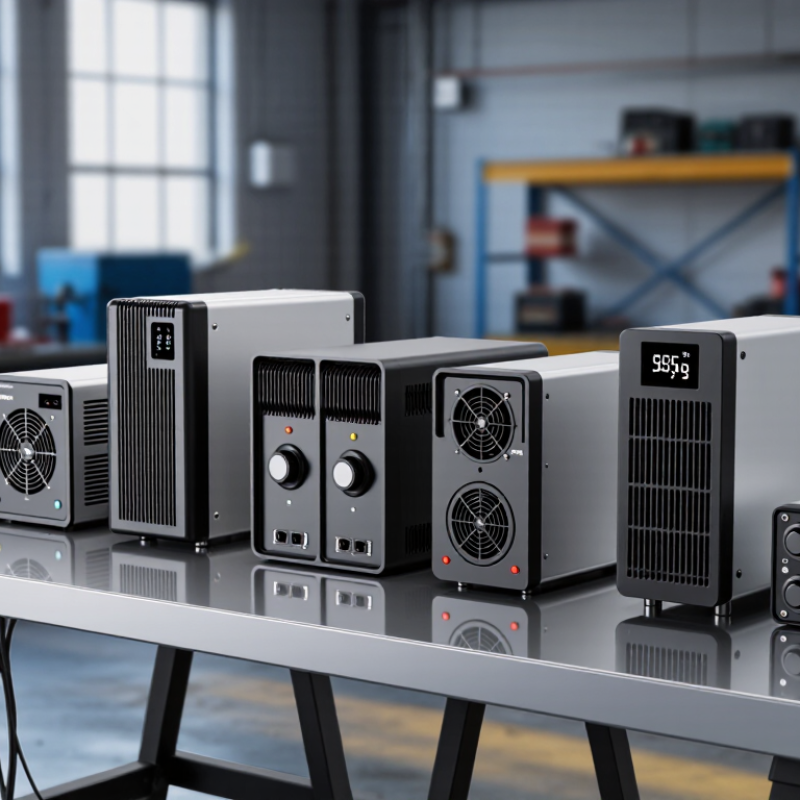
An inverter voltage stabilizer protects electrical equipment from unstable power. It is useful where voltage drops, surges, or fluctuates frequently. The device first measures incoming voltage through a sensing circuit. A controller compares this reading with the target output. An inverter stage then converts electrical energy into a controlled waveform. Batteries or capacitors may support the system during brief interruptions.
In practical use, the stabilizer can keep a computer, medical monitor, or workshop machine running steadily. Many units also filter electrical noise and respond within milliseconds. The output quality depends on switching speed, battery condition, load capacity, and waveform design. A unit rated at 1,000 VA may not safely support a 1,000-watt load. Real equipment often needs extra capacity. I have seen sizing mistakes cause overheating, even when the specifications looked acceptable. No design is perfect.
Tips: Check the voltage range, response time, waveform, and continuous wattage before purchasing. Leave at least 20 percent spare capacity. Test the unit with the intended load, not only with a lamp. Ask suppliers for independent test reports, warranty terms, replacement battery details, and service records. Installation also matters. Poor ventilation can shorten battery life. Grounding should follow local electrical requirements. Supplier claims deserve verification. A clear datasheet is helpful, but field performance can still vary.
Inverter voltage stabilizers are used where supply voltage changes could interrupt equipment or shorten its service life.
In homes, they can protect refrigerators, air conditioners, and sensitive electronics during brownouts. Clinics and testing rooms may use them for diagnostic equipment that needs a steadier input.
Telecom cabinets and workshops also benefit, especially when voltage dips occur alongside motor-starting surges.
Loads behave differently.
Common designs include relay-based, servo-controlled, and static electronic stabilizers.
Relay models switch between preset voltage steps and often suit basic household loads. Servo units adjust output through a motor-driven mechanism, providing finer correction but needing periodic mechanical inspection.
Static models use electronic switching, respond quickly, and have no moving adjustment mechanism. Some inverter-based designs convert incoming AC to DC and then recreate a controlled AC output.
Their exact operation varies, so check the technical specification rather than relying on the product label. A stabilizer alone does not provide battery backup.
Choosing a unit starts with the load’s running power and its brief startup surge.
A compressor may draw much more current at startup than while running steadily. Check the input-voltage range, output tolerance, overload protection, and ventilation requirements.
A common planning mistake is choosing capacity from the appliance’s running wattage alone.
Even careful estimates can miss real-world peaks, so leave suitable headroom and verify the figures with a qualified installer.
A worldwide supplier comparison should begin with the actual site conditions, not a headline accuracy figure. Record the input-voltage range, phase configuration, load profile, ambient temperature, and expected voltage dips. Then ask for test reports showing regulation accuracy, response time, overload behavior, efficiency, and output waveform under stated conditions. Reports from an independent, accredited laboratory are stronger evidence than an undated catalog sheet. Paper claims are easy.
Serviceability matters across borders. Check whether the supplier can provide wiring diagrams, remote diagnostics, spare-part availability, and a named local service contact. Request references from installations with similar loads, such as motor starts or sensitive control equipment.
The International Energy Agency’s 2023 report, Electricity Grids and Secure Energy Transitions, says around 80 million kilometres of grids must be added or refurbished by 2040. That changing infrastructure makes clear operating limits and commissioning support especially valuable. Still, a global network does not guarantee fast support at a remote site.
Compare warranty exclusions, factory quality controls, and change-management procedures alongside price. Ask how each unit is inspected before shipment, and what happens when measured site voltage falls outside the quoted range. Supplier answers should be specific and documented. A small gap remains: no report can fully reproduce a dusty room, an unstable generator, or a hurried installation. Independent site acceptance testing is worth budgeting for.
A credible profile of ten inverter voltage stabilizer suppliers should compare capabilities, not just advertised capacity. The field includes industrial power specialists, regional electrical manufacturers, OEM and ODM builders, renewable-energy integrators, and telecom backup suppliers. Other profiles may focus on data centers, factory controls, export distribution, custom panel assembly, or engineering service. These are useful supplier types, not a verified ranking.
Their strengths differ. An industrial specialist may support motor loads and frequent voltage swings, while a data-center supplier may prioritize monitoring and response time. A renewable-energy integrator can help coordinate stabilizers with inverters and battery systems. Custom builders may adapt terminals, cabinets, or protection settings to a site. Ask each supplier for load-range data, correction speed, efficiency figures, and installation requirements. Request a test report for the exact model under consideration. Small details matter.
Service deserves equal attention. Check warranty terms, spare-part availability, commissioning support, and access to qualified technicians. A polished catalogue cannot confirm performance in a hot electrical room or dusty workshop. Compare references from similar applications, where available, and clarify who handles troubleshooting after delivery. Some suppliers publish less technical detail than buyers need; that gap is worth discussing before purchase. A careful comparison may take longer, but it can reveal mismatches between a product’s stated capacity and the actual load profile.
When comparing inverter voltage stabilizer suppliers, look beyond headline capacity. Check input voltage range, output accuracy, overload response, and compatibility with the inverter’s load. A unit serving a workshop with motor starts may need different protection from one supporting office equipment. Ask for test reports and clear operating limits, not just a polished specification sheet. Small details matter.
Product range is only part of the comparison. Some suppliers offer wall-mounted units for compact sites, while others cover larger three-phase installations. Global reach is more than shipping to many countries: ask where spare parts are stocked, how technical support handles time zones, and whether manuals are available in usable formats. Compare warranty terms and realistic delivery estimates. No scorecard captures every installation; an impressive catalogue can still miss an awkward site constraint.
Tips: Share your load list, supply conditions, and expected runtime before requesting a quote. Ask for a sample wiring diagram and the nameplate details of a comparable model. Check how the supplier handles fault diagnosis and replacement parts. If answers stay vague, pause. I’d also record any assumptions in writing, because they are easy to forget once equipment arrives.
| No. | Anonymized Supplier Profile | Typical Product Offering | Common Technology | Typical Capacity Range | Best-Fit Applications | Global Reach and Support Model |
|---|---|---|---|---|---|---|
| 1 | Industrial three-phase specialist | Three-phase automatic voltage stabilizers; optional bypass, alarms, and monitoring | Servo-controlled or static electronic regulation | About 10–500 kVA; model ranges vary | Factories, production lines, pumps, and other three-phase loads | Often serves domestic industrial customers and export markets through distributors or project integrators |
| 2 | Single-phase commercial supplier | Wall-mounted and floor-standing single-phase stabilizers | Relay-stepped or servo-controlled regulation | About 0.5–30 kVA; model ranges vary | Retail equipment, offices, small workshops, and household appliances | Commonly distributed through electrical wholesalers, dealers, and online channels; coverage depends on the supplier |
| 3 | Static power-conditioning specialist | Fast-response stabilizers for sensitive or frequently changing loads | Power-electronic switching, commonly using thyristors or IGBTs | Often offered from a few kVA to several hundred kVA | Automation, CNC equipment, process controls, and other loads needing rapid correction | May support international projects through specialist distributors and local commissioning partners |
| 4 | Servo stabilizer manufacturer | Automatic voltage regulators with motor-driven variable transformers | Servo-controlled electromechanical regulation | Single- and three-phase models; capacity varies from small units to industrial systems | Commercial buildings, workshops, and industrial equipment where gradual correction is acceptable | Export availability is common in this product category, but service and spare-parts coverage is market-specific |
| 5 | Relay-type budget supplier | Compact stepped stabilizers for light commercial and residential use | Relay-switched tap selection | Typically low to mid capacity, commonly below a few tens of kVA | Appliances and basic equipment in locations with recurring voltage variation | Usually sold through local dealers and mass-market electrical channels; international reach varies widely |
| 6 | Inverter-based power conditioner supplier | Voltage-conditioning systems using a power-electronic conversion stage | Inverter or converter-based regulation; topology and operating mode differ by product | Product-specific; commonly available in small and medium power ratings | Sensitive electronics and applications requiring tightly controlled output | Often requires technical selection and installation support; distribution is typically handled by electrical or power-quality specialists |
| 7 | Medical and laboratory power specialist | Stabilizers and power-conditioning packages specified for sensitive equipment | Static or servo regulation, selected according to load and response requirements | Specified to the connected equipment; no single standard capacity range | Laboratories, diagnostic equipment, and clinical facilities | Usually supplied through project tenders, equipment integrators, or specialist regional partners |
| 8 | Telecom and critical-facility supplier | Power-conditioning equipment integrated with site power systems | Static regulation or coordinated power-conversion systems | Modular or site-sized; capacity is determined by the facility load | Telecom sites, control rooms, and other critical infrastructure | Support commonly depends on regional service partners and the site operator’s maintenance arrangements |
| 9 | OEM and private-label supplier | Configurable stabilizers built for resale, equipment integration, or custom specifications | Relay, servo, or static designs depending on the order | Configurable; minimum order quantities and options vary | Equipment manufacturers, panel builders, and distributors seeking integrated or private-label products | Can serve multiple countries through OEM relationships; branding, warranty, and local service may be managed by the reseller |
| 10 | Online UPS and adjacent power-protection supplier | Online UPS systems that also regulate output while providing battery-backed power | Double-conversion UPS topology; this is related to, but not identical with, a standalone voltage stabilizer | From small equipment-level units to large modular systems | Servers, communications equipment, and loads that need both voltage conditioning and backup power | International sales and service are often organized through authorized dealers and service networks; local coverage should be checked |
Comparison note: Company identities are intentionally omitted. The entries are anonymized supplier profiles, not a verified ranking of ten named companies. Capacity bands and product descriptions are indicative market-level examples, not audited specifications for individual suppliers. Confirm input-voltage range, output regulation, response time, overload rating, certifications, warranty, and local service availability for the specific model before purchasing.
© Copyright 2025 | LittleFirefighter.com | All Rights Reserved | 1EZ Creative: Orange County Web Design

Fusce ut ipsum tincidunt, porta nisl sollicitudin, vulputate nunc. Cras commodo leo ac nunc convallis ets efficitur.

12345 North Main Street,
New York, NY 555555
1.800.555.6789
sale@vibrotools.com
