
Passenger cart design is changing as airports, resorts, campuses, hospitals, and industrial sites handle more people across larger spaces. ACI World’s 2024 World Airport Traffic Forecast projects global air passenger traffic to move beyond pre-pandemic levels, increasing pressure on efficient ground transportation. At the same time, the International Energy Agency’s Global EV Outlook 2024 reports continued growth in electric mobility and charging infrastructure. These trends are influencing how operators select compact, low-emission, and accessible transport equipment.
This guide examines the top 10 Passenger Cart types, including airport shuttle carts, resort buggies, golf carts, electric trams, luggage carts, and wheelchair-accessible vehicles. Each type serves a different operating condition. A six-seat electric cart may move guests quietly through a resort, while a heavy-duty utility cart may handle staff and equipment on a large campus. Battery range, turning radius, seating layout, weather protection, loading time, and maintenance support all affect real-world performance.
A neat ranking can mislead. Some carts serve more than one role. The best choice depends on passenger volume, route length, terrain, charging access, and safety procedures. Reports from the U.S. Department of Energy also emphasize that vehicle efficiency depends on duty cycles, payload, and operating conditions. That detail matters. A cart performing well in a flat terminal may struggle on steep resort roads. This overview compares practical strengths, limitations, and suitable applications, helping buyers evaluate Passenger Cart options with clearer expectations. No single model fits every route.
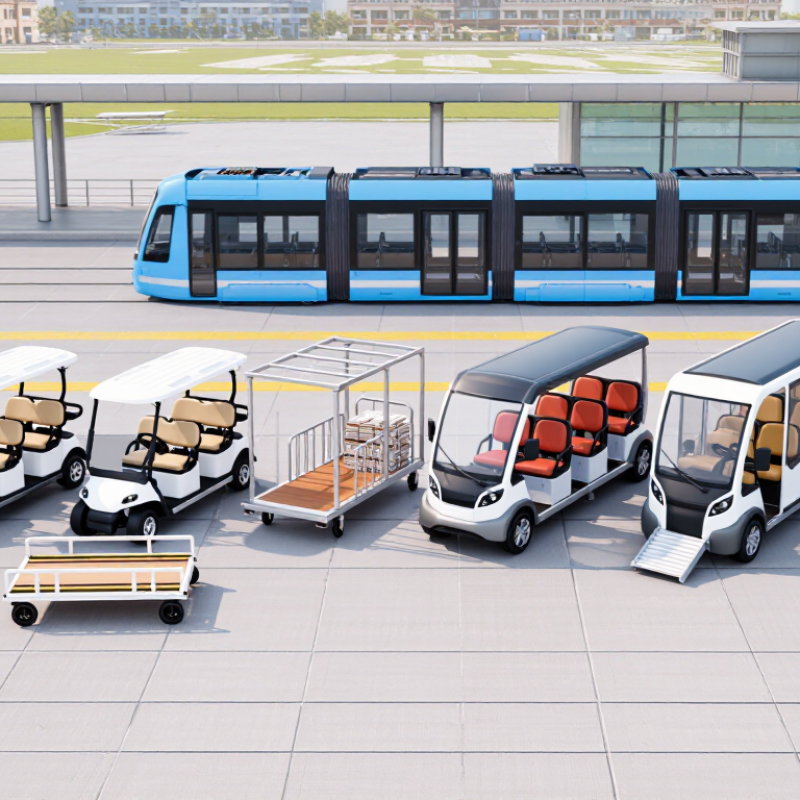
What Are the Top 10 Passenger Cart Types?
Defining Passenger Carts and Their Main Uses
A passenger cart is a compact vehicle designed to move people over short or controlled distances. It usually has open or enclosed seating, a low step height, and simple driving controls. Passenger carts are common at airports, resorts, hospitals, campuses, parks, and large facilities. Their main purpose is practical movement, not high-speed travel.
The top ten types include electric shuttle carts, golf-style passenger carts, airport transfer carts, resort carts, campus carts, hospital transport carts, tourist tram units, enclosed people movers, accessible mobility carts, and off-road passenger vehicles. Each type serves a different setting. Airport carts help travelers cover long terminals. Hospital carts reduce walking for patients and visitors. Tourist units carry groups along planned routes. Accessible carts need stable platforms, secure handrails, and enough room for mobility equipment. Some categories overlap. That can make selection less obvious.
Tips: Match the cart to its route, passenger volume, surface, and weather exposure. Check turning space before purchase. Measure doorways, ramps, and loading areas. Seating capacity alone is not enough. A cart carrying six people may feel cramped with luggage or mobility devices. In real operations, braking distance and driver visibility often matter more than advertised speed. Maintenance records should include tires, batteries, lights, restraints, and steering components. There is no perfect cart. A quiet electric model may suit an indoor facility, yet perform poorly on steep outdoor paths. Reviewing actual traffic patterns for several days can reveal needs that a brochure misses.
Passenger carts are not one-size-fits-all vehicles. The ten common types include open sightseeing carts, resort shuttles, campus carts, airport carts, event carts, hotel carts, neighborhood carts, enclosed people movers, accessibility carts, and all-weather transport carts. Their layouts may look similar, but passenger comfort changes quickly with weather, distance, and loading frequency.
Open-air carts offer fresh air, wide visibility, and fast boarding. They work well on resort paths, campuses, and outdoor events. Passengers can watch the route and communicate easily with the driver. However, wind, dust, strong sunlight, and sudden rain can make a short trip unpleasant. I have seen riders protect their faces with their hands during windy turns. That detail matters.
Enclosed carts provide better shelter and a calmer cabin. They suit airport transfers, hotel routes, and regular service in uncertain weather. Clear side panels improve visibility, while sliding doors help control boarding. Yet enclosed designs can feel warm, cramped, or noisy when ventilation is poor. Poorly placed seats also slow boarding. A practical inspection should check headroom, turning space, handrails, lighting, and emergency access. Accessibility needs careful planning, not a last-minute ramp. Open-air carts are often more flexible, but enclosed carts can deliver greater consistency. The better choice depends on route length, passenger turnover, climate, and maintenance discipline. Some designs promise comfort but overlook storage for umbrellas, mobility aids, or small luggage. That oversight deserves a second look.
Passenger cart design is shifting from simple utility to flexible mobility. IATA’s 2025 passenger forecast expects 5.2 billion air travelers worldwide. UN Tourism also reported about 1.4 billion international arrivals in 2024. These figures increase demand for practical, low-speed transport in busy public spaces.
The top 10 passenger cart types include:
Tips: Match capacity to route length, passenger turnover, and surface conditions.
The U.S. Department of Energy notes that low-speed electric vehicles can reduce local emissions when electricity replaces fuel use. Still, battery range changes with load, hills, temperature, and driving habits.
A cart rated for six people may feel cramped with luggage. That detail is often missed.
Test turning radius, ramp access, seat height, and emergency stopping before purchase. Safety standards and local operating rules should guide the final selection.
Matching cart types to capacity, terrain, and travel needs matters more than appearance. I used to treat passenger carts as simple airport equipment. That assumption was too simple. ACI World’s 2024 Airport Traffic Forecast estimates 9.5 billion air travelers worldwide in 2024. Busy terminals need practical movement, not oversized machines.
The ten common types include two-wheel luggage carts, four-wheel baggage carts, nesting airport carts, child-seat carts, mobility-assistance carts, electric shuttle carts, resort carts, golf carts, utility passenger carts, and enclosed weatherproof carts.
Two-wheel models suit one traveler and light bags. Four-wheel models offer better stability for heavy luggage. Electric shuttles carry groups across long terminals. Golf and resort carts work well on paved paths, but loose gravel can reduce control. Off-road utility carts handle uneven ground and service routes. Enclosed models protect passengers during rain and strong wind.
The U.S. Access Board’s accessibility guidance supports careful planning for clear routes, turning space, and assisted mobility. Capacity still needs testing with real luggage.
Tips: Count passengers, bags, slopes, and door widths before choosing. Check turning radius and battery range on the actual route. A cart rated for six people may feel cramped with winter coats. I learned this the hard way during a site assessment. Also inspect braking performance, visibility, seating support, and charging access. Weatherproofing sounds minor until a sudden storm changes the entire travel plan.
What Are the Top 10 Passenger Cart Types?
Evaluating Safety, Comfort, and Operating Requirements
Passenger carts vary widely, so selection should begin with real travel conditions. Open golf carts suit short, dry routes and offer simple boarding. Airport shuttle carts need strong brakes, clear mirrors, and durable seating for frequent stops. Resort carts provide comfortable movement across large properties. Campus carts benefit from good visibility and secure handrails. Tram-style carts carry larger groups, but turning space and passenger restraint require careful planning.
Enclosed weather carts protect riders from rain, wind, and cold. They need reliable ventilation and sturdy doors. Wheelchair-accessible carts require low floors, ramps, and dependable restraint systems. Utility-passenger hybrids combine cargo space with seating, although uneven loads can affect handling. Sightseeing carts prioritize visibility, smooth suspension, and quiet operation. Low-speed neighborhood carts work well on private roads, provided operators control speed and watch for pedestrians.
Safety depends on more than the cart itself. During fleet inspections, I check tire pressure, steering response, seat fasteners, lights, and battery condition. A smooth seat is not enough if passengers cannot hold a stable rail. Operators also need route training, charging procedures, and clear limits for weather and slopes. Maintenance records should be easy to verify. One overlooked issue remains common: comfort features can increase weight, reduce range, and complicate daily servicing. That trade-off deserves honest review.
| Passenger Cart Type | Typical Capacity | Typical Speed | Safety Level | Passenger Comfort | Recommended Terrain | Key Safety Equipment | Operating Requirements | Common Applications |
|---|---|---|---|---|---|---|---|---|
| Four-Seat Electric Golf Cart | 2–4 passengers | 15–25 km/h | ★★★★☆ High for controlled sites | Open seating, moderate legroom, basic weather protection | Flat or gently rolling paved surfaces | Seat belts, headlights, brake lights, horn, rear-view mirrors | Battery charging, routine tire and brake inspections, controlled-speed operation | Resorts, campuses, private communities, recreational facilities |
| Six-Seat Electric Shuttle Cart | 6 passengers | 15–25 km/h | ★★★★☆ High for low-speed routes | Forward-facing or mixed seating, grab rails, optional canopy and side curtains | Level paved roads and maintained pedestrian areas | Seat belts, accessible handrails, mirrors, lighting, emergency stop procedure | Higher battery capacity, wider turning space, passenger-loading controls | Hotels, airports, large campuses, event venues |
| Eight- to Fourteen-Seat Electric Shuttle | 8–14 passengers | 15–25 km/h | ★★★★☆ High when professionally operated | Padded seats, overhead cover, step access, improved passenger circulation | Paved internal roads and designated low-speed corridors | Seat belts, handrails, mirrors, audible warning device, controlled access doors | Commercial charging infrastructure, trained drivers, route planning and loading management | Theme parks, hospitals, universities, transportation hubs |
| Accessible Wheelchair Shuttle | 4–10 passengers, depending on wheelchair spaces | 10–25 km/h | ★★★★★ Designed for inclusive transport | Low-entry floor, ramp or lift, restraint systems, priority seating | Paved routes with sufficient clearance and suitable ramp gradients | Wheelchair tie-downs, occupant restraints, non-slip flooring, edge protection | Accessibility inspection, lift or ramp maintenance, trained boarding assistance | Hospitals, airports, campuses, public venues, senior-living facilities |
| Low-Speed Neighborhood Electric Vehicle | 2–6 passengers | 25–45 km/h | ★★★★★ Suitable for regulated low-speed roads | Enclosed cabin, automotive-style seating, improved weather protection | Paved public or private roads within applicable speed limits | Three-point belts, windshield, wipers, turn signals, mirrors, lights, parking brake | May require registration, insurance, licensed drivers and road-compliant equipment | Residential communities, business parks, municipal service routes |
| Enclosed Electric Passenger Cart | 4–8 passengers | 15–30 km/h | ★★★★☆ Strong weather and operational protection | Doors, windows, climate options, cushioned seats, reduced noise | Paved indoor or outdoor routes with adequate ventilation | Seat belts, doors, windows, lights, mirrors, emergency exits where required | Battery ventilation, heating or cooling maintenance, wider clearance for doors | Airports, hospitals, industrial sites, exhibition centers |
| Hybrid Passenger Shuttle | 8–20 passengers | 25–50 km/h | ★★★★★ High for extended route operation | Enclosed or semi-enclosed cabin, improved suspension, reduced refueling downtime | Paved roads, long internal routes and moderate gradients | Seat belts, reinforced passenger area, anti-lock braking where fitted, mirrors and lighting | Fuel and battery servicing, emissions checks, trained operators, scheduled maintenance | Large resorts, industrial parks, campuses, transportation terminals |
| Diesel Passenger Shuttle | 10–25 passengers | 25–50 km/h | ★★★★☆ High with commercial vehicle controls | Higher seating capacity, suspension, roof, optional doors and climate control | Paved roads, inclines and extended outdoor routes | Seat belts, hydraulic brakes, mirrors, lights, handrails and emergency procedures | Fuel storage, exhaust management, engine servicing and noise-control measures | Large properties, construction sites, outdoor attractions, logistics facilities |
| All-Terrain Passenger Utility Cart | 2–6 passengers | 15–35 km/h | ★★★★☆ Strong on managed off-road routes | Suspension seats, protective roof, grab handles, optional windshield | Gravel, grass, compact soil, slopes and maintained trails | Seat belts, roll-over protection, all-terrain tires, low-speed gearing | Terrain assessment, tire-pressure checks, slope limits and operator training | Golf facilities, parks, farms, resorts, utility and maintenance operations |
| Tourist Sightseeing Tram | 20–60 passengers | 10–30 km/h | ★★★★☆ High on controlled routes | High-capacity bench seating, canopy, step access, panoramic visibility | Wide paved roads, dedicated routes and level parking areas | Handrails, non-slip steps, mirrors, lighting, audible announcements, controlled boarding | Professional driver, passenger-count procedures, route clearance and frequent brake checks | Tourist attractions, zoos, parks, waterfronts, large recreational sites |
© Copyright 2025 | LittleFirefighter.com | All Rights Reserved | 1EZ Creative: Orange County Web Design

Fusce ut ipsum tincidunt, porta nisl sollicitudin, vulputate nunc. Cras commodo leo ac nunc convallis ets efficitur.

12345 North Main Street,
New York, NY 555555
1.800.555.6789
sale@vibrotools.com
