
China Top 10 Zebra Blind Mechanism Manufacturers?

Choosing a Zebra Blind Mechanism Manufacturer in China takes more than comparing catalog photos or headline prices. A zebra blind mechanism must raise smoothly, hold its position, and keep alternating fabric bands aligned during daily use. Small parts matter. Check the tube diameter, clutch capacity, mounting brackets, chain options, and compatibility with manual or motorized operation.

This guide introduces ten Chinese manufacturers for buyers seeking practical options across different project sizes. It is a starting point, not a permanent ranking. Product ranges, production capacity, and service quality can change, and a polished website alone proves little. Ask for current specifications, material details, sample units, and clear information about lead times and warranty support. Where possible, test a mechanism with the intended fabric and tube rather than judging it in isolation.

A useful supplier comparison also considers consistency. Do batches operate with similar tension? Are replacement components available? Can the manufacturer explain its testing process without relying on vague claims? These questions help importers, distributors, and blind fabricators assess fit before placing a larger order. The best choice may not be the largest factory. It should match your product requirements, communication needs, and expected order volume. Some information may still be hard to verify remotely. Treat that as a reason to ask better questions, not as proof of poor quality.
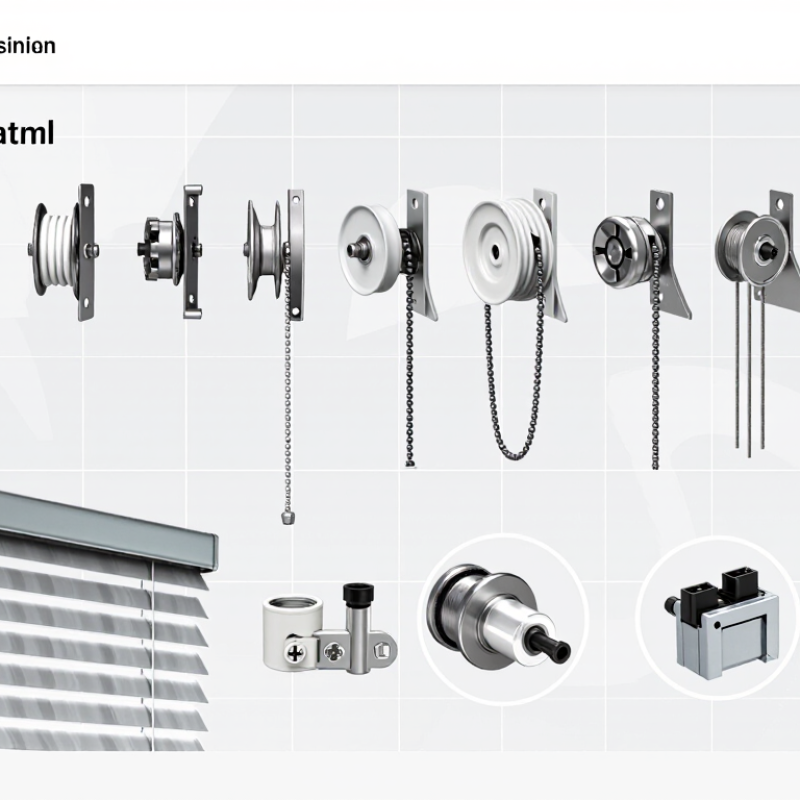
China Top 10 Zebra Blind Mechanism Manufacturers?

What Is a Zebra Blind Mechanism and How Does It Work?

What Is a Zebra Blind Mechanism and How Does It Work?

A zebra blind uses two layers of fabric with alternating sheer and opaque bands. The fabric loops around a top roller, creating overlapping stripes across the window. When the blind moves, the bands shift against each other. Line up the sheer sections to let in filtered daylight. Overlap the solid sections for more privacy and reduced glare. It is not a complete blackout system unless the fabric and installation are designed for that purpose.

Inside the headrail, a drive mechanism turns the roller. Many models use a beaded chain connected to a clutch; pulling one side raises or lowers the fabric, while the other side moves it in the opposite direction. Some use a spring or motor instead. Brackets hold the roller level, and the bottom rail helps keep the fabric steady. If the fabric tracks unevenly, check alignment and mounting before adjusting the mechanism. A small tilt can cause persistent misalignment.

Tips: Measure the window at several points. Keep the roller level, and operate the chain gently. Fabric specifications vary, so confirm light control and cleaning guidance before choosing. I might overlook this detail: a blind that looks aligned when raised can still drift during repeated use.

China Top 10 Zebra Blind Mechanism Manufacturers? - What Is a Zebra Blind Mechanism and How Does It Work?

No. Mechanism Element What It Does How It Works Practical Note
1 Alternating fabric bands Provide the blind’s adjustable light-filtering and privacy effect. The fabric has alternating sheer and opaque horizontal sections. As the fabric moves, the bands can be positioned in line with one another or offset. When the sheer sections align, more light can pass through. When opaque sections overlap the sheer sections, visibility and incoming light are reduced.
2 Front and rear fabric layers Allow the sheer and opaque bands to overlap in different positions. The fabric forms a loop or layered run across the front and back of the blind. Operating the blind shifts the relative position of the two layers. The amount of light control depends on the fabric, band dimensions, alignment, and gaps around the installed blind.
3 Headrail Houses and supports the operating components at the top of the blind. The headrail holds the rotating tube and, depending on the design, the clutch or other drive components. Headrail shape and dimensions vary by product; compatibility should be checked when replacing parts.
4 Roller tube Supports the fabric and winds or unwinds it during operation. Turning the tube moves the fabric loop. This changes the blind’s height and the alignment of its sheer and opaque bands. A level installation helps the fabric travel evenly and reduces the risk of tracking to one side.
5 Clutch Transfers input from the control to the roller tube and helps hold the blind at a selected position. In a common chain-operated design, the chain turns a wheel in the clutch, which rotates the tube. Clutch design and load capacity are product-specific; use a replacement matched to the blind.
6 Bead chain or operating chain Provides manual control on many zebra blinds. Pulling one side of the continuous loop turns the clutch in one direction; pulling the other side turns it in the opposite direction. Keep chain loops secured with an appropriate tensioning device and follow applicable child-safety requirements.
7 Spring or motor drive Offers an alternative to a manual chain on compatible designs. Spring-assisted versions use stored mechanical force; motorized versions use an electric motor to turn the roller tube. These options are not present on every zebra blind. Power, controls, and operating methods depend on the specific system.
8 Bottom rail Helps keep the hanging fabric aligned and provides a finished lower edge. The rail adds weight and moves with the fabric as the blind is raised or lowered. Keep the rail clear of obstructions to support smooth travel.
9 Mounting brackets Attach the headrail to a wall, window frame, or ceiling, depending on the installation. Brackets support the blind and locate the ends of the headrail or roller assembly. Use suitable fixings for the mounting surface and follow the product’s installation instructions.
10 Operating sequence Controls both the blind’s drop and the position of its fabric bands. Operating the chain, spring control, or motor turns the tube. The fabric moves until the desired height and band alignment are reached. A zebra blind adjusts light and privacy by changing band alignment; it is not necessarily a room-darkening or blackout system.

China’s Zebra Blind Mechanism Manufacturing Landscape

China’s zebra blind mechanism manufacturing landscape spans component workshops, integrated factories, and export-focused suppliers. Production commonly involves clutch assemblies, mounting brackets, tubes, and chain systems. Some manufacturers also coordinate fabric cutting and finished-blind assembly. The exact boundary between supplier and factory can be unclear, so buyers should ask who makes each component.

Small details matter. A clutch should turn smoothly without slipping, while brackets must hold the tube level under load. Consistent fabric alignment depends on both mechanism accuracy and careful assembly. Ask for drawings, material specifications, and samples from regular production—not only showroom pieces. A polished sample is not enough.

Manufacturing capacity alone does not prove reliability. Request records of cycle testing, inspection methods, and batch traceability. Where possible, compare several units and check chain movement, noise, and fabric tracking. Humidity and frequent operation can reveal weaknesses that a brief demonstration misses. There is no single best setup; experienced buyers can still overvalue a smooth sample. Clear tolerances and honest answers are more useful than broad claims.

Criteria for Evaluating Chinese Manufacturers

A sourcing review should begin with the mechanism, not the catalogue. Check tube diameter, bracket fit, clutch torque, and fabric alignment on a working sample. Ask for cycle-test records, load limits, and inspection results from recent production batches. Small details matter. A blind that rolls smoothly once may drift after repeated use.

Manufacturing controls deserve evidence. Review the quality system, incoming-material checks, and procedures for handling defective parts. ISO 9001 certification can indicate a documented system, but it does not prove that every batch performs consistently. The International Energy Agency reports that buildings account for about 30% of global final energy use. That makes shade performance relevant: request measured light-control or thermal data when those claims influence purchasing.

Assess supply capacity through production schedules, spare-part availability, and clear packaging specifications. UNCTAD’s Review of Maritime Transport 2024 notes that shipping carries over 80% of world merchandise trade by volume, so export packing and shipment planning matter. Compare quotations using the same mechanism specifications and order quantity. A polished sample can still hide variation across a full run. I would treat delivery promises cautiously unless the supplier can show recent lead-time records.

Profiles of 10 Leading Zebra Blind Mechanism Manufacturers

Profiles of ten leading zebra blind mechanism manufacturers are most useful when they compare practical strengths, not just catalog size. The profiles below are illustrative supplier types, not a verified ranking of named companies.

Manufacturer One focuses on compact clutch systems for narrow windows. Manufacturer Two offers metal brackets suited to frequent operation. Manufacturer Three emphasizes quiet chain drives, useful in bedrooms. Manufacturer Four produces custom tube sizes for unusual window spans. Small details matter.

Manufacturer Five specializes in child-safe control options. Manufacturer Six supports bulk orders with consistent component specifications. Manufacturer Seven is known for modular parts that simplify repairs. Manufacturer Eight offers multiple finishes, though choice can complicate stock planning. Manufacturer Nine focuses on motor-ready mechanisms and clear installation instructions. Manufacturer Ten serves smaller projects with flexible minimum orders.

A strong supplier profile should explain load limits, cycle testing, spare-part availability, and warranty terms. Ask for sample mechanisms and test them with the intended fabric weight. A smooth chain pull on a light sample may feel different after installation. These profiles need checking against current factory documents, because product ranges and quality controls can change. No supplier is perfect; the best fit depends on window dimensions, operating frequency, and service needs.

Zebra Blind Mechanism: Alternating Fabric Zones

A conceptual view of how sheer and opaque bands alternate across zebra blind fabric.

The chart uses 1 for an opaque band and 0 for a sheer band to illustrate the repeating fabric pattern. These values are a visual encoding, not measured light-transmission data or a comparison of manufacturers.

Comparing Manufacturers by Products, Capabilities, and Markets

Comparing ten zebra blind mechanism manufacturers is more useful when the criteria are clear than when names are simply ranked. Look at the complete product range: clutch systems, control chains, brackets, tubes, and compatible fabric widths. Ask whether parts suit both compact residential windows and wider commercial openings. A mechanism that runs smoothly on a sample may behave differently under heavier fabric. Test it.

Manufacturing capability affects consistency and customization. Check whether a supplier can provide dimensional drawings, material specifications, sample parts, and repeatable production runs. Practical details matter, such as gear noise, chain tension, and whether brackets allow quick installation. Requesting test data can help, but it should match the intended load and operating cycle. Not every catalog explains this well. That is worth noting.

Markets also shape what manufacturers offer. Some focus on component supply for blind makers, while others support finished-window-covering projects or export orders. Compare lead times, packaging, communication, and experience with similar order sizes. Regional preferences can influence control styles and dimensions, so confirm compatibility before purchasing. The strongest choice is not automatically the largest producer; it is the one whose products, capacity, and service fit the project. There is no perfect shortlist. Small differences can matter.

AVADA IT

Fusce ut ipsum tincidunt, porta nisl sollicitudin, vulputate nunc. Cras commodo leo ac nunc convallis ets efficitur.

RECENT TWEETS

CONTACT US

  • 12345 North Main Street,
    New York, NY 555555

  • 1.800.555.6789

  • sale@vibrotools.com

Go to Top