Safety valves are quiet components until pressure rises. Then their opening pressure, discharge capacity, and stable reseating matter more than a polished catalog. For global buyers comparing China’s leading suppliers, the real test is whether documented performance matches the installed valve. Small details count: material certificates, set-pressure records, traceable serial numbers, and accessible service support.
Fortune Business Insights’ Industrial Valves Market report valued the broader global market at US$76.24 billion in 2023. That figure covers industrial valves generally, not safety valves alone. It signals scale, but cannot establish a supplier’s quality. Trevor Kletz, a respected process-safety expert, offered a concise principle: “What you don’t have, can’t leak.” His observation concerns process design, yet it is a useful reminder that hardware must fit the wider safety system. Standards matter. So does verification.
This guide compares ten China-based suppliers for international buyers. It focuses on product range, manufacturing evidence, export experience, and technical support—not claims that cannot be checked. Buyers should confirm applicable ASME or API requirements for their project, review test documentation, and ask how suppliers handle calibration and replacement parts. A website is only a starting point. The comparison has limits: public information can be uneven, and supplier capabilities change. That deserves a second look. Before ordering, request current records and confirm the exact service conditions.
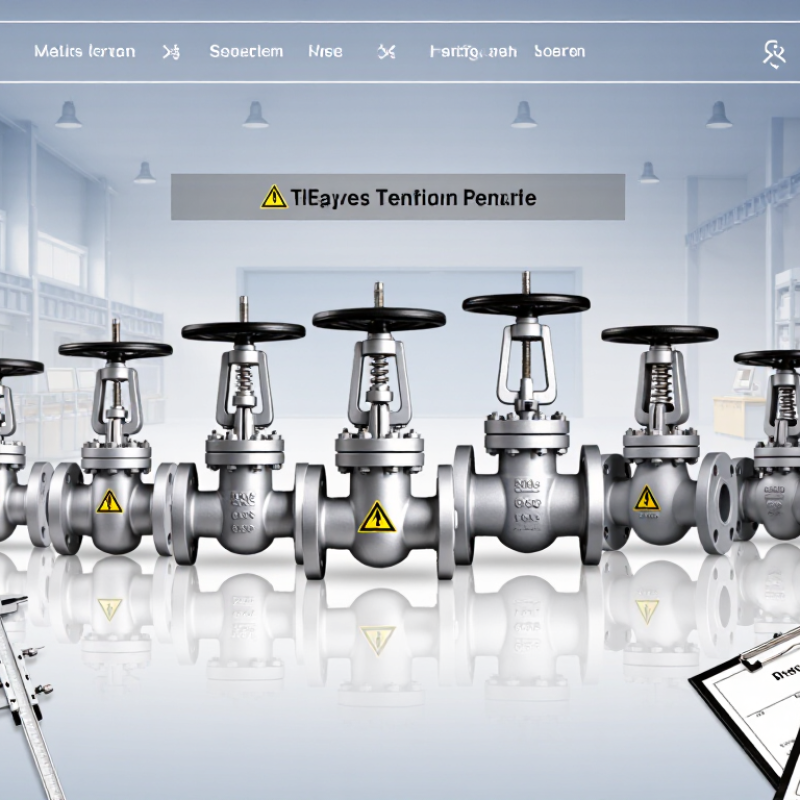
China’s safety valve manufacturing landscape is broad, specialized, and highly competitive. Production ranges from small workshops to fully integrated industrial facilities. Better-equipped manufacturers control casting, forging, machining, assembly, and pressure testing in-house. During supplier audits, I have seen clear differences in equipment maintenance and process discipline. Some factories use automated machining centers, while others still depend heavily on manual inspection. This difference can affect consistency, delivery time, and long-term reliability.
For global buyers, technical evidence matters more than attractive catalog photos. Review material certificates, pressure-test records, spring calibration data, and product traceability. Ask whether each valve receives seat-leakage testing before shipment. Experienced suppliers should explain temperature limits, set pressure, back pressure, and installation conditions clearly. They should also provide drawings that match the final product. A minor mismatch can create serious site problems. No factory is perfect, and even strong suppliers may have weak documentation or slow corrective action. That deserves honest attention.
Tips: Request a sample inspection before bulk production. Compare the valve markings with its test report. Visit the factory, if practical, and observe machining cleanliness, calibration tools, and final packing. Keep communication technical and written. Ask for measurable answers, not promises. A reliable sourcing decision may require more time than expected.
Selecting China’s top safety valve suppliers requires more than comparing catalog prices. The 2024 Global Industrial Valves Market report estimates that industrial valve demand will continue growing through 2030, driven by energy, chemical processing, and water infrastructure. This growth increases supplier competition, but it also makes verification more important.
Our selection process examines factory experience, pressure ratings, material traceability, and documented test procedures. Suppliers must show evidence of compliance with ISO 4126, ISO 5208, or comparable international requirements. We also review inspection records, calibration systems, and production capacity. A polished website is not enough. Physical testing matters.
Shipment performance is another key measure. Industry procurement studies commonly identify lead time, defect rates, and after-sales response as major purchasing factors. We compare typical production schedules, export experience, spare-part support, and technical communication. Sample orders can reveal more than sales claims. However, public data is sometimes incomplete, and reported capacity may not reflect current factory conditions. That limitation deserves attention.
We also assess customization for steam, gas, liquid, and high-temperature applications. Engineers review set pressure, connection standards, body materials, and discharge requirements. Independent inspection is preferred for critical projects. Price receives consideration, but it carries less weight than consistent testing and traceable documentation. Supplier rankings can change as new audit results become available.
China’s safety valve sector includes manufacturers with different technical strengths and production scales. One supplier focuses on steam relief valves for boilers and process lines. Another serves chemical plants with corrosion-resistant materials. A third develops compact valves for compressed air systems. A fourth supplies high-pressure models for energy equipment. A fifth specializes in threaded valves for smaller pipelines.
A sixth supplier offers sanitary designs for food and pharmaceutical facilities. A seventh produces cast-steel valves for water treatment projects. An eighth supports custom spring settings and connection sizes. A ninth combines machining, pressure testing, and export documentation in one facility. A tenth emphasizes fast replacement orders for maintenance teams. Reliable suppliers should provide material certificates, pressure-test records, dimensional drawings, and traceability details. Factory experience matters. So does clear communication during specification changes.
Confirm the working medium, temperature, pressure range, discharge direction, and connection standard before requesting quotations. Ask for test procedures, calibration evidence, and sample inspection options. Check whether the supplier understands your installation environment, not only your purchase list. Many buyers overlook back pressure and valve sizing. That mistake can create expensive delays. No supplier is perfect. Some documentation may need repeated review, especially when technical terms differ between countries. A careful comparison should examine engineering support, response time, inspection control, packaging quality, and after-sales handling. Practical evidence is stronger than polished catalog language.
Choosing among China’s top 10 safety valve suppliers requires more than comparing prices. A useful review examines valve types, pressure ratings, materials, and testing depth. Product ranges may include spring-loaded, pilot-operated, vacuum, and high-temperature safety valves. Some suppliers serve boilers, chemical lines, storage tanks, and oil equipment. Others focus on limited applications.
Certifications deserve careful checking. ISO 9001 indicates a quality system, but it does not prove every valve performs correctly. Request current certificates, test reports, material records, and calibration details. For specific projects, confirm relevant standards such as API, ASME, PED, or other destination-market requirements. Certificate scope matters. A copied document is not enough. Factory audits and witnessed pressure tests provide stronger evidence.
Export capability often separates reliable suppliers from ordinary traders. Review packaging methods, shipping experience, spare-part support, and technical documents in clear English. Ask whether the supplier can provide drawings, inspection plans, serial-number traceability, and photographs before shipment. A strong exporter understands container loading, moisture protection, customs paperwork, and delivery schedules. Small details matter.
No supplier is perfect. Some product catalogs look broad but contain limited in-house production. Others communicate well but lack fast after-sales support. Buyers should compare response times, sample quality, warranty terms, and correction procedures. A trial order can reveal more than a polished presentation. Check every claim against physical evidence and project-specific requirements.
Global buyers sourcing safety valves from China should begin with the application, not the catalogue. Define the fluid, operating pressure, temperature range, connection type, and required flow capacity. A valve that looks suitable in a product photo may not match the system’s actual conditions. Small details matter.
Ask each supplier for material specifications, pressure-test records, inspection procedures, and traceability details for critical components. Check whether stated standards and certifications apply to the exact valve model and destination market. Do not rely on a certificate image alone; confirm its scope, issuer, and validity. If documentation is unclear, pause before placing a large order.
Compare suppliers on engineering support, production capacity, quality controls, lead time, and spare-parts availability, not price alone. A factory visit or independent inspection can reveal practical details, such as how test results are recorded and how parts are identified. When an in-person audit is not feasible, request a live production walkthrough or a sample evaluation. Be candid about uncertainty: a sample cannot prove every production batch will be consistent. Put agreed specifications, inspection points, packaging, and remedies for nonconforming goods into the purchase contract, then keep communication in writing.
© Copyright 2025 | LittleFirefighter.com | All Rights Reserved | 1EZ Creative: Orange County Web Design
Fusce ut ipsum tincidunt, porta nisl sollicitudin, vulputate nunc. Cras commodo leo ac nunc convallis ets efficitur.

12345 North Main Street,
New York, NY 555555
1.800.555.6789
sale@vibrotools.com