Top 10 Types of Cordless Impact Drills for Global Buyers
Choosing the right Cordless Impact Drill can shape productivity, safety, and long-term purchasing value. Global buyers face a crowded market, with tools designed for framing, automotive repair, metalwork, installation, and general maintenance. Each type offers a different balance of torque, speed, battery capacity, weight, and control.
This guide examines the top 10 types of cordless impact drills through practical buying criteria. It considers real workshop conditions, including tight spaces, extended overhead use, dusty job sites, and changing voltage standards. A compact model may fit inside a cabinet, while a high-torque version can loosen stubborn vehicle fasteners. Those differences matter more than attractive packaging.
Battery platforms also deserve careful attention. A drill may appear affordable until replacement batteries, chargers, and compatible tools are added. Brushless motors usually improve efficiency and runtime, but they do not make every model suitable for every task. Fit matters.
Reliable selection requires more than reading maximum torque figures. Manufacturers may measure performance under different conditions, so direct comparisons can be imperfect. I have also found that advertised runtime often changes with material, bit size, and user technique. That limitation should not be ignored.
The following overview helps importers, distributors, contractors, and individual users compare ten major categories with greater confidence. It highlights suitable applications, useful features, likely trade-offs, and purchasing questions. The goal is not to promote one universal tool. No single drill fits every market.
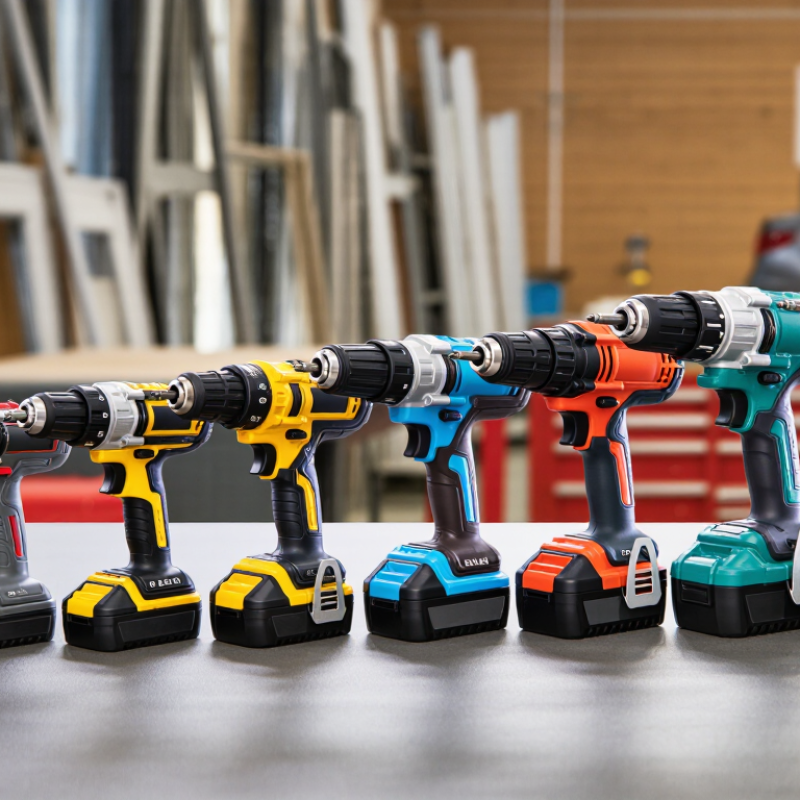
Understanding Cordless Impact Drill Classifications
Top 10 Types of Cordless Impact Drills for Global Buyers
Understanding Cordless Impact Drill Classifications
Cordless impact drills are not one universal category. Their classifications reflect torque, voltage, chuck design, impact mechanism, and working environment. The ten common types include compact impact drivers, standard impact drivers, mid-torque impact wrenches, high-torque impact wrenches, low-torque fastening tools, hammer drills, right-angle models, hydraulic pulse tools, brushed-motor tools, and brushless-motor tools. The categories overlap. That can confuse buyers.
Compact drivers suit cabinet screws and light installation. Standard drivers handle longer fasteners and general construction. Mid-torque wrenches fit vehicle maintenance, while high-torque models serve heavy assemblies. Hammer drills add masonry impact, but they are not ideal for every fastening task. Right-angle designs reach narrow frames. Hydraulic pulse tools reduce sudden reaction force. Brushed motors usually cost less, while brushless motors often improve efficiency and service life. A 2024 industry assessment by Grand View Research placed the global power tools market above 45 billion US dollars in 2023, showing strong demand for application-specific equipment.
Power selection also matters. Compact 12-volt systems favor low weight, while 18- to 20-volt platforms provide broader fastening capability. The U.S. Department of Energy reported lithium-ion battery pack costs fell from 1,415 dollars per kilowatt-hour in 2010 to 139 dollars in 2023. This decline supports more affordable cordless equipment, although tool batteries remain expensive in some regions. Buyers should compare tested torque, impact rate, battery capacity, grip balance, and local electrical safety requirements. Rated torque can mislead. Real performance changes with fastener size, socket friction, temperature, and operator technique.
Compact and Standard Models for Everyday Fastening Tasks
Compact and standard cordless impact drills serve different fastening needs, yet both support faster daily work. Compact models usually use 12-volt systems and weigh less than standard 18- or 20-volt tools. Their shorter heads fit inside cabinets, narrow wall spaces, and crowded electrical enclosures. A compact drill also reduces wrist strain during repeated screw driving.
Standard models provide stronger torque for deck screws, structural fasteners, and longer bolts. However, more power can damage soft timber or strip a small screw head. Field experience suggests choosing adjustable speed, several torque settings, and a responsive trigger over maximum torque alone. Battery capacity matters, too. A 2.0Ah pack keeps the tool light, while a 4.0Ah pack supports longer jobs but adds noticeable weight.
The global power tools market is expected to expand at about 5.2% annually from 2024 to 2030, according to Grand View Research. This growth reflects continued demand for portable fastening equipment across construction, maintenance, and home improvement. IEC 62841 provides safety requirements for many handheld motor-operated tools, making compliance information worth checking before purchase. Still, published specifications do not replace a practical test. I have found that a perfectly balanced compact drill can outperform a stronger model during overhead work. That is not universal. Examine grip comfort, charger time, clutch control, and battery availability for the intended region. Small details often decide whether a drill becomes a daily tool or stays in a drawer.
Mid-Torque and High-Torque Drills for Professional Applications
Mid-torque and high-torque cordless impact drills serve different professional demands. Mid-torque models usually suit automotive repairs, equipment maintenance, and structural assembly. They balance fastening power, control, and portability. A technician working beneath a vehicle may value a lighter tool more than maximum output. Less fatigue matters.
High-torque applications High-torque models target heavy-duty applications, including truck service, industrial machinery, and large structural fasteners. Their stronger motors handle stubborn bolts, but they also create greater kickback and wrist strain. Professional users should check the tool’s tested torque range, anvil size, battery temperature control, and reverse-breaking performance. Torque figures are not always directly comparable. Testing methods vary between manufacturers, which can confuse global buyers.
Market evidence supports this specialization. Fortune Business Insights reported that the global power tools market was valued at approximately 32.7 billion dollars in 2023, with cordless equipment gaining share through improved batteries and mobility. The International Energy Agency’s Global EV Outlook 2024 recorded more than 17 million electric car sales in 2024, expanding workshop demand for battery-service and chassis applications. These figures do not prove that every high-torque drill is necessary. That assumption needs questioning. In field use, a mid-torque tool may complete most jobs while reducing damage to fasteners. High torque remains valuable, but only when matched with calibrated sockets, controlled trigger use, and documented fastening procedures.
Specialized Models for Automotive, Construction, and Precision Work
Top 10 Types of Cordless Impact Drills for Global Buyers
Specialized Models for Automotive, Construction, and Precision Work
Cordless impact drills differ by torque, speed control, chuck design, and working environment. Automotive technicians often choose compact impact wrenches for wheel nuts and suspension bolts. Mid-torque models suit engine brackets and workshop repairs. High-torque units handle larger fasteners, but their weight can cause fatigue during repeated overhead work.
Construction users need different strengths. Impact drivers with hex chucks fit screws, lag bolts, and structural fixings. Hammer impact models help with masonry anchors, although they are not replacements for rotary hammers. Models with adjustable torque reduce stripped screws and damaged surfaces. A bright work light matters inside cabinets and dim building areas. It sounds minor. It is not.
Precision work needs restraint rather than maximum power. Low-torque impact screwdrivers suit equipment assembly, electrical cabinets, and delicate fixtures. Electronic controls can provide slower starts and more repeatable fastening. Battery voltage alone does not show real performance; clutch behavior, heat control, and balance matter too. In practical testing, a lighter tool often beats a stronger one after several hours. I still find torque claims difficult to compare because manufacturers may use different testing conditions. Buyers should check the measurement method, compatible sockets, charger voltage, and service support before choosing among the ten specialized types.
Top 10 Types of Cordless Impact Drills for Global Buyers
Typical maximum torque ranges for specialized cordless impact drill categories used in automotive, construction, installation, and precision applications. Values are representative specifications commonly found across professional tool classes, not company or brand data.
Higher torque supports heavier fastening, while compact and precision models prioritize control, reduced weight, and lower fastening risk.
Comparing Power, Battery Systems, Safety, and Global Market Standards
Global buyers can compare ten cordless impact drill types: compact, standard, mid-torque, high-torque, hammer, right-angle, brushless, hydraulic, dual-speed, and heavy-duty models. Each serves a different job. Compact tools suit cabinets and light assembly. High-torque versions handle large fasteners and structural work. Hammer models support masonry tasks, but they may feel heavier during repeated use.
Power ratings can mislead without battery context. Compare torque, impact rate, speed control, and runtime under load. A high-capacity battery adds working time, but also increases weight. Slide-in battery systems are convenient for frequent replacement. Multi-voltage systems may simplify purchasing across countries. Check charger input ranges and local plug requirements. Standards also differ between markets. Confirm applicable electrical, battery, charger, and electromagnetic compliance before importing. Certification marks should match the destination country, not merely the supplier’s sales region.
Tips: Test the tool with your actual fastener size and material. Check brake response, grip temperature, vibration, and LED visibility. Wear eye protection and secure loose clothing. A thermal cutoff is useful, but it cannot replace safe handling. In field comparisons, I once favored maximum torque and overlooked balance. That was a mistake. Operators used less power but finished faster with the lighter model. Review battery availability, spare parts, manuals, and warranty support locally. A reliable tool is not always the strongest one.