Top 10 Hood Filter Suppliers for Global Buyers
Choosing a Hood Filter supplier involves more than comparing prices. Buyers must consider filtration performance, material quality, dimensional accuracy, production capacity, and dependable delivery. A filter that looks suitable in a catalog may not fit an existing hood or perform well under a kitchen’s actual cooking load. Small details matter: frame depth, mesh construction, airflow resistance, and how easily staff can remove and clean the unit.
This guide introduces ten Hood Filter suppliers for global buyers, with practical points to support a more informed shortlist. It considers product range, customization options, quality-control practices, export experience, and communication during sampling and ordering. Buyers should still verify current specifications, request relevant test documents, and confirm packaging and lead times directly with each supplier. Details can change. That is worth remembering.
No supplier is ideal for every project. A large manufacturer may offer consistent output, while a smaller specialist might respond more flexibly to unusual dimensions. Yet claims alone do not prove performance. Ask for clear product data and compare samples against your equipment requirements. Also check whether replacement filters remain available after the first order. A careful review takes time, and a comparison table can help—but it cannot replace a real fit check. The following suppliers offer different strengths, so the best choice depends on your operating conditions, budget, and service expectations.
Understanding Hood Filters and Their Commercial Applications
Top 10 Hood Filter Suppliers for Global Buyers
Understanding Hood Filters and Their Commercial Applications
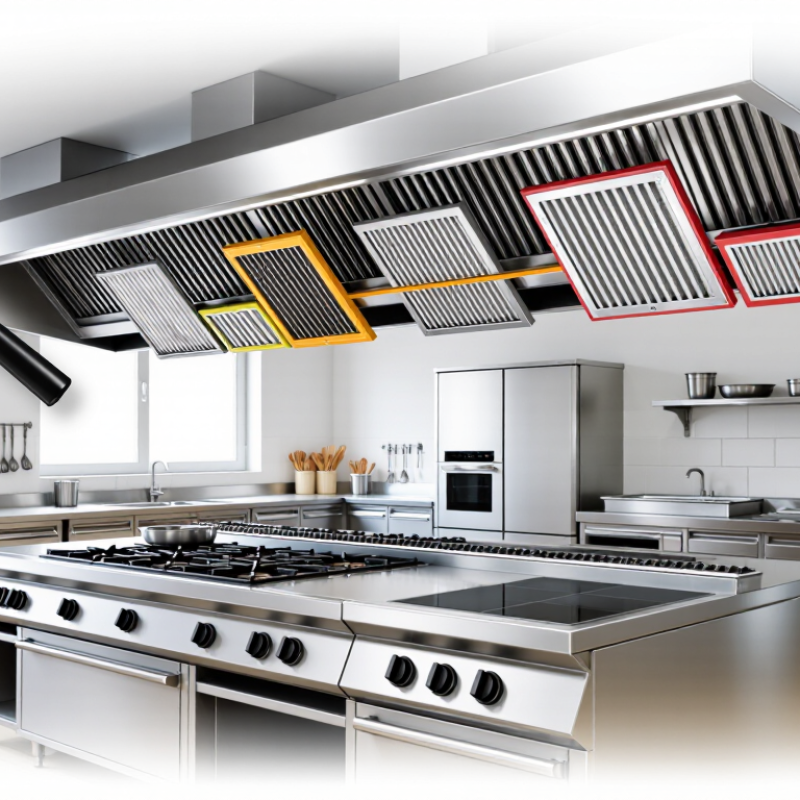
A hood filter sits between cooking equipment and the exhaust duct, catching grease droplets before they travel farther into the ventilation system. In busy kitchens, this can reduce residue buildup and support steady airflow, but it does not replace duct cleaning or system inspections. Common designs include baffle and mesh filters. The right choice depends on cooking volume, menu, hood design, and equipment guidance. A fryer line behaves differently from a small café grill. Air matters.
For buyers comparing suppliers, check dimensions, materials, construction, and performance documentation rather than appearance alone. Stainless steel baffle filters are often chosen for durability and ease of cleaning, though other setups may need different specifications. Confirm that filters fit the hood and can be removed safely. Ask about replacement availability and technical documents. Small details matter.
Tips: Keep a cleaning log and check for dents, blocked passages, or loose handles. Cleaning intervals vary with use, so follow equipment instructions and applicable local requirements. A filter that looks clean may still restrict airflow. This is easy to overlook during rushed maintenance, and no single schedule fits every kitchen.
Key Criteria for Evaluating Global Hood Filter Suppliers
A hood filter supplier should prove performance, not just quote a low unit price. Ask for grease-arresting test results, pressure-drop data, metal grade, dimensions, and cleaning instructions. Confirm the test applies to the exact filter model, not a similar product. A useful technical distinction: ASHRAE Standard 52.2 measures particle removal in HVAC filters across defined particle sizes; it does not measure kitchen grease capture. Request evidence suited to the job. Check that replacement filters fit the existing hood without gaps or awkward handling.
Energy matters, too. ENERGY STAR’s restaurant guidance reports that restaurants use about five to seven times more energy per square foot than typical commercial buildings. That figure covers the whole operation, not filters alone, but it makes airflow and pressure-drop data worth reviewing. Ask suppliers for test conditions and documented pressure-drop values, then compare like with like. Check cleaning frequency, spare-part availability, packaging, and delivery estimates for your destination. These details can prevent downtime. A polished catalog is not proof. Buyers sometimes trust one neat data sheet too much; I would also request a sample and inspect its edges, fit, and finish before placing a large order.
Comparing Supplier Capabilities, Certifications, and Service
For global buyers, hood-filter suppliers should be compared on more than price. The National Restaurant Association’s 2024 State of the Restaurant Industry projected U.S. restaurant sales of $1.1 trillion and employment of 15.7 million. That scale makes dependable replacement supply important. Ask suppliers for filter dimensions, frame materials, pressure-drop data, and test documentation. Small details matter. A filter that fits poorly can leave visible gaps around the hood.
Certifications also need careful checking. UL 1046 covers grease filters for commercial cooking equipment; buyers should confirm that the exact product configuration carries the relevant listing, not just that a supplier mentions the standard. NFPA’s report on structure fires in eating and drinking establishments estimated 7,410 fires annually during 2017–2021, with cooking equipment involved in 61 percent. These figures do not prove that a particular filter prevents fires, but they reinforce the need for documented maintenance guidance and suitable products.
Service quality is easier to judge through practical questions: Can the supplier provide drawings before ordering? Are replacement units available in consistent sizes? How quickly are test records and shipment updates shared? Compare warranty terms, export packing, and response times across the top 10 candidates. A polished catalog is useful, but it cannot replace clear answers. I would still verify samples; supplier claims sometimes look stronger on paper than in a kitchen.
Top 10 Hood Filter Suppliers: Buyer Evaluation Priorities
Suggested scorecard weights for comparing suppliers: product performance and compliance receive the greatest emphasis, followed by certifications, delivery, and service. These are evaluation recommendations—not measured market statistics or claims about any supplier. Verify certificates, test reports, lead times, and service commitments directly with each supplier.
How Global Buyers Can Select and Verify a Supplier
For a hood filter supplier, start with the actual operating conditions, not a catalog photo. Share the hood dimensions, expected cooking load, airflow, and cleaning routine. Ask whether the proposed filter fits your frame and how it performs as grease builds up. Details matter. A low initial price may not reflect replacement frequency, shipping damage, or the time needed for cleaning.
Request product drawings, material specifications, and test data relevant to filtration efficiency and pressure drop. Check that documents identify the same filter model and configuration you plan to purchase. Ask for a sample, then inspect its dimensions, finish, edges, and welds. Compare it with your installation requirements. A small measurement mismatch can become an expensive problem across a large order. Ask again if an answer is vague.
Before placing an order, verify the supplier’s production capacity, quality checks, packaging method, lead time, and replacement-part availability. Request recent customer references for comparable applications, and confirm who handles defects or transit damage. Keep agreed specifications and inspection criteria in writing. A factory audit or video review can reveal useful details, but neither guarantees consistent output. Even a careful checklist can miss something; consider a pilot order and review the filters after real use.