
China has a broad industrial equipment sector, but choosing a manufacturer requires more than comparing catalog prices. A Hot Water Absorption Chiller can turn available heat into cooling for factories, hotels, and district energy systems. Its performance depends on the heat source, cooling-water conditions, and the demands of the site. Small details matter.
This guide explores how to assess Chinese manufacturers without treating a supplier list as a guarantee of quality. It outlines practical checks, including published capacity ranges, operating-temperature requirements, material specifications, testing procedures, and service support. Ask for performance data under conditions close to your own. A chiller rated for one heat-source temperature may not deliver the same output at your facility. That distinction can be easy to miss.
Manufacturer claims deserve careful review. Request technical documents, references for comparable installations, warranty terms, and clear answers about commissioning and spare parts. Where possible, verify details through direct discussions and independent inspections. A polished product page is useful, but it cannot replace evidence. Even a thorough comparison may leave questions unanswered; buyers should record assumptions and confirm them before ordering. The sections ahead provide a grounded starting point for identifying suitable manufacturers, preparing supplier questions, and weighing long-term operating needs alongside the purchase price.
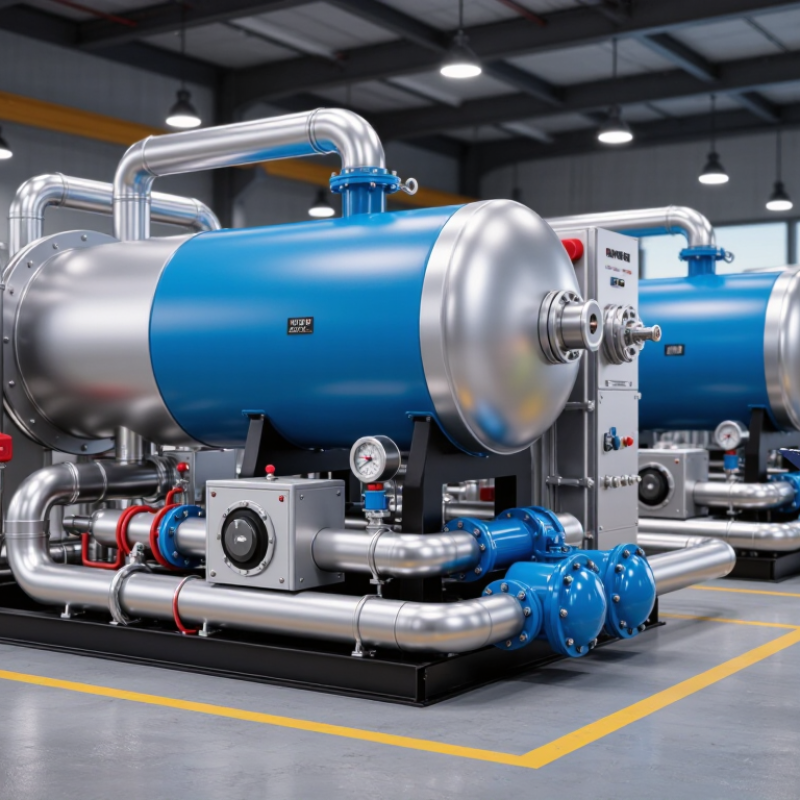
Hot-water absorption chillers make chilled water using heat instead of a conventional mechanical compressor. In a common water–lithium bromide cycle, water refrigerant evaporates under low pressure and absorbs heat from the chilled-water loop. The lithium bromide solution captures the vapor. Hot water then heats the solution in the generator, releasing refrigerant vapor for condensation and reuse. The cycle is quiet, but it still needs pumps and heat-rejection equipment.
The U.S. Department of Energy’s CHP Technology Fact Sheet on absorption chillers reports typical thermal coefficients of performance around 0.6–0.8 for single-effect units and 1.0–1.2 for double-effect units. These figures are not guarantees: actual output depends on hot-water temperature, cooling-water conditions, and operating load. A diagram makes the cycle look simple. Commissioning is less tidy; small temperature differences can affect performance, and heat rejection needs careful attention.
Tips: Check the available hot-water temperature and flow against the chiller’s operating requirements. Measure cooling-water conditions during the hottest site days, not just during a design review. Also compare annual heat availability with cooling demand; recovered heat is useful only when both occur together. That detail is easy to overlook.
Evaluating Chinese hot water absorption chiller manufacturers requires more than comparing quoted capacity. The International Energy Agency’s The Future of Cooling (2018) reports that cooling uses about 10% of global electricity, with demand projected to more than triple by 2050. That outlook makes verified efficiency and dependable operation important purchasing criteria. Ask manufacturers for performance data at your actual hot-water inlet temperature, chilled-water setpoint, and cooling-water conditions. A COP without test conditions tells you little.
Check factory test records, component specifications, warranty terms, and the availability of trained service staff near your site. Request references for installations with similar heat sources and operating hours. Review water-treatment requirements, too: mineral buildup on heat-transfer surfaces can reduce performance and increase maintenance. A neat catalogue number can still mislead. I would also compare the proposed unit’s turndown range with your seasonal load, not only its peak capacity.
Tips: Ask for a witnessed acceptance test and a written list of exclusions. Confirm the supplier can provide spare parts, operating manuals, and commissioning support. If a claim is unclear, request the test method in writing. Small details matter. A response that arrives late during procurement may hint at future communication gaps, though it is not proof.
China’s leading hot water absorption chiller manufacturers serve factories, hotels, and campuses that can use recovered heat or hot water. Their equipment uses thermal energy to produce chilled water, reducing dependence on electrically driven compressors. The right design depends on heat-source temperature, flow rate, cooling load, and seasonal operating hours. Details matter. A manufacturer should explain how these conditions affect capacity, efficiency, and stable operation—not just quote a headline rating.
When comparing Chinese manufacturers, request performance data at your actual operating conditions, including part-load results and hot-water temperature limits. Ask about corrosion-resistant materials, tube-bundle access, control-system integration, and routine maintenance requirements. A factory visit or technical review can reveal whether engineering and testing processes match the proposal. Not every model fits. Check references from comparable applications, and confirm who handles commissioning and after-sales support. Be cautious of broad efficiency promises without stated test conditions; real performance can shift with water quality, heat-source fluctuations, and site design. A detailed specification helps, though it cannot replace careful commissioning.
Comparing China’s hot water absorption chiller manufacturers means looking beyond rated capacity. Single-effect machines can suit lower-temperature hot water and steady building loads. Higher-effect designs may deliver more cooling per unit of heat, but need suitable heat-source temperatures and operating conditions. Ask for performance curves at your actual hot-water inlet temperature, cooling-water temperature, and chilled-water setpoint. Nameplate capacity alone can mislead.
The International Energy Agency’s The Future of Cooling (2018) projects global cooling energy demand rising from 2,020 TWh in 2016 to 6,200 TWh by 2050. That growth makes efficient heat recovery worth evaluating, especially in factories with dependable waste heat, campuses, and district-energy systems. Most water-based absorption chillers use water as the refrigerant and lithium bromide as the absorbent. Compare manufacturers on capacity at design conditions, part-load performance, heat-source stability, controls, and maintenance access. Look closely at vacuum-system service and crystallization safeguards. Small details matter. A chiller may perform well on paper but struggle when heat supply fluctuates; that limitation deserves an honest site assessment.
Indicative cooling-capacity bands for project planning, shown by typical application scale.
Smaller systems may suit individual buildings or process loads; mid-size systems are common in hotels, hospitals, and commercial facilities; larger systems can serve campuses or district cooling networks. These are broad planning ranges, not fixed product limits. Actual capacity and efficiency depend on chilled-water conditions, hot-water temperature, and system design. Single-effect hot-water-driven chillers commonly operate with a thermal COP around 0.6–0.8, with source-water temperatures often in the approximate 70–100°C range.
Selecting a hot water absorption chiller supplier starts with reliable site data, not catalog capacity. Share the hot-water inlet temperature, flow rate, return temperature, chilled-water setpoint, and cooling-water conditions. Ask for predicted performance at those exact points, including seasonal changes. A nominal capacity can mislead. Numbers matter.
Request the heat balance, expected COP, pressure-drop data, minimum stable load, and startup requirements. Check whether the unit suits your actual water quality and fluctuating heat supply. Ask how capacity changes when hot-water temperature falls below the design point. “It should work” is not enough. Request the assumptions behind that answer, in writing.
Evaluate engineering support alongside equipment specifications. Ask for references from installations with similar heat sources and duty cycles, plus commissioning procedures, operator training, spare-parts guidance, and service response times. Confirm who manages controls integration and site troubleshooting. Compare warranty exclusions, not only warranty length. If possible, speak with an operator at a comparable facility. No spreadsheet captures every site constraint; an unclear alarm or slow sensor replacement may matter more than expected.
© Copyright 2025 | LittleFirefighter.com | All Rights Reserved | 1EZ Creative: Orange County Web Design

Fusce ut ipsum tincidunt, porta nisl sollicitudin, vulputate nunc. Cras commodo leo ac nunc convallis ets efficitur.

12345 North Main Street,
New York, NY 555555
1.800.555.6789
sale@vibrotools.com
