Top Investment Casting Foundries in China for Global Buyers
China remains a major sourcing base for precision metal components, especially in aerospace, medical, energy, and industrial equipment. The China Foundry Association reported that Chinese foundries produced more than 50 million tonnes of castings in 2023. Investment casting represents only a specialized portion of this output. Still, its ability to reproduce thin walls, internal passages, and complex stainless-steel shapes attracts global buyers.
Market estimates require caution. Fortune Business Insights valued the global investment casting market at approximately USD 15 billion in 2023, while other research firms publish different figures and growth forecasts. These variations reflect different definitions, regions, and product categories. A serious sourcing review should therefore examine factory evidence, not rely on market size alone. Look for an Investment Casting Foundry with documented experience in wax injection, ceramic shell control, vacuum melting, heat treatment, and precision inspection.
The strongest Chinese suppliers can provide material certificates, dimensional reports, process records, and samples from comparable projects. Their workshops should show controlled wax temperatures, clean shell rooms, and calibrated coordinate measuring machines. Certifications such as ISO 9001, IATF 16949, or AS9100 may support credibility, depending on the application. However, certification alone proves little.
Ask for proof.
This guide compares leading foundries through practical criteria, including alloy capability, minimum order quantities, tooling ownership, export experience, and corrective-action systems. Some supplier websites appear impressive but offer limited technical evidence. That weakness deserves attention. Global buyers should verify production capacity, communication quality, traceability, and inspection data before approving a long-term supplier.
Investment Casting in China: Process, Materials, and Applications
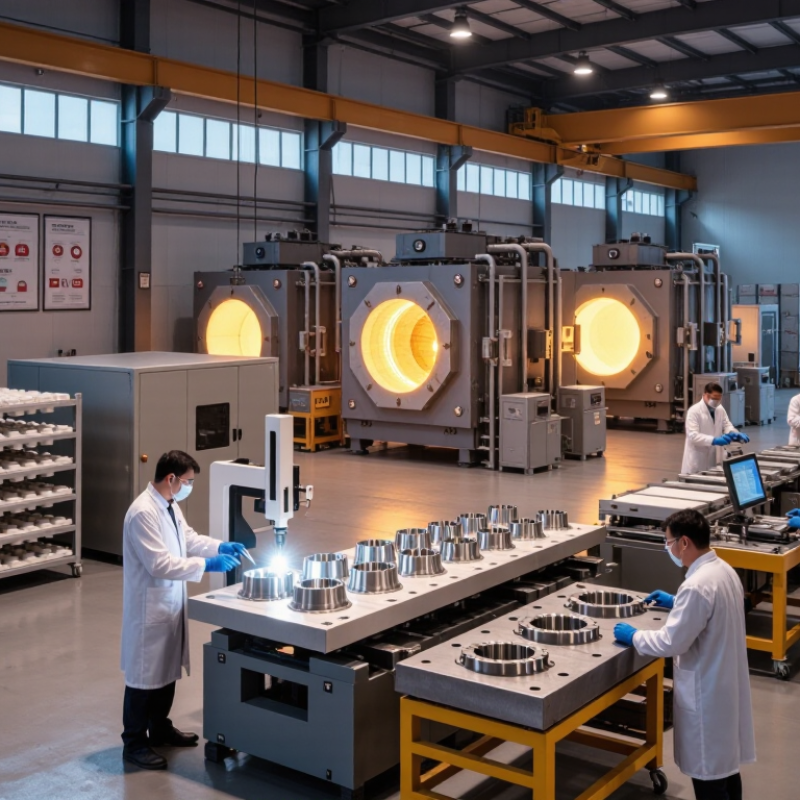
Investment casting in China serves global buyers seeking complex metal components with smooth surfaces and tight dimensional control. The process begins with a wax pattern, usually produced from an engineered mold. Workers assemble patterns onto a wax tree before applying several ceramic slurry layers. After drying, the shell is heated to remove the wax. Molten metal then fills the ceramic cavity. Gating design, shell thickness, and pouring temperature affect the final result. Small errors can create porosity, distortion, or incomplete filling. The process is precise, but not flawless.
Common materials include stainless steel, carbon steel, aluminum alloys, nickel alloys, and heat-resistant steels. Material selection depends on corrosion exposure, operating temperature, load, and machining requirements. Experienced foundries review the application before recommending an alloy. Heat treatment can improve strength and stability. Inspection may include dimensional checks, hardness testing, radiography, dye penetrant testing, and chemical analysis. Buyers should request material certificates and clear inspection records. Verifiable documents matter.
Applications include pump bodies, valve components, impellers, food-processing parts, industrial fittings, and energy equipment. Some aerospace and medical components also require investment casting, but their qualification demands are much stricter. Reliable production requires accurate drawings, agreed tolerances, approved samples, and traceable batch records. Communication gaps can still cause avoidable revisions. A practical buyer should confirm inspection points before production starts. Even then, design changes may expose weaknesses that looked invisible on paper.
Key Criteria for Selecting a Chinese Investment Casting Foundry
Selecting a Chinese investment casting foundry requires evidence, not polished brochures. Modern Casting’s 2023 World Casting Census reported that China produced 51.9 million metric tonnes of castings in 2022. That scale creates options, but it does not guarantee investment-casting discipline. Ask for recent samples, process limits, and repeat-order results. Inspect thin walls, radii, gates, and ceramic shell residues. Small details matter.
Quality systems should be tested at process level. The ISO Survey 2023 identifies China as the country with the most valid ISO 9001 certificates, yet certification alone proves little. Request control plans, material certificates, heat-treatment charts, dimensional reports, and non-destructive testing records. For critical parts, confirm calibrated CMM equipment, alloy traceability, and nonconformance closure.
Ask how wax patterns and ceramic shells are protected during humid summer production. That answer can reveal factory maturity.
Capacity claims need a physical check. Compare quoted output with furnace size, shell-room space, inspection staffing, and subcontracted operations. A pilot lot should include destructive testing when technically appropriate. Do not trust a perfect first sample. Some factories optimize samples, not repeatability. That uncomfortable possibility deserves a live audit. Also examine engineering communication, revision control, packaging, and delivery records. A foundry may meet the drawing yet fail through uncontrolled changes or weak traceability. No checklist is perfect. Use the scorecard, then challenge it.
Top Investment Casting Foundries Serving Global Buyers
China’s investment casting foundries increasingly serve aerospace, medical, energy, and industrial buyers worldwide. A 2024 market assessment by Mordor Intelligence valued the global investment casting market at about USD 17 billion. It forecasts steady growth through 2029. This demand rewards foundries with disciplined export experience, not only low prices.
Reliable suppliers usually manage wax injection, ceramic shell building, heat treatment, machining, and inspection internally or through controlled partners. Buyers should request ISO 9001 certification, material certificates, dimensional reports, and clear lot traceability. For demanding parts, X-ray inspection, coordinate measuring machines, and vacuum melting can reduce hidden defects. I have found that response speed matters. A technically strong quotation still fails when drawings, tolerances, or revision codes are misunderstood. Some suppliers also provide tooling maintenance and sample approval before mass production. Their evidence should be specific, dated, and easy to verify.
Tips: Ask for a process flow, inspection plan, and recent sample report. Compare quoted tolerances with ISO 8062 requirements. Confirm whether pricing includes tooling, testing, packaging, and shipping documents. Request a video audit when an in-person visit is impractical. Do not accept impressive photographs as proof of capacity. A foundry may show polished parts while outsourcing critical controls. That is a risk. The Global Foundry Market Report 2024 estimates Asia-Pacific remains the largest regional production base, but regional scale does not guarantee consistency. Buyers should run a small pilot order first, review defect data, and revise the specification when practical experience exposes weak assumptions.
Quality Standards, Certifications, and Production Capabilities
Top Investment Casting Foundries in China for Global Buyers
Quality begins with a traceable process, not a polished brochure. Reliable foundries maintain ISO 9001 systems and provide certificates within their valid scope. Buyers should verify audit dates, certificate numbers, and covered production sites. For automotive or aerospace work, additional quality systems may be required.
Ask for heat numbers, chemical analysis, and mechanical test results with every batch. A clear inspection plan should define dimensional checks, surface limits, and non-destructive testing. Digital reports with photographs can make defects easier to review across time zones. Samples should match drawings, tolerances, and approved materials.
Production capability also matters. Experienced facilities may combine wax injection, ceramic shell building, vacuum casting, heat treatment, and precision machining. Check their equipment list, furnace capacity, maximum casting dimensions, and ability to control thin sections. A 0.8-millimeter wall can expose weak process control. Tooling records and first-article inspection reports reveal practical discipline.
No foundry gets every first article perfect. The important question is how quickly it identifies and corrects variation. Ask for corrective-action records, process capability data, and evidence of repeat orders. Some suppliers report impressive tolerances but lack stable measurement routines. That deserves careful questioning. A factory visit, independent inspection, or small pilot order can test reliability before larger commitments.
Top Investment Casting Foundries in China for Global Buyers
Quality Standards, Certifications, and Production Capabilities
The chart shows commonly published, non-company-specific capability benchmarks for precision investment casting suppliers. Actual results depend on alloy, geometry, tooling design, heat treatment, inspection method, and applicable customer specifications. Export buyers commonly evaluate ISO 9001 quality systems, ISO 14001 environmental management, ISO 45001 occupational safety, IATF 16949 automotive quality requirements, and NADCAP special-process accreditation where relevant.