
Who Are the Top Jacquard Guide Board Manufacturers in China?

China’s Jacquard Guide Board suppliers serve a textile industry where precision parts affect pattern accuracy, machine uptime, and fabric quality. The International Textile Manufacturers Federation’s International Textile Machinery Shipment Statistics 2023 reported approximately 82,000 shuttleless looms shipped worldwide, down about 25% from 2022. This broader machinery figure is useful context, not a direct measure of guide-board demand. That distinction matters.

A credible supplier comparison should look beyond catalogue claims. Check machining tolerances, material consistency, surface finish, compatibility with named jacquard systems, and documented quality controls. Ask for drawings, inspection records, sample parts, and realistic lead times. A smooth board edge and accurately aligned holes can reduce friction and help maintain reliable yarn movement. But specifications alone do not prove performance on your machine.

This overview examines manufacturers in China through product capability, manufacturing experience, customization, quality assurance, and export support. ITMF’s shipment report and industry information from the China Textile Machinery Association provide useful context for the machinery sector; neither publishes a definitive ranking of Jacquard Guide Board makers. So, any “top” list should be treated as a practical shortlist, not an official league table. Supplier claims still deserve checking.
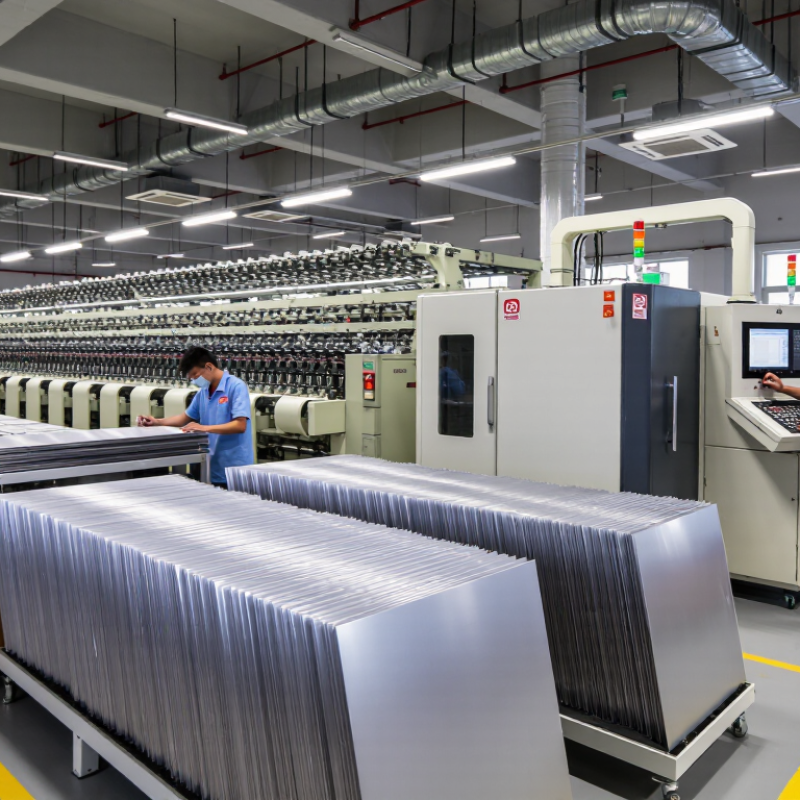
Who Are the Top Jacquard Guide Board Manufacturers in China?

What Is a Jacquard Guide Board and What Does It Do?

A Jacquard guide board is a precision part used in jacquard knitting machines. It helps guide yarns through selected paths as the machine forms a patterned fabric. Its openings keep individual yarns separated and aligned, reducing unwanted rubbing and tangling. Simple in appearance, it has a demanding job.

During production, hooks and needles move in a controlled sequence. The guide board supports consistent yarn delivery, which can affect stitch quality and pattern definition. Depending on the machine, boards may be made from materials such as engineered plastic or metal. Hole spacing, surface finish, and dimensional accuracy matter. A rough edge can catch fine yarn. Even a small alignment error may show up as uneven stitches.

Tips: Check the board for burrs, cracks, and blocked openings before installation. Match its dimensions to the machine specification, and handle it carefully; forcing a misaligned part can cause damage. Keep a record of wear and fabric defects. The connection is not always obvious, so inspect the yarn path too.

When comparing guide boards, ask how dimensions are checked and whether samples can be verified against your machine. Request clear material and tolerance details. In practice, the best fit depends on the machine model, yarn type, and production conditions—not on appearance alone. Regular inspection helps, though it cannot correct every cause of fabric variation.

How Are Jacquard Guide Boards Designed and Manufactured?

Jacquard guide board design starts with the loom model, fabric structure, and required warp-thread path. Engineers translate these requirements into a hole layout, checking spacing, board thickness, and alignment with the machine’s hooks. A few millimeters can matter. If holes sit off-center, threads may rub, fray, or move unevenly during operation.

Manufacturing often involves cutting or drilling a suitable board material, then deburring and inspecting each opening. The exact material and process depend on the loom, production volume, and expected wear. Not every board needs the same tolerance. A prototype can reveal problems that drawings miss, such as rough edges or slight warping. It should be tested on the intended machine before larger batches are made. That step takes time. Even a careful design may need adjustment after a real weaving run, especially when thread tension or operating speed changes. Reliable makers document these checks and confirm dimensions against the customer’s loom specifications.

What Factors Distinguish Leading Chinese Manufacturers?

What Factors Distinguish Leading Chinese Manufacturers?

A strong jacquard guide board starts with dimensional control, not a polished catalogue. Buyers should ask for flatness readings, hole-position tolerances, material specifications, and inspection records. On a finished board, even a small burr around a guide hole can catch yarn and cause repeated stops. Small details matter. Ask how each batch is checked, and whether rejected parts are recorded rather than quietly reworked.

China’s National Bureau of Statistics reported more than RMB 4.7 trillion in 2023 operating revenue for textile-industry enterprises above designated size. That figure signals a substantial industrial base, but it does not prove any supplier’s precision. Request a sample, compare hole alignment under magnification, and test the board on the intended machine. Also check whether the maker can explain heat treatment, surface finishing, and replacement lead times in plain terms. A quick quotation is useful, but it is not evidence of consistent quality. My own assessment would still be incomplete without seeing the part run under production conditions.

What Distinguishes Leading Jacquard Guide Board Manufacturers in China?

A practical procurement framework for comparing manufacturers—not a company ranking.

Precision and consistency, wear resistance, quality control, customization and technical support, and delivery and after-sales service are relevant evaluation criteria for guide boards. The equal 20% values are a neutral framework allocation, not measured market data or ratings of individual manufacturers.

Who Are the Top Jacquard Guide Board Manufacturers in China?

The top jacquard guide board manufacturers in China are best identified by measurable production quality, not marketing claims. Look for suppliers that can document board flatness, hole-position accuracy, surface hardness, and batch consistency. Ask for inspection records and sample boards, then check whether the holes align cleanly with your machine’s hooks and needles. Small errors matter. They can cause uneven yarn movement, wear, or downtime.

Textile Exchange’s Materials Market Report 2024 estimates global fiber production reached 124 million tonnes in 2023. This signals the scale of textile manufacturing, but it does not rank guide board suppliers; buyers should not treat broad market growth as proof of product quality. Request material specifications, machining tolerances, and wear-test results from each candidate. Compare lead times and replacement support, too. A supplier may offer precise boards but struggle with repeat orders. That detail is easy to miss. A ranking can still mislead unless it reflects your jacquard machine type, operating speed, and maintenance needs.

How Can Buyers Compare Suppliers and Select the Right Board?

Comparing jacquard guide board suppliers starts with the machine, not the catalog. Share the loom model, board dimensions, hole pattern, and operating conditions. Ask each supplier to confirm material grade, thickness tolerance, surface finish, and drilling accuracy in writing. Small errors matter. A hole that sits slightly off-center may affect thread movement or installation.

Request a sample made to your specifications, then check its flatness, edge quality, and hole alignment with suitable measuring tools. If possible, test it on the intended machine and observe wear during a normal production run. Ask how the supplier controls batch consistency and handles rejected parts. Clear answers matter more than broad claims. Compare lead times, packaging, replacement terms, and the detail included in technical drawings, not price alone. A low quote can hide thin material or limited inspection. That is easy to miss. It is also worth checking relevant production experience and asking for customer references, while remembering that one sample cannot prove long-term reliability. Some buyers focus too heavily on appearance; I would review the measurements twice, even when the board looks clean.

Who Are the Top Jacquard Guide Board Manufacturers in China? - How Can Buyers Compare Suppliers and Select the Right Board?

Comparison Dimension What Buyers Should Compare Evidence to Request Suggested Weight
Drawing and specification accuracy Confirm that board dimensions, hole layout, thickness, material, and tolerances match the buyer’s approved drawing and machine requirements. Controlled technical drawing, revision history, inspection report, and a first-article sample checked against the drawing. 20%
Material and construction Compare the specified board material, surface finish, rigidity, and suitability for the intended operating environment. Requirements can vary by machine and application. Material specification, relevant test results, sample, and written confirmation of any proposed material substitution. 15%
Hole and feature quality Check hole position, diameter, edge condition, burrs, and consistency across the board. Agree on critical dimensions and acceptance limits before production. Dimensioned inspection data, close-up sample images, and a production sample inspected against agreed criteria. 15%
Compatibility and fit Verify the board against the specific Jacquard system, machine interface, and installation requirements. Do not rely on a general compatibility claim alone. Machine model or interface confirmation, fit-check records, and sample approval by the buyer or equipment integrator. 15%
Quality management and traceability Assess how the supplier controls incoming materials, production checks, nonconforming parts, and identification of finished goods. Quality procedures, applicable management-system certificates with scope and validity, inspection records, and batch or order traceability details. 10%
Sampling and production control Compare sample lead time, approval process, production scheduling, and how changes are managed after sample approval. Written sampling and production plan, sample approval record, and change-control process. 10%
Packaging and delivery Check whether packaging protects the board from impact, moisture, contamination, and handling damage during the agreed shipping route. Packaging specification, delivery schedule, and clear terms for inspection, shipping, and responsibility for damage. 5%
Commercial terms and support Compare quotations on the same scope, including tooling or setup charges, minimum order quantities, payment terms, warranty, and response process for defects. Itemized quotation, written warranty terms, order terms, and a named technical contact or documented support channel. 10%
Total suggested evaluation weight 100%

This is a supplier-comparison checklist, not a ranking of named manufacturers. Confirm all dimensions, tolerances, compatibility, delivery terms, and acceptance criteria against the buyer’s specific machine and approved technical documents.

AVADA IT

Fusce ut ipsum tincidunt, porta nisl sollicitudin, vulputate nunc. Cras commodo leo ac nunc convallis ets efficitur.

RECENT TWEETS

CONTACT US

  • 12345 North Main Street,
    New York, NY 555555

  • 1.800.555.6789

  • sale@vibrotools.com

Go to Top