
Choosing among China’s top low-noise fan manufacturers takes more than comparing catalog prices. Buyers need to understand how each supplier balances sound, airflow, energy use, and service life. A Low Noise Fan may sound impressive in a product description, yet perform differently once installed inside a cabinet or ventilation system. Ask for sound-pressure data, test conditions, and operating speed. Without those details, decibel figures can be difficult to compare fairly. Quiet matters. So does consistent airflow.
This guide introduces practical ways to assess manufacturers, from engineering capability and production controls to customization and after-sales support. Look for clear product specifications, sample-testing options, and responses that address your actual operating conditions. A factory visit or technical call can reveal useful details, such as how workers check vibration or inspect fan blades. Still, one conversation is not proof of long-term reliability. Request relevant test records and verify claims against the needs of your application. Some suppliers may present incomplete information; that is a reason to ask better questions, not to assume the worst. The strongest choice is rarely the quietest fan on paper alone. It is the manufacturer that can explain its measurements, show consistent quality practices, and support the product after delivery. No shortlist replaces careful verification.
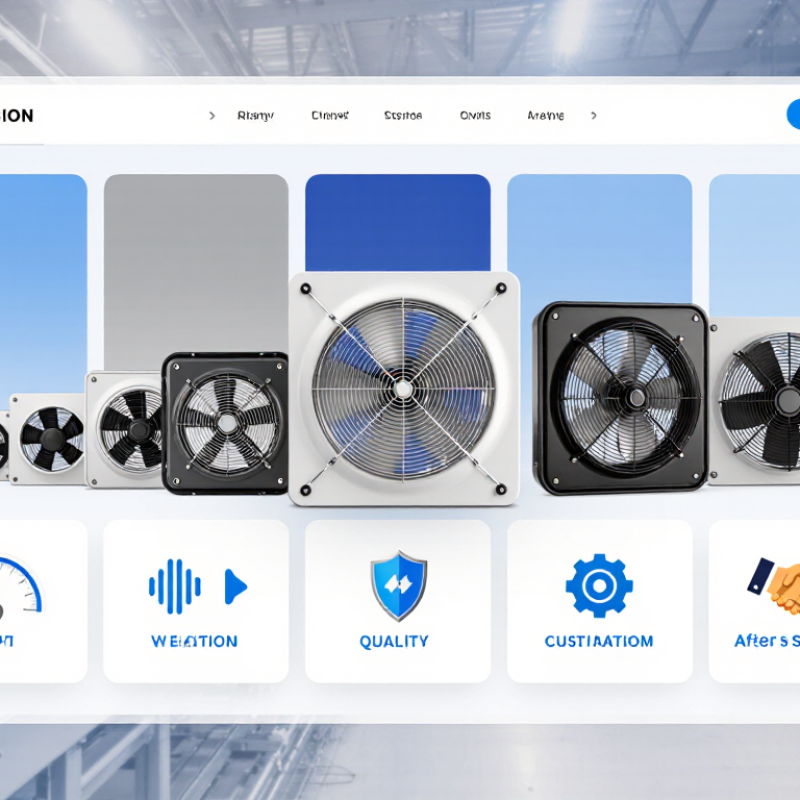
A low-noise fan is not defined by a low decibel number alone. Noise should be measured at a stated airflow and pressure, because a fan may sound quieter simply by moving less air. AMCA Standard 300 and ISO 13347 describe laboratory methods for measuring fan sound, including sound power across frequency bands. These results help compare products under controlled conditions. They do not guarantee identical sound in a room, where duct shape, mounting, and nearby surfaces can change what people hear.
The sound character matters, too. A smooth airflow is usually less intrusive than a sharp tonal whine or a rattling motor. Check the A-weighted sound level, but also ask for octave-band data and the operating point used for testing. One number can mislead. As a useful context—not a fan pass/fail limit—the WHO’s 2009 Night Noise Guidelines recommend keeping average indoor bedroom noise at or below 30 dB LAeq for good-quality sleep. Real rooms vary, so treat that figure carefully.
Tips: Compare fans at the same airflow, and listen for hum or vibration after installation. A soft rubber mount can help. It is easy to overlook duct noise.
China’s low-noise fan industry is a network, not a single production line. Component suppliers make motors, bearings, blades, and molded housings, while specialist factories assemble fans for ventilation, cooling, and equipment applications. Some companies focus on one component; others manage design, production, and testing under one roof. It varies by region.
Manufacturing clusters in areas such as the Yangtze River Delta and Pearl River Delta give producers access to nearby parts suppliers and processing services. This can shorten development cycles, but it does not guarantee quieter products. Noise depends on the whole system: blade shape, motor vibration, bearing fit, airflow resistance, and how securely the fan sits in its housing. Small assembly differences matter.
The market also includes engineering-led manufacturers that customize speed, dimensions, or control features for specific equipment makers. Buyers should compare acoustic results alongside airflow and pressure, using consistent test conditions and measurement distances. A low decibel figure alone can mislead if the fan moves too little air. That matters. In practice, China’s industry combines high-volume production with specialized engineering, though the line between the two is not always clear. Even detailed product specifications may leave questions about real-world installation noise.
China’s leading low-noise fan manufacturers distinguish themselves through acoustic testing, motor control, and consistent production—not just low decibel claims. The U.S. Department of Energy’s Improving Fan System Performance: A Sourcebook for Industry estimates that fans use about 15% of the electricity consumed by industrial motor systems. That makes efficient airflow important alongside quiet operation. Buyers should compare sound data with airflow and static pressure, under matching test conditions. A low dB(A) figure alone can mislead.
Strong manufacturers document their test methods and provide repeatable results across production batches. Ask for sound-pressure or sound-power data, operating speed, and the distance and room conditions used for measurements. AMCA Publication 300 describes laboratory methods for measuring fan sound, offering a useful reference when reviewing claims. Look beyond the sample unit. Check how the supplier controls blade balance, vibration, and motor noise on the production line. There is a trade-off: reducing speed may lower noise but also reduce airflow. A quiet prototype is not proof of a quiet installed system.
Tips: Request a test report for your actual airflow and pressure range. Compare samples in the same setup, and listen for tonal hum as well as overall loudness. If results are unclear, ask the manufacturer to repeat the test. It happens.
When comparing low-noise fan manufacturers in China, ask how they measure sound—not just for a single decibel figure. A useful report states the test distance, room conditions, fan speed, and airflow. Numbers need context. Compare sound levels at similar airflow and static pressure, since a quieter fan may simply move less air. Request a sound-spectrum chart if available; a sharp tonal whine can be more noticeable than steady airflow, even when overall readings look similar.
Product capability matters as much as the sample. Ask whether the manufacturer checks impeller balance, vibration, and bearing noise during production. Confirm how often units are tested and whether inspection records can be shared. Check that the proposed model has been tested under conditions close to your installation, including any grille or duct resistance. A polished sample is not proof of consistent batches. Ask how production changes are controlled and what happens when a shipment falls outside agreed limits. A spreadsheet cannot capture every installation, and I would not treat one impressive demo as a guarantee. Compare the test method, repeatability, and technical support before deciding.
Decibel levels are logarithmic: each 10 dB increase represents 10 times the acoustic intensity. The chart shows mathematical reference levels, not measurements of any fan or manufacturer.
To compare manufacturers fairly, check noise measurements at the same airflow and static pressure, using the same distance, installation, and test method.
Choosing a Chinese low-noise fan supplier means checking measured performance, not relying on a “quiet” label. Ask for sound-pressure data in dBA and octave-band results at your actual airflow and static pressure. ISO 13347 defines laboratory methods for measuring industrial fan sound power, helping buyers compare test results on a consistent basis. Request the test setup and distance, too; figures from different conditions can mislead.
Efficiency matters alongside noise. The International Energy Agency’s 2011 report, Energy Efficiency Policy Opportunities for Electric Motor-Driven Systems, estimates that motor-driven systems use about 45% of global electricity. That figure covers many applications, not fans alone, but it shows why motor efficiency and operating-point data deserve attention. Check airflow, pressure, power consumption, vibration, and materials against your specification. Ask how the factory controls impeller balance and inspects finished units. A clear answer is useful; a perfect-sounding promise is not enough.
Tips: Request a sample test at your expected duty point. Compare the report with your own measurements, and confirm production units follow the same process. Small details matter. Supplier responses may still leave gaps, so record assumptions before approving a design.
© Copyright 2025 | LittleFirefighter.com | All Rights Reserved | 1EZ Creative: Orange County Web Design

Fusce ut ipsum tincidunt, porta nisl sollicitudin, vulputate nunc. Cras commodo leo ac nunc convallis ets efficitur.

12345 North Main Street,
New York, NY 555555
1.800.555.6789
sale@vibrotools.com
