
Choosing the right Screw Thread is a purchasing decision, not merely a catalog exercise. A thread can look correct and still fail during assembly. Pitch, diameter, flank angle, tolerance, sealing method, and material all affect performance. A buyer inspecting a sample under warehouse lighting may notice clean crests, yet miss a pitch mismatch that causes leakage or cross-threading.
This guide examines ten widely used Screw Thread types, including Metric, Unified, Whitworth, BSP, NPT, Acme, and Buttress threads. It explains where each type appears, how engineers identify it, and which details global buyers should confirm before ordering. Standards matter. ISO 68-1, ISO 965, ASME B1.1, and regional specifications may define similar-looking threads differently. Names alone are not enough.
Joseph Whitworth, whose 1841 work influenced modern thread standardization, described the goal as “a uniform system of screw threads.” That principle still matters. A global buyer needs consistency across drawings, samples, suppliers, and inspection reports. In practice, confusion often begins with one unchecked abbreviation. BSP is not automatically compatible with NPT. Metric is not simply interchangeable with Unified. Small errors become expensive quickly.
The comparison is not perfect. Some applications require specialist standards, tighter tolerances, or verified sealing tests. Thread gauges, calibrated measurement tools, and supplier documentation provide stronger evidence than visual judgment. This introduction offers a practical starting point, while encouraging buyers to question assumptions before approving production. Sometimes, the safest decision is to ask one more technical question.
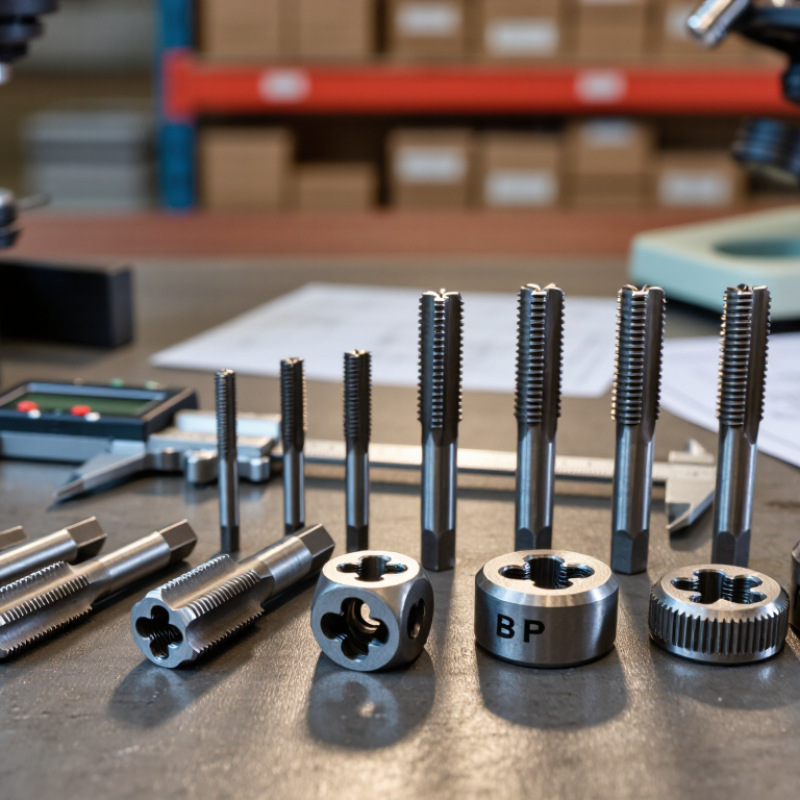
A screw thread is a helical ridge that converts rotation into controlled clamping force. It also guides assembly, resists loosening, and supports load transfer. Thread types matter because a small profile mismatch can damage parts, leak fluids, or weaken a joint.
Metric, Unified, pipe, trapezoidal, buttress, and acme threads serve different duties. ISO 68-1 defines the basic metric thread profile, while ISO 261 organizes preferred metric sizes. ASME B1.1 covers Unified inch threads. These standards control pitch, angle, diameter, and tolerance.
For global buyers, “M10” alone is incomplete. Pitch, grade, coating, and tolerance still require confirmation.
A coarse thread usually assembles faster and handles dirt better. A fine thread offers better adjustment and stronger tensile engagement in suitable materials. Neither is always safer.
Grand View Research reported that the global industrial fasteners market exceeded USD 80 billion in 2023. This scale reflects how often thread selection affects machinery, construction, transport, and maintenance costs. In my sourcing experience, drawings are often clear, but supplier listings are not. That gap deserves attention.
Tips: Ask for a complete thread callout, not only the diameter. Check pitch with a gauge. Confirm the mating standard and tolerance. Request a sample when coatings or heat treatment may change fit. A perfect thread chart cannot replace physical verification. That is an uncomfortable, but useful, limitation.
Screw threads are commonly classified by profile, pitch, diameter, and measurement system. The profile describes the thread’s shape, such as triangular, trapezoidal, or square. Pitch measures the distance between adjacent crests. Diameter identifies the screw’s nominal size. These details affect strength, sealing, assembly speed, and interchangeability.
The ten widely encountered types include Metric, Unified Coarse, Unified Fine, Whitworth, British Standard Pipe, National Pipe Taper, Acme, trapezoidal, square, and buttress threads. Metric and Unified threads are usually grouped by measurement system and pitch. Whitworth threads use a rounded crest and root. Pipe threads are classified by sealing method, with tapered forms tightening through contact pressure. Acme, trapezoidal, square, and buttress profiles are selected for motion or heavy axial loads.
A purchasing team should verify more than the thread name. Check the pitch gauge against the drawing. Measure the major diameter with a calibrated micrometer. Inspect whether the thread is internal, external, parallel, or tapered. A 1.5 mm metric pitch can look surprisingly similar to a fine imperial thread. It may still fail during assembly. I have seen errors caused by translating “fine” without recording the actual pitch. That shortcut is risky. Material, coating thickness, tolerance class, and mating component also influence fit. Standards can overlap in appearance, but they are not automatically compatible. Supplier drawings and inspection records should state the full designation, measurement unit, tolerance, and sealing requirement.
Global buyers should compare thread geometry, pitch, angle, sealing behavior, and measurement systems before approving a fastener. The ISO metric thread uses millimeters and offers coarse or fine pitches for general assembly and adjustment. UNC threads provide a coarse pitch, strong engagement, and better tolerance of dirt or minor damage. UNF threads use finer pitches, improving adjustment and clamp control in thinner sections. Whitworth threads have a 55-degree profile and rounded crests, which can complicate replacement with modern standards. BSPP threads have parallel sides and usually require a washer or seal for fluid connections. BSPT threads taper along their length, creating mechanical interference during tightening. NPT threads also taper, but their profile and pitch rules differ, so visual similarity proves little. Measure carefully.
ACME threads use a broad 29-degree form, supporting power transmission in jacks, vises, and linear actuators. Metric trapezoidal threads use a 30-degree profile and suit controlled movement under substantial loads. Buttress threads carry heavy force mainly in one direction, making load orientation critical during design. In practice, sealing threads and load-bearing threads need different inspection methods. Check major diameter, minor diameter, pitch, flank angle, and thread direction with calibrated gauges or instruments. A supplier drawing should state the standard, tolerance class, length, coating, and mating component. Field inspections often reveal near-matching threads that assemble briefly, then leak or seize during service. That failure is easy to underestimate.
| No. | Thread Type | Common Standard / Form | Typical Designation | Unit System | Included Angle | Profile and Geometry | Typical Pitch or TPI | Sealing or Joining Method | Key Features and Common Uses | Global Buyer Checkpoints |
|---|---|---|---|---|---|---|---|---|---|---|
| 1 | ISO Metric Coarse | ISO 68-1 metric screw thread; coarse series | M10 × 1.5 | Metric | 60° | Symmetrical V-thread with truncated crests and roots; pitch is specified in millimetres. | Example: 1.5 mm pitch for M10 | Mechanical clamping; the thread itself is normally not a pressure seal. | Most widely used general-purpose fastening thread in metric markets. Coarser pitch gives good assembly speed, strong resistance to cross-threading, and better tolerance of dirt or coating thickness. | Confirm nominal diameter, pitch, tolerance class, thread length, and whether the mating part is internal or external. |
| 2 | ISO Metric Fine | ISO 68-1 metric screw thread; fine series | M10 × 1.0 | Metric | 60° | Same basic 60° metric profile as coarse threads, but with a smaller pitch and shallower thread depth for a given diameter. | Example: 1.0 mm pitch for M10 | Mechanical clamping; sealing normally requires a gasket, O-ring, or separate sealant. | Provides finer adjustment, greater tensile stress area, and improved resistance to loosening in some applications. Common on thin-wall parts, hydraulic components, and precision assemblies. | Check that the fine-pitch mating component is not accidentally paired with the coarse-pitch version of the same nominal diameter. |
| 3 | Unified National Coarse | ASME B1.1; UNC series | 1/4-20 UNC | Inch | 60° | Symmetrical Unified V-thread with flat crests and roots; size is stated by diameter and threads per inch. | 20 TPI for the 1/4 in example | Mechanical clamping; not intended to seal fluids through the thread alone. | Standard coarse thread for general-purpose inch fasteners. It offers fast engagement, good durability, and relatively high tolerance to contamination and minor damage. | Specify UNC rather than only the diameter; the same diameter may also be available in UNF or UNEF pitches. |
| 4 | Unified National Fine | ASME B1.1; UNF series | 1/4-28 UNF | Inch | 60° | Unified 60° V-thread with a finer pitch than UNC for the same nominal diameter. | 28 TPI for the 1/4 in example | Mechanical clamping; use a dedicated sealing element when pressure-tight performance is required. | Provides finer adjustment and a larger tensile stress area than the corresponding coarse series. Often used in automotive, aerospace, instrumentation, and compact assemblies. | Verify TPI, fit class, and whether the application requires a fine-thread nut, insert, or tapped hole. |
| 5 | Unified National Extra Fine | ASME B1.1; UNEF series | 1/4-32 UNEF | Inch | 60° | Unified 60° V-thread with an extra-fine pitch and relatively shallow thread engagement per turn. | 32 TPI for the 1/4 in example | Mechanical clamping; thread sealing requires a gasket, O-ring, sealant, or another engineered sealing method. | Useful where high adjustment resolution, thin sections, or maximum thread engagement are important. More sensitive to dirt, damage, and cross-threading than coarse threads. | Confirm the exact TPI and assess cleaning, plating, torque, and installation-control requirements. |
| 6 | National Pipe Taper | ASME B1.20.1; NPT | 1/4-18 NPT | Inch | 60° | Tapered 60° pipe thread; the taper is 1:16 on diameter, equivalent to 3/4 inch per foot. | 18 TPI for the 1/4 in example | Seals by tapered-thread interference, normally assisted by a suitable thread sealant. It is not a dry mechanical fit. | Common for pipe and fitting connections carrying air, water, oil, and other fluids. The connection can generate high radial stresses if over-tightened. | Check NPT size, taper, material compatibility, sealant requirements, allowable torque, and whether the mating port is also NPT. |
| 7 | British Standard Pipe Parallel | ISO 228-1; G thread, formerly BSPP | G 1/4 | Inch-based pipe size | 55° | Parallel Whitworth-form thread with rounded crests and roots; the thread does not taper along its length. | 19 TPI for the 1/4 in example | Does not normally seal on the thread. Sealing is achieved with a bonded washer, gasket, O-ring, or an engineered seat. | Widely used for pipe fittings, valves, and instrumentation where a reusable parallel connection is preferred. | Do not substitute G for R or Rc without checking the design. Confirm the sealing face, gasket dimensions, and port standard. |
| 8 | British Standard Pipe Taper | ISO 7-1; R external thread / Rc internal thread | R 1/4 | Inch-based pipe size | 55° | Tapered Whitworth-form pipe thread; the commonly used taper is 1:16 on diameter. | 19 TPI for the 1/4 in example | Seals through tapered-thread interference, usually with a compatible sealant. Rc identifies a tapered internal thread. | Used for pressure-containing pipe and fitting connections in systems using the British pipe-thread family. | Match R, Rc, or Rp designations correctly; G, R, Rc, and Rp are not interchangeable in every application. |
| 9 | British Standard Whitworth | BS 84; BSW coarse series | 1/4 BSW | Inch | 55° | Whitworth V-thread with rounded crests and roots; the nominal size is stated in inches and the pitch in TPI. | 20 TPI for the 1/4 in example | Mechanical clamping; it is not a pressure-sealing pipe thread. | A legacy British fastening thread still encountered in older machinery, restoration work, and replacement parts. The rounded profile differs from Unified threads. | Do not mate with UNC solely because the nominal diameter appears similar; verify angle, crest form, diameter, and TPI. |
| 10 | ACME | ASME B1.5; general-purpose ACME form | 1/2-10 ACME | Inch | 29° | Trapezoidal power-screw profile with a 29° included angle; designed to transmit motion or load rather than simply clamp parts. | 10 TPI for the example | Not normally used as a fluid-sealing thread; lubrication is commonly required for moving interfaces. | Suitable for lead screws, positioning mechanisms, actuators, vises, and lifting equipment. It offers better load-carrying capability and easier manufacture than a square thread. | Specify nominal diameter, TPI, class of fit, handedness, travel direction, nut material, lubrication, and required backlash. |
Buyer note: Thread designations are not interchangeable across standards, even when nominal diameters appear similar. Always verify the standard, nominal size, pitch or TPI, thread angle, tolerance or fit class, hand, material, surface treatment, and sealing method before approving a component.
Global buyers should compare thread standards before comparing prices. A metric M6 × 1.0 thread has a 6 mm nominal diameter and 1 mm pitch. A 1/4-20 UNC thread uses inches and 20 threads per inch. They may look similar, but they are not interchangeable. ISO 261 identifies preferred metric thread sizes, while ASME B1.1 defines Unified inch threads. Fit is not identity.
Check five details: nominal diameter, pitch, flank angle, tolerance class, and thread form. ISO 68-1 uses a 60-degree metric profile. Unified threads also use 60 degrees, yet their pitch systems differ. Pipe threads require extra care. NPT and BSP designs can differ in angle, pitch, and sealing method. A 2024 global fasteners market assessment estimated the sector above 90 billion US dollars, showing the scale of cross-border sourcing. The figure does not remove technical risk.
Ask suppliers for calibrated gauge results, drawings, and material certificates. Request both millimetres and inches on inspection records. Measure twice. A thread plug gauge can confirm internal fit, but it cannot replace visual checks for damaged crests or incomplete engagement. ISO 965-1 tolerance guidance helps buyers compare fit classes, especially where temperature or vibration changes performance. I still see purchase teams matching diameter alone. That shortcut is expensive. Even experienced buyers can miss a coating’s effect on thread fit. Confirm the finished dimension, not only the machining dimension.
Choosing the best screw thread type depends on the application, assembly method, and target market. In field inspections, mismatched threads often cause leakage, galling, or delayed installation. Metric threads suit many international machines and are easy to source across major markets. UNC and UNF threads remain practical where inch-based equipment is common. BSPP and BSPT threads serve different pipe-sealing needs, while NPT requires careful attention to regional compatibility. ACME and trapezoidal threads support motion and lifting systems. Self-tapping threads reduce preparation work in sheet materials.
The working environment matters as much as the thread name. A fine thread can improve adjustment and clamping force, but it may suffer in dirty conditions. Coarse threads usually assemble faster and tolerate minor damage better. For fluid systems, confirm whether sealing occurs on the thread, a gasket, or a tapered seat. Do not rely on appearance alone. Pitch gauges and calibrated measuring tools prevent expensive assumptions.
Market requirements also influence the correct choice. Check the buyer’s drawing, thread standard, tolerance class, coating, material, and inspection documents before production. A supplier should provide traceable measurements, not only a basic thread label. I once considered interchangeability too simple; it was not. Even similar-looking profiles can fail after plating or thermal expansion. Prototype testing with the actual mating part remains valuable, especially when entering a new market.
© Copyright 2025 | LittleFirefighter.com | All Rights Reserved | 1EZ Creative: Orange County Web Design

Fusce ut ipsum tincidunt, porta nisl sollicitudin, vulputate nunc. Cras commodo leo ac nunc convallis ets efficitur.

12345 North Main Street,
New York, NY 555555
1.800.555.6789
sale@vibrotools.com
