
Acetic Acid is not a single, interchangeable purchase. Buyers commonly compare glacial, food-grade, industrial-grade, and high-purity products. The right choice depends on intended use, concentration, impurity limits, packaging, and supplier documentation. Small differences matter.
Grand View Research estimated the global acetic acid market at approximately USD 14.9 billion in 2022. Its report projected a compound annual growth rate of about 5% from 2023 through 2030. This market context signals broad demand, but it does not identify the best grade for every buyer. Application requirements still decide. A food processor may need documented food-grade specifications, while a chemical manufacturer may prioritize concentration, consistency, and delivery format. Laboratory and pharmaceutical applications can require tighter impurity controls and additional verification.
Grade names alone are not enough. Check the product specification, safety data sheet, and certificate of analysis before comparing quotations. Confirm assay, water content, relevant impurities, packaging compatibility, and whether the supplier can maintain consistent batches. This guide compares the main types of Acetic Acid buyers encounter and explains the practical trade-offs behind each. One caution: terminology and specifications can vary between suppliers, so buyers should verify the actual product documents rather than rely on labels. That extra check is unglamorous, but useful.
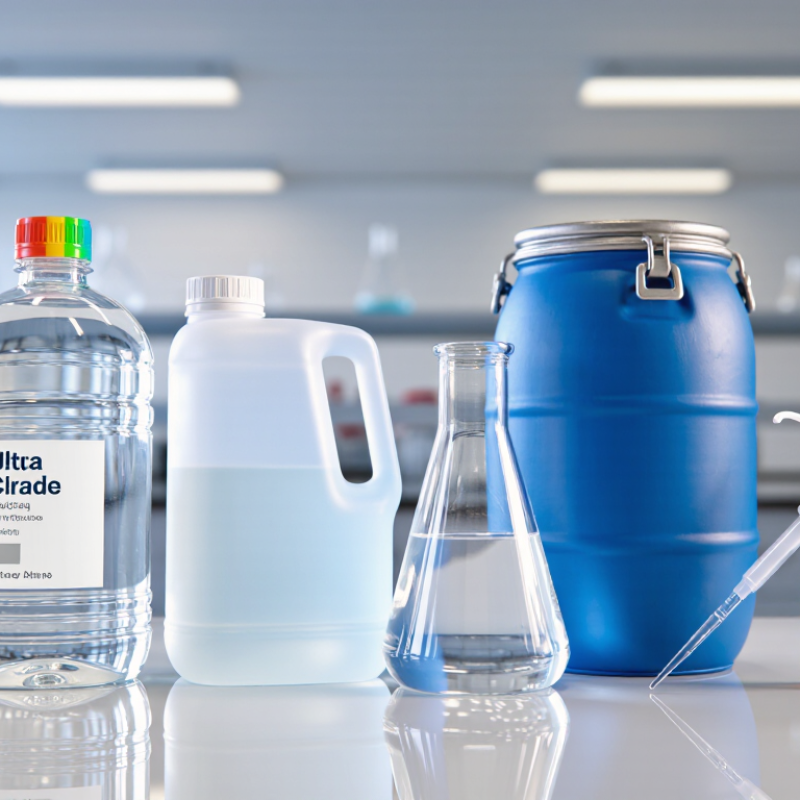
What Are the Top Types of Acetic Acid for Buyers?
How Commercial Acetic Acid Is Classified by Grade and Concentration
Commercial acetic acid is commonly described by both grade and concentration, but these terms answer different questions. Grade indicates intended use and quality specifications; concentration tells how much acid is present in the solution. Industrial grade may suit a process without meeting food or analytical specifications. Check the technical data sheet, not just the label. Look for assay, water content, color, and limits for trace impurities. Requirements vary by application.
Concentrations range from dilute aqueous solutions to high-strength material often called glacial acetic acid, typically around 99% or higher, depending on specification. Higher concentration does not automatically mean better quality. A buyer sourcing a 10% solution or a concentrated manufacturing input should confirm the required strength, test method, and acceptable variation. Packaging compatibility matters, too. Concentrated acid can damage unsuitable materials. Request a current certificate of analysis and safety data sheet for the specific batch. Labels can mislead. I double-check the stated units: percent by mass and percent by volume are not interchangeable.
Tips: Match grade to end use, then confirm concentration and impurity limits. Compare documents, not product names. If specifications seem unclear, ask how the product was tested before ordering.
Glacial acetic acid is a highly concentrated form of acetic acid, commonly supplied at 99% purity or above. It is a clear, colorless liquid with a sharp vinegar-like odor. Unlike dilute vinegar, it can cause serious burns and requires careful handling. At about 16.6°C, it may freeze into clear crystals. That detail matters in cool storage areas.
Purity alone does not tell the whole story. Buyers should check the stated assay, water content, and relevant impurity limits against their process needs. A certificate of analysis helps verify each batch. Glacial acetic acid is used as a chemical feedstock, solvent, and processing aid in applications such as acetate production and ester manufacturing. The right grade depends on the intended use; assuming every high-purity grade is interchangeable can be a costly mistake.
Tips: Confirm that containers are compatible with concentrated acid, and review storage and handling guidance before delivery. Keep the product dry and temperature-controlled to reduce crystallization surprises. Check the safety data sheet, too. Small details can be easy to overlook.
Typical Acetic Acid Concentration by Product Type
Household and cleaning vinegars are dilute aqueous solutions, while glacial acetic acid is nearly pure acetic acid (typically about 99–100%). Concentration ranges are representative; check the supplier’s specification and intended-use requirements before purchasing.
Food-grade acetic acid, listed as food additive E260, provides a sharp, clean sourness and helps control acidity. Buyers commonly select it for pickles, sauces, dressings, and marinades. The right grade matters: food processing requires documented food-grade specifications, impurity controls, and batch traceability—not simply a high acid concentration.
A useful benchmark is the European Commission’s Regulation (EU) No 231/2012, which sets an assay of at least 99.5% for acetic acid used as an additive. This figure describes ingredient purity, not the concentration used in a finished food. The FAO/WHO Joint Expert Committee on Food Additives (JECFA) lists an ADI of “not specified” for acetic acid. That is a safety assessment, not permission to use unlimited amounts or ignore local food standards. Small details matter. In practice, recipe limits and process controls still deserve attention.
Tips: Match the product specification to the application, then verify the certificate of analysis and food-grade documentation. Confirm dilution instructions before handling concentrated acid; a mistake here is easy to make. For pickling, check the finished product’s acidity with a suitable method rather than relying on taste alone.
Industrial-grade acetic acid is commonly purchased as glacial acid, with commercial assay targets often around 99.5% or higher. Buyers should confirm assay, water content, color, and trace-metal limits on the current specification and certificate of analysis; exact limits vary by process. The OECD’s SIDS Initial Assessment Report gives a freezing point near 16.6°C and a boiling point near 118°C. That freezing point matters in winter: a cold drum or line can partly solidify, slowing unloading. A heated, insulated transfer system may be needed.
Bulk demand is tied to chemical manufacturing. Acetic acid is used to make vinyl acetate monomer, acetate esters, and other chemical intermediates; downstream users may also specify tighter impurity limits than a general industrial grade. The OECD report documents these major uses, while the NIOSH Pocket Guide lists acetic acid’s key handling hazards. Keep that in view. Buyers should check tank compatibility, ventilation, temperature control, and delivery quantity before contracting. A high assay alone does not guarantee suitability. I would also review a retained sample when switching suppliers; specifications can look complete, yet a minor impurity may affect a sensitive process.
| Product type | Typical specification | Key characteristics | Common bulk uses | Buyer considerations |
|---|---|---|---|---|
| Glacial acetic acid | Typically 99.5–99.9% acetic acid by mass; low water content. A common reference density is about 1.05 g/mL at 20°C. | Concentrated, clear, colorless liquid with a sharp vinegar-like odor. Pure acetic acid freezes at about 16.6°C, so it can solidify in cool conditions. | Production of vinyl acetate monomer, acetic anhydride, acetate esters, purified terephthalic acid, and other chemical intermediates. | Check assay, water, color, and impurity limits against the process requirement. Plan temperature-controlled handling where freezing is a risk; use compatible equipment and appropriate corrosion controls. |
| High-strength aqueous acetic acid | Commonly supplied around 80–90% by mass; exact concentration and impurity limits depend on the purchase specification. | Water-containing concentrated acid. Its handling properties and freezing behavior differ from glacial acetic acid. | Industrial acidulation, chemical synthesis, and processes that need concentrated acetic acid but do not require near-anhydrous material. | Confirm concentration on a mass basis, water content, and delivery temperature. Account for the added water in reaction and dilution calculations. |
| Medium-strength aqueous acetic acid | Often specified at approximately 50–70% by mass for industrial supply; the exact grade is defined by the contract or certificate of analysis. | Diluted acid with a lower acetic-acid concentration than glacial material; typically supplied as a clear aqueous solution. | pH adjustment, chemical processing, intermediate preparation, and operations where a pre-diluted feed reduces on-site dilution needs. | Compare delivered concentration with the process target and freight economics. Verify packaging or tank compatibility with the solution and site procedures. |
| Dilute aqueous acetic acid | Common industrial formulations may be around 10–40% by mass, with concentration selected for the application. | A lower-strength aqueous solution. It remains acidic and requires suitable storage, handling, and labeling. | Cleaning and descaling formulations, textile or process treatments, pH adjustment, and other applications requiring a diluted acid feed. | Specify concentration tolerance and any limits on color, residue, or trace impurities. Compare delivered solution cost with the cost of buying concentrated acid and diluting it safely on site. |
| Recovered or recycled acetic acid | Concentration and impurity profile vary with the recovery process; no single universal specification applies. | Recovered material may contain water or process-specific impurities and may require additional purification for sensitive applications. | Suitable non-sensitive chemical processes or internal reuse where the material meets documented process limits. | Request a recent certificate of analysis, source and recovery-process information, and data for relevant contaminants. Qualify the material in the intended process before purchasing at scale. |
Specifications shown are typical buying ranges, not universal standards. Confirm assay, water content, impurity limits, safety data, packaging, and transport requirements with the supplier and applicable regulations before ordering.
Buyers should compare acetic acid by intended use, assay, and supporting documents—not just the product name. Food, pharmaceutical, and industrial grades may share similar chemistry, but their impurity limits and verification requirements differ. The Joint FAO/WHO Expert Committee on Food Additives (JECFA) specification gives an assay range of 99.5–100.5% for acetic acid. That benchmark is useful for food-additive purchasing, but it does not replace checking the grade-specific specification and certificate of analysis. A higher assay alone does not prove a product fits a particular process.
Packaging matters, too. NIST reports acetic acid freezes near 16.6°C, so cold storage or transit can leave crystals in a drum. Buyers should confirm the supplier’s packaging compatibility guidance, closure integrity, and temperature-handling instructions. For bulk deliveries, review tank materials and unloading procedures before dispatch. One detail is easy to miss: a suitable container does not guarantee suitable handling.
Tips: Match the grade to the final application. Request a recent certificate of analysis, safety data sheet, lot traceability, and compliance statement. Compare drum, tote, and bulk options against expected use and storage conditions. Don’t choose on price alone; I would still recheck the paperwork before approving a shipment.
© Copyright 2025 | LittleFirefighter.com | All Rights Reserved | 1EZ Creative: Orange County Web Design

Fusce ut ipsum tincidunt, porta nisl sollicitudin, vulputate nunc. Cras commodo leo ac nunc convallis ets efficitur.

12345 North Main Street,
New York, NY 555555
1.800.555.6789
sale@vibrotools.com
