
On a busy production floor, small delays can add up. Operators may walk back and forth for fasteners, tools, or work-in-progress parts. An Assembly Line Trolley keeps these items close to the point of use, helping teams arrange materials around each workstation. A well-planned trolley can reduce unnecessary reaching and make replenishment easier to see. That small change matters.
The right design depends on the job. A trolley carrying labeled bins needs different shelves from one holding long components or delicate parts. Wheel size, load capacity, handle height, and aisle width all deserve attention. Smooth-rolling casters help on clean floors, but uneven surfaces can still cause vibration or handling problems. Measure the route before choosing a model. Check it in use.
Trolleys can also support clearer visual organization. Color-coded containers, fixed locations, and simple labels help operators notice missing supplies. These details are practical, not decorative. Still, a trolley is not a cure-all. Poorly chosen layouts can create clutter, block access, or encourage excessive loading. Teams should test the setup during normal shifts and adjust it when materials or tasks change. The best results come from matching the trolley to real production needs, then reviewing how it performs over time. A brief trial can reveal problems that a product sheet cannot.
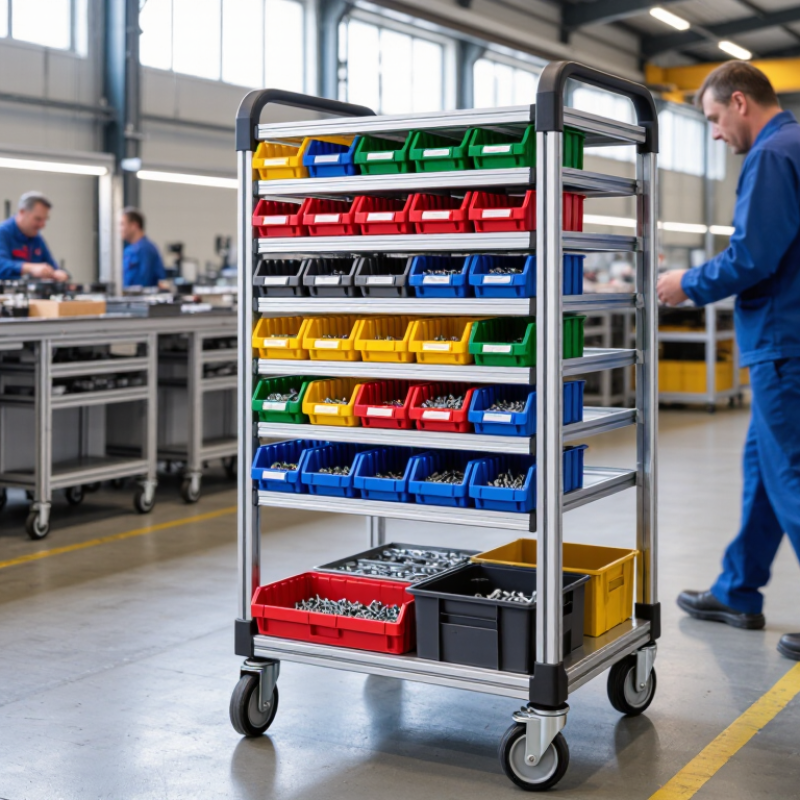
Why Choose an Assembly Line Trolley?
What Is an Assembly Line Trolley?
An assembly line trolley is a mobile carrier that brings parts, tools, or work-in-progress to a production station. It may have shelves, bins, dividers, or a flat deck, with wheels selected for the floor and load. Unlike a general-purpose cart, it is typically configured around a specific task, route, and workstation height. Small details matter: a bin facing the operator can save awkward reaching, while a loose wheel can make a loaded trolley difficult to steer.
The U.S. Bureau of Labor Statistics reported 2.6 million nonfatal workplace injury and illness cases in private industry in 2023. That figure does not show that trolleys prevent injuries. It does underline why material movement and handling deserve careful attention. A well-matched trolley can keep parts close and reduce repeated carrying, but poor layout or overloading can create new problems. Not a cure-all.
In practice, teams should check the heaviest expected load, turning space, wheel behavior, and access to replenishment points. Measure the aisle with the trolley loaded, not empty. That is easy to miss. A design that works on a drawing may block a walkway or force operators to twist at a tight station. Reviewing the route with the people who use it can reveal these issues before rollout.
An assembly line trolley supports material flow by bringing parts close to the point of use. Instead of walking back to a central store, an operator can reach for a labeled bin beside the workstation. A trolley with separate trays can keep fasteners, components, and empty containers apart. That small detail reduces searching and helps prevent mix-ups. Keep frequently used items within easy reach. The route matters, too. A narrow aisle, a sharp turn, or a crowded station can slow every delivery. It is not magic.
In practice, trolley capacity should match the line’s consumption rate. If it carries too little, workers may make repeated trips; if it carries too much, parts can sit unused or block access. A simple replenishment schedule and visible bin labels make handoffs easier to understand. Wheels should roll smoothly across floor joints, and brakes help hold the trolley steady during loading. These details are easy to overlook. A trolley will not fix unclear work instructions or uneven demand, and its route may need adjustment after operators test it during a normal shift. The first layout is rarely perfect.
An assembly line trolley should match the work, not just carry parts. Its frame needs a clearly rated load capacity, with a safety margin for uneven loads and frequent starts. A low, stable platform helps prevent trays from shifting when the trolley turns. Fit matters.
Look for smooth-rolling wheels suited to the floor: hard wheels can rattle over joints, while softer wheels may roll more slowly. Brakes should hold the trolley securely during loading. Handles should sit at a comfortable pushing height, and shelves or bins should keep fast-moving components within easy reach. For mixed product runs, adjustable shelves can help, though too many adjustments may slow daily use.
Ergonomics deserve attention. The U.S. Bureau of Labor Statistics reported 2.6 million nonfatal workplace injury and illness cases in private industry in 2023, down 8.4% from 2022, in its Survey of Occupational Injuries and Illnesses. That figure does not measure trolley-related injuries, but it shows why safer material handling matters. A trolley cannot fix a poor layout. Test it on the actual route, loaded with real parts, and check turning space, noise, and stopping distance before choosing.
An assembly line trolley can keep parts close to the people who need them. Instead of walking back to a shared shelf, operators can reach fasteners, housings, or tools from a marked cart beside the workstation. This can shorten small delays across a shift and make replenishment easier to see. A loaded trolley also groups items by task, reducing searching and unnecessary handling. Not dramatic, but useful.
When carts follow a set route, material handlers can refill stations at planned intervals. This helps prevent crowded benches and uneven stock. Adjustable shelves and bins can accommodate changing kits, while locking casters keep the trolley steady during picking. The gains depend on load weight, aisle width, wheel condition, and how often each station uses parts. A poorly sized cart may block movement or invite overloading. It is not a cure for weak scheduling; it can expose it.
Tips: Label bins by task, set a safe load limit, and check wheels regularly. Test the trolley on a real shift before standardizing its route.
Choosing the right assembly line trolley starts with the work, not the catalogue. Start with the load. Weigh the heaviest parts, including bins and tools, and check how often operators move them. A trolley that carries the load safely on paper may still feel awkward when pushed around a tight corner.
Measure the route and the workstation. Note aisle width, turning space, bench height, and any floor joints or ramps. Check that shelves keep frequently used parts within easy reach without blocking sightlines. Locking casters can help keep the trolley steady during loading, while wheel material should suit the floor and expected noise levels. Small details matter. A handle set too low can make repeated pushes uncomfortable.
Consider the working environment, too. Dust, moisture, cleaning routines, and temperature can affect material choice and maintenance needs. Confirm the trolley’s rated capacity with the supplier, and inspect welds, fasteners, brakes, and wheel condition during routine checks. If possible, test a loaded trolley on the actual route before ordering several. Even careful measurements can miss a snag point or a shelf that catches a worker’s sleeve. That is worth noticing early.
| Trolley Type or Selection Factor | Best Suited For | Why Choose It | What to Check Before Buying |
|---|---|---|---|
| Flat-deck trolley | Moving bulky items, boxes, or containers between workstations. | Its open deck accommodates varied load shapes and allows straightforward loading and unloading. | Confirm deck dimensions, load restraint needs, handle position, and the rated capacity for the intended load. |
| Multi-shelf trolley | Carrying smaller parts, tools, or supplies that need to remain separated. | Shelves help organize materials and make frequently used items easier to access. | Check shelf spacing, usable shelf area, edge protection, and whether the load is evenly distributed. |
| Kit-picking trolley | Delivering grouped components to an assembly station in the order they are needed. | Dedicated bins or compartments can support organized picking and reduce searching at the workstation. | Match bin sizes and layout to the actual parts, picking sequence, and replenishment method. |
| Flow-rack trolley | Presenting totes or small containers in a first-in, first-out sequence. | Inclined roller or track lanes can help bring the next container toward the operator as one is removed. | Verify container compatibility, lane dimensions, replenishment access, and that the trolley fits the workstation. |
| Lift-table trolley | Moving loads that need to be raised or lowered to a working height. | A height-adjustable platform can help position loads for transfer or assembly tasks. | Check platform size, lifting range, rated load, operating method, and safeguards specified for the model. |
| Load capacity and load distribution | Any application where the trolley will carry parts, containers, or tools. | Choosing an appropriate rated capacity helps keep the trolley within its intended operating limits. | Compare the total expected load with the manufacturer’s rating, and follow any limits for concentrated or uneven loads. |
| Wheels, floor, and route | Routes with particular floor surfaces, thresholds, turns, or shared traffic. | Suitable wheel size and material can make pushing and maneuvering more appropriate for the route. | Assess floor condition, obstacles, turning space, noise requirements, and whether brakes are needed for parking. |
| Ergonomics and workflow | Repeated material deliveries or tasks that involve frequent reaching and handling. | A trolley configured around the work sequence can keep materials accessible and reduce unnecessary handling. | Check handle height, reach to shelves or bins, visibility, aisle clearance, and compatibility with the station layout. |
Selection note: Capacity, dimensions, wheel specifications, and lifting range vary by model. Confirm the manufacturer’s rated specifications and assess the actual load, route, and workstation before choosing a trolley.
© Copyright 2025 | LittleFirefighter.com | All Rights Reserved | 1EZ Creative: Orange County Web Design

Fusce ut ipsum tincidunt, porta nisl sollicitudin, vulputate nunc. Cras commodo leo ac nunc convallis ets efficitur.

12345 North Main Street,
New York, NY 555555
1.800.555.6789
sale@vibrotools.com
