
Why Choose a Containerized Energy Storage System? The answer begins with practical energy needs, not fashionable technology. A Containerized Energy Storage System combines batteries, thermal management, fire protection, and control equipment within a transportable enclosure. This integrated design can simplify deployment at solar farms, industrial sites, microgrids, and backup facilities. Space matters. A standard container can use land more efficiently than scattered equipment rooms. It may also reduce on-site construction, wiring complexity, and installation time.
From an engineering perspective, containerized storage supports modular expansion. Operators can add units as demand increases, rather than redesigning an entire facility. Remote monitoring can track temperature, state of charge, alarms, and maintenance conditions. These details help teams identify unusual behavior before it becomes an expensive interruption. However, performance depends on more than battery capacity. Site climate, ventilation, grid compatibility, fire-safety planning, and maintenance quality require careful evaluation. A larger system is not automatically a better system.
Reliable decisions should compare lifecycle cost, usable energy, round-trip efficiency, warranty terms, and local service capability. Project owners should request tested documentation and confirm that equipment meets applicable standards. Safety assumptions deserve regular review. That trade-off matters. Containerized systems can shorten schedules and improve scalability, yet they still need skilled commissioning and disciplined operation. The right choice is therefore a balanced one: match the system architecture to real load patterns, environmental conditions, and future expansion plans. Even experienced teams can misjudge demand. Good design leaves room to learn, adjust, and improve.
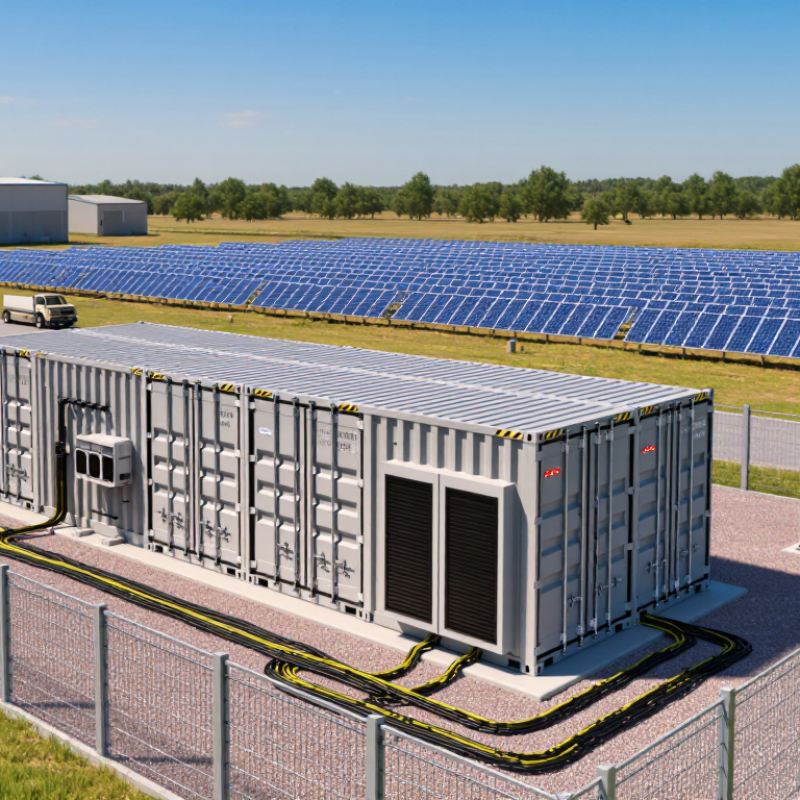
A containerized energy storage system is a complete battery facility inside a reinforced, transportable enclosure. It usually combines battery racks, power conversion equipment, controls, cooling, fire protection, and switchgear. The container arrives largely assembled and connects to a site’s electrical network through defined interfaces. Think of it as a compact power room, not merely a box of batteries.
Inside, battery modules store electricity as direct current. Power conversion equipment changes it into alternating current for buildings, factories, or grid services. An energy management system controls charging, discharging, temperature, and operating limits. Sensors track voltage, current, smoke, heat, and insulation conditions. During commissioning, technicians verify cable connections, protection settings, ventilation, alarms, and emergency shutdown functions. Small installation errors matter.
The enclosure also protects equipment from weather, dust, and unauthorized access. Cooling systems keep cells within a controlled temperature range, especially during rapid charging. Fire protection design depends on the battery chemistry, layout, local conditions, and applicable safety codes. It is not maintenance-free. Filters clog, sensors drift, and software settings may need review. Field experience shows that a clean installation does not guarantee perfect operation. Heat waves, weak grid connections, or unexpected load patterns can expose planning gaps. Regular inspections, tested alarms, clear operating procedures, and trained personnel support safer, more reliable performance.
Why Choose a Containerized Energy Storage System?
How Does a Containerized Energy Storage System Work?
A containerized energy storage system houses batteries, power electronics, cooling equipment, and safety controls inside a reinforced enclosure. Battery modules store electricity as chemical energy during low-demand periods. During peak demand, an inverter changes that stored energy into usable alternating current. The system can then supply buildings, support renewable generation, or stabilize a local power network. Timing matters.
A central energy management system monitors voltage, current, temperature, and charge levels. It decides when to charge or discharge based on operating settings and grid conditions. Cooling equipment removes heat produced during high-power operation. Fire detection and suppression systems provide additional protection inside the enclosure. At the connection point, meters and protective devices help isolate faults quickly.
In field commissioning, technicians check cable connections, software settings, ventilation, and emergency shutdown functions. They also test the system under different loads instead of trusting factory data alone. A container may simplify installation, but it does not remove design challenges. Heat waves can reduce performance, while poor ventilation may shorten battery life. Maintenance records, regular inspections, and clear operating limits remain essential. The system is practical, not perfect. Each project still needs careful sizing, site assessment, and ongoing review.
How Does a Containerized Energy Storage System Work?
A containerized energy storage system integrates battery modules, a battery management system, power conversion equipment, thermal management, and safety controls inside a standardized enclosure. In this illustrative operating cycle, approximately 100 kWh is supplied during charging, about 95 kWh is stored after conversion and auxiliary losses, and roughly 90 kWh can be delivered back to the grid or load, representing a typical round-trip efficiency of about 90% for lithium-ion systems.
A containerized energy storage system combines many functions inside a weather-resistant enclosure. Its main components usually include battery racks, a battery management system, power conversion equipment, cooling units, and fire protection devices. Switchgear and protection relays control electrical isolation during faults. Sensors track temperature, voltage, smoke, and humidity.
The battery management system monitors each cell and balances charging performance. The power conversion system changes direct current into alternating current for local loads or the grid.
An energy management system decides when to charge, discharge, or reserve capacity. In a real installation, cable routes and ventilation space matter as much as the batteries. Small design mistakes can create maintenance problems later.
Configurations vary with the project. An AC-coupled system connects storage beside existing solar inverters, making upgrades relatively practical. A DC-coupled design places storage closer to the solar array and may reduce conversion losses. Modular battery racks allow capacity to expand in stages. Systems can also operate in grid-connected, backup, or hybrid modes. Engineers should check load profiles, ambient temperature, grid rules, and emergency access before selecting a layout. A container may look simple outside, but its internal coordination is not. Oversizing is common, while poor thermal planning is sometimes overlooked.
Containerized energy storage is becoming a practical choice for power projects that need speed, safety, and predictable deployment. A factory-assembled system arrives with batteries, power conversion equipment, cooling, monitoring, and protection inside a standardized enclosure. This reduces on-site construction work and limits exposure to dust, rain, and installation errors.
For projects facing tight schedules, containerized energy storage can shorten commissioning time. Engineers can test major components before delivery, then connect the units to the site’s electrical infrastructure. The modular design also supports phased expansion. A project may begin with limited capacity and add containers as demand grows. That flexibility matters for renewable power, peak shaving, backup supply, and remote microgrids.
Safety requires more than a strong enclosure. Each project needs careful thermal analysis, fire detection, ventilation, access planning, and emergency procedures. Experienced teams should review local grid rules and operating conditions before selecting equipment. In hot climates, cooling loads can reduce efficiency. In cold regions, heating may be necessary. I have seen planning assumptions fail when temperature data was too general. The container is not a complete solution by itself. Maintenance access, replacement planning, cybersecurity, and end-of-life handling also deserve attention. That part is often underestimated. A reliable system depends on disciplined design, qualified installation, regular inspections, and clear operating records.
Why Choose a Containerized Energy Storage System?
Selecting a containerized energy storage system starts with the site, not the enclosure. Define the application clearly. Peak shaving, frequency regulation, backup power, and renewable shifting require different operating profiles. A system built for brief high-power events may underperform during six-hour discharge periods.
The 2024 International Energy Agency Batteries and Secure Energy Transitions report estimates that global energy storage capacity must increase sixfold by 2030. This growth makes selection discipline more important. Compare usable energy, continuous power, round-trip efficiency, degradation, and expected cycle life. Do not rely only on nameplate capacity. A 5 MWh container may deliver less after temperature limits, reserve settings, and aging. Climate also matters. High heat can accelerate degradation, while cold conditions can restrict charging. Review thermal management, fire detection, ventilation, emergency access, and local interconnection requirements. These details often decide project schedules.
Tips: Request a duty-cycle model using hourly site data. Include augmentation, maintenance, replacement, and end-of-life costs. The Lazard Levelized Cost of Storage Analysis, Version 10.0, shows that storage costs vary widely by duration and use case. That is easy to overlook. Ask suppliers for independently verified performance data and degradation assumptions. Check whether monitoring systems record cell temperature, state of charge, alarms, and unavailable capacity. Cybersecurity deserves equal attention. A connected system can be efficient, but poorly governed access creates operational risk. I would also test the design against an unusually hot week. Average weather can hide the real weakness.
| Selection Factor | Typical Data or Benchmark | Why It Matters | Recommended Selection Guidance |
|---|---|---|---|
| Required Power Rating | Common containerized systems range from approximately 0.5 MW to more than 5 MW per installation, depending on configuration. | Power rating determines how quickly the system can respond to demand, renewable fluctuations, or grid services. | Size the inverter for the highest continuous and peak load, including motor starts and short-duration overloads. |
| Usable Energy Capacity | Containerized lithium-ion systems commonly provide roughly 1–10 MWh per container, although larger and smaller configurations are available. | Usable capacity determines how long the system can support loads or shift energy. | Calculate capacity from the required load profile, minimum state of charge, reserve margin, temperature effects, and expected degradation. |
| Duration Requirement | Typical applications range from less than 1 hour for frequency regulation to 2–8 hours for energy shifting and renewable firming. | The power-to-energy ratio affects both system cost and application suitability. | Use a high-power configuration for short-duration services and a higher-energy configuration for peak shaving, backup, or solar shifting. |
| Battery Chemistry | Lithium iron phosphate is widely selected for stationary storage because of its thermal stability and long cycle life. Nickel-based lithium-ion chemistries offer high energy density but require careful thermal management. | Chemistry influences safety, footprint, cost, usable capacity, cycle life, and operating temperature. | Prioritize cycle life and thermal stability for frequent cycling; consider energy density where space is restricted. |
| Round-Trip Efficiency | Modern battery storage systems commonly achieve approximately 85–95% AC round-trip efficiency under rated operating conditions. | Higher efficiency reduces energy losses and improves the financial return of energy arbitrage and renewable integration. | Compare full-system AC efficiency, including the battery, inverter, transformer, controls, and auxiliary loads. |
| Response Time | Battery systems can typically respond within milliseconds to seconds, depending on the inverter and control system. | Fast response supports frequency regulation, voltage control, microgrid operation, and power-quality improvement. | Confirm both the inverter response time and the complete control-loop response time required by the application. |
| Cycle Life and Degradation | Stationary lithium-ion systems are commonly designed for several thousand equivalent full cycles, with capacity gradually declining over time. | Frequent cycling can accelerate degradation and increase the lifetime cost of stored energy. | Evaluate guaranteed end-of-life capacity, depth of discharge, annual throughput, temperature, and expected cycling frequency. |
| Safety and Fire Protection | A complete system may include battery-management controls, thermal monitoring, ventilation, detection, fire suppression, emergency shutdown, and separation distances. | Safety design affects permitting, insurance, site layout, emergency response, and project acceptance. | Verify compliance with applicable local requirements and recognized standards such as UL 9540, UL 9540A, NFPA 855, and relevant IEC standards. |
| Operating Temperature | Many systems are specified for ambient operation near −20°C to 50°C, but available power and capacity may be derated outside the optimal temperature range. | Extreme temperatures affect battery performance, HVAC consumption, degradation, and safety. | Select HVAC capacity based on local climate, solar exposure, altitude, humidity, and the container’s thermal load. |
| Footprint and Site Conditions | Standardized 20-foot and 40-foot container formats are common, but final dimensions include transformers, switchgear, service clearances, and access routes. | Site constraints influence transport, civil works, fire separation, maintenance access, and total project cost. | Check land availability, ground loading, drainage, flood risk, seismic conditions, noise limits, and equipment access before final sizing. |
| Grid Connection and Interconnection | Systems may connect at low, medium, or high voltage through dedicated transformers and switchgear, subject to local utility requirements. | Interconnection requirements can determine equipment selection, schedule, protection settings, and project cost. | Confirm voltage level, short-circuit contribution, power-factor range, protection coordination, anti-islanding, and metering requirements early. |
| Scalability and Modularity | Containerized designs can be expanded by adding battery blocks, power-conversion units, or additional containers, subject to controls and interconnection limits. | Modularity allows capacity to grow with demand and can reduce initial capital expenditure. | Select a platform with compatible expansion architecture, spare capacity in controls, and a clear future interconnection plan. |
| Controls and Energy Management | A system generally requires a battery-management system, power-conversion controls, supervisory controls, communications, alarms, and an energy-management system. | Control quality determines dispatch accuracy, asset availability, cybersecurity, and compatibility with solar, generators, or building loads. | Require open communication protocols, remote monitoring, role-based access, event logging, and integration with the existing electrical-control system. |
| Maintenance and Availability | Availability targets above 95% are commonly specified for utility and commercial systems, subject to maintenance strategy and operating conditions. | Downtime directly reduces backup protection, market revenue, and renewable-energy utilization. | Assess preventive-maintenance intervals, spare-parts access, remote diagnostics, service response times, and component redundancy. |
| Total Cost of Ownership | Total cost includes equipment, transportation, foundations, grid connection, installation, HVAC, auxiliary energy, maintenance, augmentation, and decommissioning. | The lowest purchase price may not provide the lowest lifetime cost per delivered kilowatt-hour. | Compare levelized cost of storage, lifetime throughput, degradation, efficiency, replacement costs, and expected revenue over the project life. |
| Project Timeline and Deployment | Factory-integrated containers can reduce on-site assembly compared with fully custom installations, but permitting and grid studies may remain critical-path activities. | Shorter installation time can reduce construction labor, site disruption, and schedule risk. | Prioritize standardized, factory-tested equipment when schedule certainty and repeatable installation are important. |
Note: Values shown are indicative industry benchmarks. Actual performance depends on system design, battery chemistry, ambient conditions, operating profile, grid requirements, and applicable regulations.
© Copyright 2025 | LittleFirefighter.com | All Rights Reserved | 1EZ Creative: Orange County Web Design

Fusce ut ipsum tincidunt, porta nisl sollicitudin, vulputate nunc. Cras commodo leo ac nunc convallis ets efficitur.

12345 North Main Street,
New York, NY 555555
1.800.555.6789
sale@vibrotools.com
