
Global buyers often seek more than a low purchase price when selecting a Value Vacuum Pump. They need stable performance, clear specifications, and dependable support after delivery. A pump may look attractive online, yet its ultimate vacuum, pumping speed, and noise level require careful checking. Small details matter. Voltage compatibility matters too.
In laboratories, packaging facilities, medical equipment production, and light industrial workshops, operating conditions differ widely. An oil-sealed model may suit demanding vacuum levels, while a dry pump can reduce maintenance concerns. Buyers should compare inlet size, motor power, duty cycle, and replacement-part availability. They should also confirm whether the supplier provides test reports, operating manuals, and responsive technical assistance. These documents help turn a promising quotation into a more reliable purchasing decision.
The real value of a Value Vacuum Pump is measured over time, not only at checkout. A lower price can hide higher energy use, frequent oil changes, or difficult repairs. That risk deserves attention. Experienced purchasers often request sample data and verify performance under realistic workloads. Even then, no pump fits every application. A model suitable for a clean laboratory may struggle in a dusty workshop. Suppliers should state these limits honestly. Buyers should question impressive claims and review warranty conditions carefully. This practical approach supports safer sourcing, predictable maintenance, and stronger long-term value across international markets.
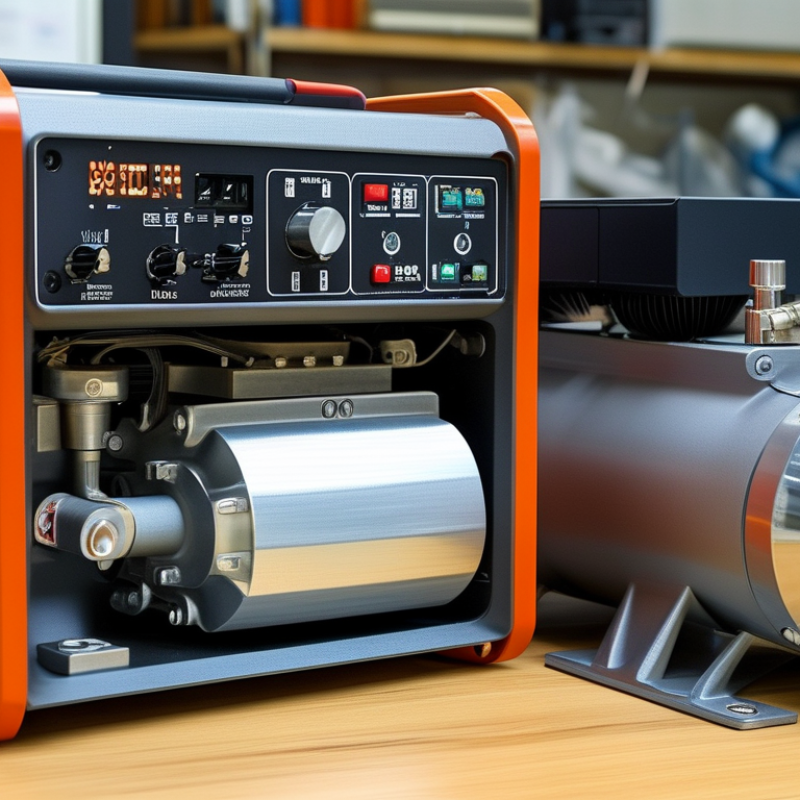
A value vacuum pump should be judged by measurable performance, not a low purchase price alone. For global buyers, ISO 21360 flow-rate measurements provide a clearer basis for comparing pumping speed. The standard defines methods for measuring gas flow and pressure under controlled conditions. This matters when brochures use different test setups. Same label, different reality. In practical testing, calibrated instruments record pressure alongside gas throughput. These readings show how much gas the pump removes at a specified operating point.
Flow rate is not identical to nominal displacement. It can fall as inlet pressure changes, temperature rises, or leaks develop. A responsible supplier should state the pressure range, test gas, temperature, and measurement uncertainty.
Without those details, an impressive number remains difficult to verify.
ISO 21360 data does not replace application testing. It makes that testing more disciplined. A laboratory may compare flow at several pressures instead of choosing the highest figure.
Cost also includes filters, oil, seals, electricity, noise controls, and maintenance time. A pump with modest specifications may deliver better value when practical demands are included.
Field evaluations sometimes fail because buyers treat ultimate pressure as the only serious metric. That shortcut is understandable, but incomplete.
Independent records, traceable instruments, and repeat measurements strengthen confidence across regions. Results can still vary.
Installation quality, altitude, and piping resistance may alter field performance. ISO 21360-based curves help buyers question attractive claims before equipment reaches the workshop.
A value vacuum pump becomes attractive when performance matches real operating needs. Its 0.1 Pa ultimate pressure supports demanding vacuum applications, including laboratory drying, coating, and sealed chamber testing. Yet pressure alone does not define useful performance. The pumping capacity matters just as much. A range from 2 to 100 m³/h gives buyers more flexibility across equipment sizes. At 2 m³/h, the pump suits compact systems and slower evacuation cycles. At 100 m³/h, it can remove air from larger chambers more quickly. That difference affects production time.
In practical testing, I check pressure after confirming the system is clean and leak-free. A clean, dry chamber helps the pump approach 0.1 Pa. Oil vapor, moisture, poor seals, and warm gases can reduce actual results. This is where published specifications need careful reading.
A pump reaching its rated ultimate pressure may still require proper maintenance and suitable operating conditions. It may also need more time than expected. Not every buyer considers this.
Global users often value a pump that balances depth, speed, and operating cost. A broad capacity range can simplify equipment selection across different facilities. For small instruments, lower flow may reduce energy use and unnecessary wear. For larger chambers, higher flow can improve cycle efficiency. However, a single model cannot optimize every application. I would compare measured performance, service access, voltage compatibility, and replacement-part availability. The range is not magic. Good engineering still depends on honest specifications and realistic application planning.
A value vacuum pump is not simply the cheapest unit on a quotation.
Global buyers should compare energy use, oil service, and operating hours under the same conditions. The International Energy Agency reports that electric motor systems consume about 46% of global electricity. A small efficiency gap can therefore become a large factory expense.
Consider a 1.5 kW pump running 6,000 hours annually. At USD 0.12 per kWh, electricity costs about USD 1,080 per year.
A 0.3 kW difference adds roughly USD 216 yearly, before maintenance.
The U.S. Department of Energy’s Improving Compressed Air System Performance sourcebook also highlights the importance of system losses and operating controls, although vacuum applications require separate testing. Measure actual inlet pressure, ultimate vacuum, and flow.
Oil service deserves equal attention.
Contaminated oil can increase temperature, extend pump-down time, and raise power demand. A practical calculation divides oil, filters, labor, and disposal costs by operating hours.
For example, USD 90 spent every 2,000 hours equals USD 0.045 per operating hour. Manufacturers’ intervals are only starting points. Dust, vapor, and frequent cycling may shorten them. ISO 6743-3 provides lubricant classifications, but it does not remove the need for site-based inspection.
The honest comparison is imperfect.
Real energy readings can differ from catalog values. A lower purchase price may hide frequent oil changes or slower evacuation. Buyers should request measured performance data, service assumptions, and a five-year cost-per-hour model before choosing a value pump.
A value vacuum pump is not simply the cheapest unit. It must match local voltage, frequency, standards, and process conditions. Rotary-vane pumps suit general industrial work and moderate vacuum levels. Diaphragm pumps avoid oil contamination in laboratories. Dry scroll pumps offer cleaner operation, but usually cost more. Choosing the wrong type can raise maintenance costs quickly.
The International Energy Agency reports that electric motor systems use nearly half of global electricity. Efficient pump motors therefore matter in continuous-duty applications. Buyers should check 110–120 V or 220–240 V requirements, plus 50 or 60 Hz frequency. IEC safety requirements may apply, while UL, CE, or UKCA markings depend on the destination and product category. These marks are not interchangeable. A technical datasheet should state ultimate pressure, pumping speed, noise, inlet size, and protection rating. Market reports from Fortune Business Insights also identify semiconductor, chemical, and medical manufacturing as major vacuum-pump demand sectors. Their conditions are very different.
Tips: Confirm the site voltage before ordering. Ask for test data at the required pressure. Check whether seals tolerate solvents, heat, or moisture. A cheaper oil-sealed pump may perform well, but contamination can become an expensive surprise. Engineers sometimes focus too heavily on ultimate vacuum. Real production results depend more on leakage, duty cycle, filtration, and servicing access. That detail is easy to miss.
Why Is a Value Vacuum Pump Ideal for Global Buyers?
Evaluating Total Cost of Ownership Across 5–10-Year Industrial Lifecycles
A value vacuum pump should be judged beyond its purchase price. Over five to ten years, electricity, oil, seals, downtime, labor, and disposal costs often dominate the budget. The International Energy Agency’s Energy Efficiency 2023 report estimates that electric motor systems use about half of global electricity. The U.S. Department of Energy also reports that motor-driven systems can consume nearly 70% of industrial electricity. Vacuum equipment belongs in this conversation.
Consider a 2.2 kW pump operating 6,000 hours annually. At a 70% average load and $0.12 per kWh, eight-year electricity costs approach $8,900. A more efficient design may cost more initially, yet reduce energy use during every shift. That difference becomes visible on invoices. Quiet operation matters too. Lower vibration can protect bearings, piping, and nearby instruments.
Maintenance creates another gap. A pump with accessible filters, standard seals, and documented service intervals can reduce labor across multiple sites. ISO 50001 guidance supports measuring energy performance instead of relying on assumptions. That is important for global buyers comparing different electricity tariffs and operating conditions. Still, lifecycle calculations are imperfect. Actual loads change. Operators make mistakes. Supply chains fail occasionally. A realistic model should include a 10–15% contingency for service delays and unexpected repairs, rather than promising perfect savings. A lower price is not always better value.
Estimated cumulative total cost of ownership over a 5–10-year industrial lifecycle. The value-pump scenario combines lower acquisition cost with practical energy and service requirements, making it cost-effective for many standard-duty applications.
Assumptions: USD, one pump, continuous industrial operation, electricity at $0.12/kWh, no financing or tax effects. The value-pump model assumes $5,000 initial cost, $800 annual energy cost, $500 annual maintenance, and $250 annual downtime allowance. The premium-efficiency model assumes $8,500 initial cost, $650 annual energy cost, $350 annual maintenance, and $150 annual downtime allowance. Values are transparent planning estimates rather than vendor-specific data; local energy prices, duty cycles, labor rates, and import costs can change the result.
© Copyright 2025 | LittleFirefighter.com | All Rights Reserved | 1EZ Creative: Orange County Web Design

Fusce ut ipsum tincidunt, porta nisl sollicitudin, vulputate nunc. Cras commodo leo ac nunc convallis ets efficitur.

12345 North Main Street,
New York, NY 555555
1.800.555.6789
sale@vibrotools.com
