China Best Shutoff Valve Suppliers for Global Buyers
Choosing the right shutoff valve supplier can determine whether an industrial project runs smoothly or faces costly interruptions. Global buyers need more than attractive prices. They need verified materials, accurate dimensions, stable production, responsive support, and clear documentation. A valve may look excellent in a catalogue. Its real performance appears under pressure, heat, corrosion, and repeated operation.
Valve engineering authority Dr. Mohinder L. Nayyar is widely associated with a practical principle: “Good valve selection starts with understanding the process.” That principle remains highly relevant. Buyers should examine media type, pressure class, temperature range, connection standards, sealing materials, and required service life. A carbon steel valve may suit water systems, while stainless steel or alloy construction may be safer for corrosive fluids. Small details matter. Seat design matters. Actuator compatibility matters.
This guide reviews China’s best shutoff valve suppliers for global buyers. It focuses on manufacturing experience, quality control, testing capabilities, certifications, customization, export support, and after-sales communication. Factory audits, pressure-test records, material certificates, and sample inspections can reveal more than sales claims. Ask direct questions. Request evidence.
No supplier is perfect. Some manufacturers have strong machining capacity but limited international service. Others offer flexible customization but inconsistent documentation. That difference deserves careful attention. Reliable sourcing takes time, and rushed decisions can create expensive problems later. By comparing suppliers against practical project requirements, buyers can identify a dependable partner for water treatment, oil and gas, chemical processing, HVAC, fire protection, and general industrial applications. The goal is simple: a shutoff valve that closes securely, performs consistently, and supports the entire system.

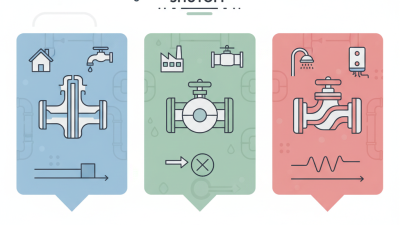
Shutoff Valve Types: Gate, Ball, Globe, Butterfly, and Check Valves
China’s Best Shutoff Valve Suppliers for Global Buyers
Global buyers should match valve behavior to service conditions, not price alone. Fortune Business Insights valued the global industrial valves market at USD 78.66 billion in 2023 and projects USD 107.52 billion by 2032. That growth increases choice, but it can also increase specification risks.
Gate valves suit full-flow isolation in pipelines. They perform poorly under continuous throttling.
Ball valves close quickly with a quarter turn and usually provide tight shutoff.
Globe valves offer better flow control, though their curved passage creates higher pressure loss.
Butterfly valves save weight and space, especially on large water lines.
Check valves prevent reverse flow automatically. They are not isolation valves.
A practical supplier review should examine pressure-temperature ratings, body and trim materials, seat compatibility, end connections, and actuator torque. Ask for material certificates, dimensional reports, hydrostatic test records, and serial-number traceability.
API 598 and ISO 5208 provide recognized valve-testing frameworks, but certificates alone cannot prove consistent production. Request a sample inspection plan. Check packing, coatings, and flange faces; small defects often appear there first.
For steam, verify temperature limits. For corrosive media, confirm chemical compatibility instead of trusting “stainless steel” as a complete answer.
A catalogue comparison can miss water hammer, trapped pressure, or maintenance access. I would not specify a check valve without studying flow direction and closing dynamics. I would also question unusually low quotations.
Savings may hide thinner castings, weaker seats, or incomplete testing. Reliable suppliers should explain these trade-offs clearly, support sample validation, and maintain documented quality controls across repeat orders.
Pressure Ratings Explained: ASME Class 150–2500 and PN10–PN420
China Best Shutoff Valve Suppliers for Global Buyers
Pressure ratings are not simple numbers on a valve nameplate.
ASME Class 150–2500 ratings follow pressure-temperature tables in ASME B16.34. The permitted pressure changes with body material and operating temperature. Class 150 does not mean 150 psi. A carbon-steel valve may accept much higher pressure at ambient temperature, but its rating declines as temperature rises.
Small details matter.
PN ratings use bar-based designations. PN10 indicates 10 bar nominal pressure, while PN420 indicates 420 bar, approximately 6,090 psi. EN 1333 defines the PN system, while EN 1092-1 covers many flange dimensions. However, PN420 is not automatically equal to ASME Class 2500. Their dimensions, temperature rules, and material tables differ. Treating them as direct conversions creates procurement risk.
A reliable sourcing review should request the pressure-temperature chart, material certificate, and hydrostatic test record. API 598 commonly specifies shell testing at 1.5 times the applicable pressure, with seat testing based on allowable working pressure. Ask suppliers to state the exact standard edition. It sounds tedious. It prevents costly confusion.
Industry quality reviews often reveal another weakness: buyers compare pressure labels but ignore actuator torque, media temperature, and cycling frequency.
That approach needs reconsideration. A valve rated PN16 may still fail early in abrasive service or repeated thermal cycling. Purchase decisions should match the complete operating envelope, not one impressive number.
China’s Valve Supply Chain: Manufacturing Capacity, Exports, and Lead Times
China Best Shutoff Valve Suppliers for Global Buyers
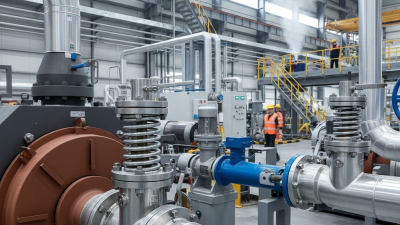
China’s valve supply chain combines casting plants, machining workshops, testing centers, and export logistics. Production capacity varies widely by region and factory size. Larger manufacturers often run automated machining lines and maintain dedicated pressure-testing areas. Smaller suppliers may offer flexibility but depend on outside foundries. During sourcing work, I have found that visible capacity can be misleading. A busy workshop does not always mean reliable delivery.
Exports move through major seaports and established freight networks. Suppliers commonly prepare commercial invoices, packing lists, inspection records, and material certificates. However, document quality still differs between factories. Buyers should verify export experience for their destination market. Lead times commonly range from four to twelve weeks, depending on valve size, body material, order volume, and customization. Standard stainless steel units may ship faster. Special alloys, electric actuators, or private labeling can add several weeks. No schedule is perfect.
Tips: Ask for a realistic production plan, not only a promised date. Request recent factory photos, test records, and a sample inspection report. Confirm whether critical parts are made in-house. Keep buffer time for port congestion and approval delays. One overlooked detail matters: packaging. Heavy valves need reinforced crates, moisture protection, and clear lifting marks. A pre-shipment inspection can catch damaged threads, incorrect markings, or missing accessories. It costs time, but rushed acceptance often costs more.
Supplier Qualification: ISO 9001, API 6D, EN 10204, and Test Records
When global buyers evaluate shutoff valve suppliers, certificates should open the discussion, not close it. ISO 9001 indicates controlled processes, but it does not prove every valve is suitable. Ask for the certificate number, issuing body, scope, and validity dates. The scope should cover relevant design, machining, assembly, or testing activities. A mismatch here is easy to miss. It matters later.
For pipeline service, API 6D documentation deserves careful review. Confirm the edition, product scope, pressure class, design temperature, and applicable end connections. Request material certificates prepared to EN 10204, preferably 3.1 for pressure-retaining parts when contract requirements support it. These records should identify heat numbers, chemical results, mechanical results, and traceability. Check whether the heat number appears on the valve body or component tag. Small details expose weak controls.
Test records should show hydrostatic shell testing, seat testing, pressure, hold time, medium, and acceptance criteria. Ask for calibration records for pressure gauges and the test procedure used. Photos can help, but they are supporting evidence only. In supplier audits, incomplete signatures and copied values sometimes appear. That does not automatically prove failure, but it demands clarification. A reliable supplier accepts technical questions, corrects gaps, and preserves records from quotation through shipment.
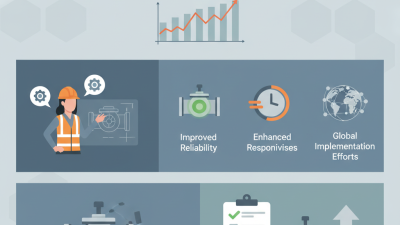
China Shutoff Valve Supplier Qualification Checklist
This chart presents a practical document checklist for global buyers. The values indicate the typical number of verification items to review, not the performance of any specific supplier or brand.