Global buyers need more than a low purchase price when selecting safety valves. They need verified protection, stable performance, and clear documentation. A failed valve can release steam, gas, or chemical pressure within seconds. The details matter.
The Fortune Business Insights report estimates that the global safety valve market will continue expanding through 2030, supported by investments in energy, chemicals, manufacturing, and process infrastructure. The report also reflects growing demand for dependable pressure-control equipment. However, market growth does not prove product quality. Buyers must examine certification, material traceability, testing records, and supplier experience.
International standards provide a stronger reference point. API 520 and API 521 guide sizing, installation, and pressure-relief system design. ISO 4126 addresses safety devices used against excessive pressure. These standards help buyers compare products across regions. They do not remove every purchasing risk.
Pressure-relief engineering specialist Les Driskill has emphasized, “A safety valve is the last line of defense against overpressure.” That statement deserves practical attention. A valve may look excellent in a catalogue yet fail under corrosion, vibration, incorrect sizing, or poor maintenance. Real operating conditions expose weak assumptions.
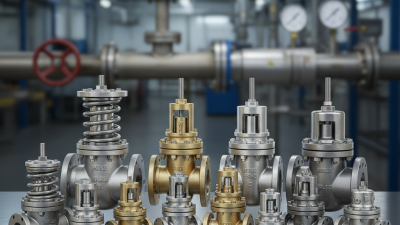
This guide compares top safety valves for global buyers, including spring-loaded, pilot-operated, and bellows-sealed designs. It considers pressure range, temperature, media compatibility, response stability, and service support. Supplier audits also matter. Small details matter more.
Some forecasts appear precise, but field performance remains difficult to predict. Buyers should challenge impressive claims and request independent evidence. The best choice is rarely the cheapest valve. It is the valve that protects people, equipment, and production under the actual conditions.
A safety valve is a pressure relief device designed to protect equipment from excessive pressure. When pressure rises beyond its set point, the valve opens and releases fluid safely. It protects vessels, piping, boilers, and process equipment. The basic principle is simple. Selection is not. Engineers must compare set pressure, relieving capacity, temperature, fluid properties, and allowable back pressure. The valve must also suit the connection size and discharge arrangement.
In global industrial systems, operating conditions can change across sites. A steam line may face high temperature, while a chemical process may involve corrosive or viscous media. Back pressure deserves careful attention. Installation details matter. A blocked discharge path can reduce protection. During commissioning, technicians should verify the set pressure, flow direction, seals, and test records. Field inspections often reveal practical problems, such as vibration, poor drainage, or an incorrectly supported discharge pipe.
Reliable purchasing involves more than comparing prices. Buyers should request material certificates, capacity data, calibration records, and clear maintenance instructions. Documentation should match the actual valve delivered. Regional pressure equipment requirements may also differ, so qualified engineers should review applicable standards before approval. No valve lasts forever. Maintenance intervals depend on service conditions, opening frequency, contamination, and corrosion. A practical weakness remains: designers sometimes trust calculations without reviewing real operating changes. That assumption needs review. Regular testing, documented inspections, and trained technicians provide stronger protection for global industrial systems.
Spring-loaded pressure relief valves suit boilers, compressed-air systems, and general process lines. They respond quickly when pressure exceeds the set point.
Pilot-operated relief valves fit large vessels and high-pressure gas systems. They offer tighter sealing, but dirty pilot lines can reduce reliability.
For fire exposure or blocked outlets, a certified pressure safety valve is essential. API 520 and ISO 4126 provide widely recognized sizing and testing guidance.
Rupture discs can add fast, non-reclosing protection. They work well with corrosive fluids and sudden overpressure.
A combined disc-and-valve arrangement may reduce leakage, though replacement planning is often overlooked.
Thermal relief valves protect liquid-filled sections between closed valves. Small volume does not mean small risk.
Vacuum relief valves serve storage tanks that may collapse during cooling or draining. Balanced-bellows designs help when backpressure changes.
Buyers should verify materials, temperature limits, discharge routing, and local certification.
The International Energy Agency’s Global Methane Tracker 2024 estimates that fossil fuel operations released about 120 million tonnes of methane in 2023. That figure makes low-leakage valve selection more than an environmental preference. It affects operational exposure.
In practice, specifications can still be wrong when engineers rely on normal pressure instead of credible failure scenarios.
Field inspection, documented set-pressure tests, and realistic maintenance intervals matter.
Small details matter.
When comparing safety valves, start with pressure data from the actual system, not a catalogue estimate. Record normal operating pressure, maximum allowable pressure, set pressure, and expected backpressure. A valve set too close to operating pressure may leak or chatter. One set too high may fail to protect equipment. Sizing also depends on flow rate, fluid state, and credible overpressure scenarios. Ask for certified capacity tests and calibration records. Small details matter.
Temperature selection requires more than checking a maximum number. Review continuous temperature, short-term spikes, startup conditions, and shutdown exposure. Steam, hot oil, cryogenic gas, and outdoor service affect seals differently. Thermal cycling can harden elastomers or distort seating surfaces. I have seen technically correct selections fail after repeated heating and cooling. The data sheet looked complete. It was not.
Material compatibility should focus on every wetted component, including springs, seats, bolts, and coatings. Compare chemical resistance, corrosion risk, erosion, and galvanic contact. Confirm whether the material suits concentration, pressure, and temperature together. Request traceability documents, inspection reports, and current certificates from qualified suppliers. Also check local installation codes and inspection requirements before ordering. Standards differ between markets. That part is easy to underestimate. Keep the review practical: mark the valve inlet, outlet, drain path, and test connection on the piping drawing.
What Are the Top Safety Valves for Global Buyers?
Selecting a safety valve starts with the service, not the catalog photograph. Buyers should confirm pressure range, temperature, fluid type, connection size, and required discharge capacity. A valve for steam may not suit corrosive chemicals or high-cycle gas service. Small details matter. Ask for sizing calculations based on recognized engineering methods, not general claims.
Global compliance depends on the destination and equipment category. Common references include ASME pressure vessel requirements, API testing practices, ISO quality systems, and regional rules such as the European Pressure Equipment Directive. Some markets also require local conformity marks, approved inspection bodies, or specific language on labels and manuals. Certification must match the exact valve model, materials, pressure class, and manufacturing site. A certificate covering a similar product may be insufficient.
Reliable purchasing also requires a complete technical file. Request material certificates, heat numbers, hydrostatic or seat-leakage test records, calibration evidence, setting-pressure reports, and inspection results. Verify that serial numbers connect the valve to its documents. In my experience, missing traceability often causes more delay than the valve itself. Paperwork matters. Buyers should also define witness points, packaging conditions, spare-part availability, and re-certification intervals in the purchase order. No process is perfect; even experienced teams can overlook changing regional requirements. Independent review is worthwhile when the installation protects people, production, or the environment.
| Safety Valve or Compliance Area | Typical Application | Key Global Standard or Regulation | Core Technical Requirements | Certification or Market Status | Buyer Compliance Evidence to Request |
|---|---|---|---|---|---|
| Spring-Loaded Pressure Safety Valve | General overpressure protection for pressure vessels, boilers, pipelines, process equipment, and utilities. | ISO 4126-1; ASME BPVC Section VIII where the equipment is designed to that code; API 520 and API 526 are widely used industry practices. | Correct set pressure, certified relieving capacity, suitable inlet and outlet sizing, stable operation, compatible materials, and controlled blowdown. | Application-dependent Compliance is determined by the governing equipment code and destination-market regulation. |
Set-pressure certificate, capacity certification, dimensional drawing, material certificates, inspection and test plan, and traceable serial-number records. |
| Pilot-Operated Pressure Relief Valve | High-capacity or high-pressure services where tighter operating margins and reduced blowdown are required. | ISO 4126-1; API 520 Part I and Part II; API 521 for system-level relief and depressuring design. | Pilot-system reliability, minimum operating pressure, back-pressure tolerance, fail-safe behavior, sensing-line design, and verified relieving performance. | Application-dependent Additional functional documentation is normally required because the valve includes control components. |
Certified flow capacity, pilot functional test report, minimum-pressure data, back-pressure limits, failure-mode description, and maintenance instructions. |
| Vacuum Relief Valve | Protection against vessel collapse caused by cooling, draining, condensation, pump-out, or blocked-in conditions. | ISO 4126 principles where applicable; API 2000 is commonly used for atmospheric and low-pressure storage tank venting. | Accurate vacuum set point, required air or inert-gas intake capacity, resistance to sticking, weather protection, and compatibility with the stored product. | Application-dependent Storage-tank design rules and local environmental requirements may also apply. |
Vacuum capacity calculation, set-point test report, venting basis, materials documentation, flame-arrestor compatibility where relevant, and inspection procedure. |
| Thermal Relief Valve | Protection of blocked-in liquid sections, small-bore piping, heat exchangers, and equipment exposed to solar or process heat. | Applicable pressure-equipment code; API 521 engineering guidance is often used for relief-system evaluation. | Correct thermal expansion basis, low-flow relieving capacity, safe discharge routing, corrosion resistance, and compatibility with the trapped fluid. | Application-dependent Not every jurisdiction requires a separate product certificate, but the design must satisfy the applicable pressure-equipment rules. |
Thermal relief calculation, set-pressure certificate, discharge arrangement, material compatibility statement, and proof of final inspection. |
| Pressure Relief Valve for Steam or Boiler Service | Steam boilers, superheaters, steam generators, and high-temperature pressure equipment. | ASME BPVC Section I or Section VIII, as applicable; ISO 4126-1 may be used where accepted by the governing authority. | Certified steam capacity, temperature-rated materials, correct blowdown, resistance to chattering, safe discharge piping, and protection against unauthorized adjustment. | Code-controlled Local boiler and pressure-vessel authorities may require specific code marks, witnessing, or registration. |
Code capacity certification, set-pressure and blowdown test results, material certificates, calibration records, nameplate data, and authorized adjustment controls. |
| Rupture Disc Used with a Safety Valve | Corrosive, fouling, polymerizing, or rapidly responding services where a non-reclosing device provides isolation or supplemental protection. | ISO 4126-2 for bursting discs; ISO 4126-6 for application, selection, installation, and use; API 520 and API 521 for relief-system integration. | Burst pressure and temperature, manufacturing range, fragment retention, correct orientation, discharge-path integrity, and interaction with the downstream safety valve. | Application-dependent The disc must be selected as part of the complete relief system, not as an interchangeable substitute without engineering review. |
Burst test certificate, manufacturing-range data, temperature correction, material certificate, installation instructions, and combination-system calculation. |
| Petroleum, Chemical, and Gas-Process Relief Service | Refineries, chemical plants, gas processing, offshore facilities, and other high-hazard process installations. | API 520 for sizing and selection; API 521 for pressure-relieving and depressuring systems; API 527 for seat tightness testing. | Relief scenarios, credible fire case, blocked outlet, utility failure, two-phase flow, reaction runaway, flare or vent-system capacity, and acceptable leakage. | Industry-practice based These API documents are widely specified but do not replace legally applicable regulations or the purchaser’s design basis. |
Relief-load calculation, datasheet, process-simulation basis, back-pressure analysis, seat-leakage test report, inspection plan, and valve history dossier. |
| European Union Pressure Equipment Compliance | Pressure equipment and assemblies placed on the EU or European Economic Area market when within the regulation’s scope and pressure thresholds. | Pressure Equipment Directive 2014/68/EU (PED); harmonized standards may be used where applicable. | Hazard classification, essential safety requirements, conformity assessment, technical documentation, traceability, and safe operating instructions. | CE marking may be required Applicable conformity-assessment route depends on equipment category, fluid group, and risk level. |
EU Declaration of Conformity, CE marking details, notified-body documentation where required, pressure test records, technical file references, and instructions in the required languages. |
| United Kingdom Pressure Equipment Compliance | Pressure equipment and assemblies supplied for use in Great Britain or Northern Ireland under the applicable local market rules. | Pressure Equipment (Safety) Regulations 2016, as amended; Northern Ireland requirements may differ under applicable arrangements. | Conformity assessment, essential safety requirements, product traceability, technical documentation, and destination-specific marking. | Market-specific Required marking and conformity route must be confirmed for Great Britain or Northern Ireland at the time of supply. |
Applicable declaration of conformity, conformity-assessment certificate, marking information, inspection records, pressure tests, and UK-specific technical documentation where required. |
| Sour-Gas or Hydrogen-Sulfide Service | Oil and gas production, gas processing, refining, and other services containing hydrogen sulfide or other cracking risks. | ISO 15156 / NACE MR0175 for materials in hydrogen-sulfide-containing oil and gas production environments; project specifications may impose additional requirements. | Resistance to sulfide stress cracking and related damage mechanisms, hardness control, material condition, heat treatment, and environmental limits. | Service-specific Material compliance is not automatically established by the valve pressure rating alone. |
Material certificates, heat-treatment records, hardness results, sour-service compliance statement, chemistry data, and deviations or waivers. |
| Functional-Safety Interface | Projects where relief, shutdown, isolation, or monitoring functions are credited in a safety instrumented system. | IEC 61508 and IEC 61511 may apply to the safety lifecycle; they do not automatically certify an ordinary mechanical relief valve. | Defined safety function, proof-test interval, failure data, diagnostic coverage where relevant, independence, and documented bypass or maintenance controls. | Project-dependent Functional-safety compliance applies to the credited safety function and architecture, not simply to the presence of a safety valve. |
Safety requirements specification, failure-rate data, proof-test procedure, functional test records, safety-manual information, and lifecycle responsibility matrix. |
| Universal Buyer Documentation Package | Global procurement, inspection, commissioning, and long-term maintenance of safety valves. | Applicable national regulation plus the specified product, pressure-equipment, material, and testing standards. | Complete traceability from design basis through manufacturing, testing, delivery, installation, and periodic inspection. | Strongly recommended Documentation requirements should be agreed before purchase order placement. |
Approved datasheet, calculations, drawings, certificates, material records, calibration certificates, test reports, nonconformance records, spare-parts list, manuals, and inspection history. |

What Are the Top Safety Valves for Global Buyers?
Selecting a safety valve starts with pressure, temperature, fluid type, and discharge capacity. A valve should open before equipment reaches its allowable pressure limit. Spring-loaded valves suit many general systems. Pilot-operated designs can provide tighter control in larger, more demanding installations. Materials must resist corrosion, erosion, and process contamination. Certification requirements also vary between markets, so buyers should verify current documentation with qualified engineers.
Installation errors can weaken even a well-designed valve. Position the valve according to the manufacturer’s instructions, usually in an upright orientation. Keep the inlet path short and unobstructed. Discharge piping needs proper support and safe routing. Avoid placing isolation devices where they could accidentally block protection. Testing should include set-pressure verification, leakage checks, and functional inspection. Field conditions sometimes differ from drawings. That deserves honest review.
Tips: Record the valve’s serial details, set pressure, test date, and service conditions. Inspect for vibration, corrosion, blocked outlets, and damaged seals. Establish maintenance intervals based on risk, not habit. Test more often in dirty, pulsating, or corrosive services. Replace questionable components rather than forcing a temporary repair. A practical checklist helps, but it cannot replace competent inspection. Operational teams should understand the warning signs, including chattering, unexpected discharge, and pressure instability.
ASME Section VIII pressure-vessel rules commonly use different accumulation limits depending on the overpressure scenario: up to 10% for a single pressure-relief device, 16% when multiple devices are used, and 21% for exposure to external fire. During selection, installation, testing, and maintenance, buyers should verify that the valve set pressure, relieving capacity, discharge arrangement, and inspection procedure match the applicable code and process conditions.
Reference basis: ASME Boiler and Pressure Vessel Code, Section VIII, Division 1, pressure-relief device requirements.
© Copyright 2025 | LittleFirefighter.com | All Rights Reserved | 1EZ Creative: Orange County Web Design
Fusce ut ipsum tincidunt, porta nisl sollicitudin, vulputate nunc. Cras commodo leo ac nunc convallis ets efficitur.

12345 North Main Street,
New York, NY 555555
1.800.555.6789
sale@vibrotools.com