
Choosing a commercial gas supplier is rarely a simple price comparison. Global buyers must weigh supply reliability, product specifications, delivery options, technical support, and local availability. A competitive quote can look less attractive when transport costs, storage needs, or supply interruptions are considered. Details count.
The phrase “The golden age of gas is upon us” appeared in the International Energy Agency’s 2011 outlook, associated with Fatih Birol, then the IEA’s chief economist. It captured a moment of strong expectations for natural gas, but expectations alone do not guarantee dependable service. Buyers still need to ask practical questions: Can the supplier meet required volumes? Are its quality controls documented? How quickly can it respond when demand changes? Those answers matter at a factory loading bay, where a delayed delivery can disrupt a production schedule.
This guide introduces ten commercial gas suppliers for global buyers and considers the factors that distinguish their offerings. It is not a universal ranking. A supplier with extensive international operations may suit a multinational manufacturer, while a regional provider may offer faster support and simpler logistics. Not always. Product range, contract terms, and service coverage can vary by country and application, so buyers should verify details directly before making commitments. The comparison offers a useful starting point, not a substitute for careful due diligence. Some differences are difficult to capture in a list. That limitation deserves attention, too.
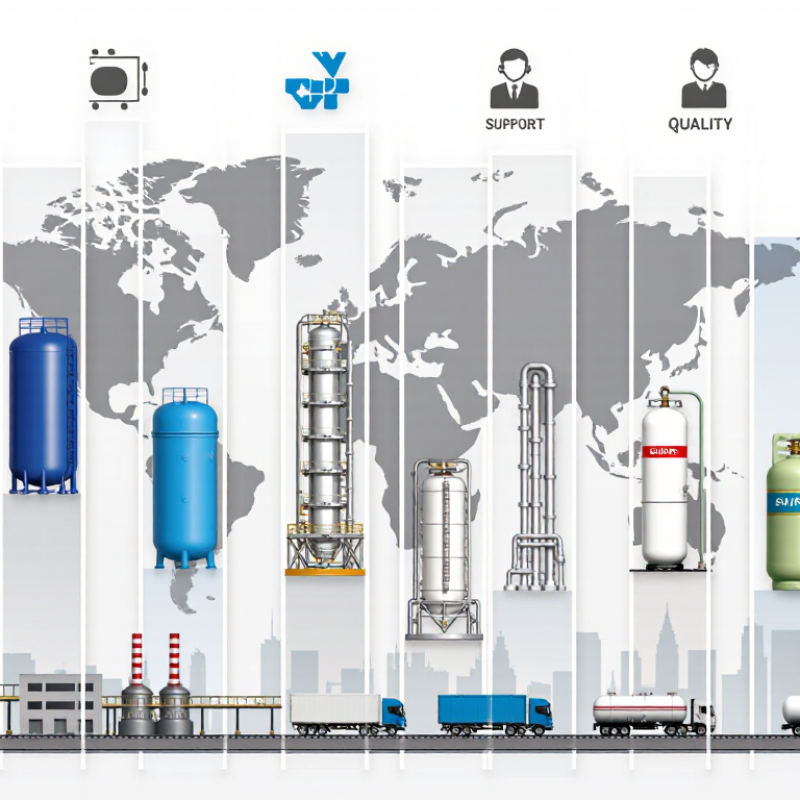
Global commercial gas supply is large, but not evenly distributed. The Energy Institute’s Statistical Review of World Energy 2024 reports that worldwide natural gas production reached 4,059 billion cubic metres in 2023. That figure describes production, not the volume freely available to every buyer. Gas must still move through pipelines, liquefaction plants, shipping routes, and storage facilities.
For global buyers, supply reliability depends on more than a supplier’s headline capacity. The International Energy Agency’s Gas 2024 analysis highlights how weather, infrastructure constraints, and changing demand can tighten regional markets. A contract may look secure on paper, yet delivery can depend on pipeline access, shipping schedules, and local storage. One useful question: what happens if the nominated route is disrupted? Production totals cannot answer that alone.
Tips: Compare delivered cost, contract flexibility, transport options, and contingency plans. Ask for clear volume and quality specifications, plus notice periods for supply changes. Check how prices are indexed and which risks each party carries. Keep assumptions visible. Forecasts can be wrong. A careful buyer reviews the route as closely as the source.

A credible ranking of commercial gas suppliers should separate production scale from exportable supply. Annual output matters, but domestic demand can sharply reduce available volumes. LNG capacity adds another test: compare operating liquefaction plants with actual exports, not announced projects. GIIGNL’s 2024 Annual Report recorded 401.4 million tonnes of global LNG trade in 2023. That figure shows market scale, not guaranteed delivery from any single supplier. That distinction matters.
Reach should reflect access to export terminals, shipping routes, and receiving markets. The International Gas Union’s 2024 World LNG Report tracks liquefaction capacity and import infrastructure, useful measures for assessing that reach. Reliability needs a separate score: examine delivery records, outage exposure, and the ability to manage seasonal swings. Data from reports can still lag. Markets shift. A strong comparison should state its measurement period and distinguish nameplate capacity from actual performance. I would also treat reliability as partly uncertain; public data rarely reveal every disruption or contract constraint. For buyers, a supplier with slightly lower output may prove more dependable when nearby terminals, diversified routes, and consistent delivery records support its volumes.
Annual natural gas production, 2023 (billion cubic metres). Production indicates output scale; it does not by itself measure LNG export capacity, market reach, or supplier reliability.
Source: Energy Institute, Statistical Review of World Energy 2024. Values rounded to the nearest billion cubic metre.
A useful comparison of ten commercial gas suppliers should begin with portfolio depth, not headline volume. Check whether each portfolio combines domestic production, pipeline imports, and liquefied natural gas, or depends heavily on one source. Ask where cargoes can be redirected, which receiving terminals are accessible, and whether seasonal storage supports delivery during cold spells. These details reveal practical flexibility. A large contract book alone does not.
Markets and routes shape reliability. GIIGNL’s Annual Report 2024 recorded 401.4 million tonnes of global LNG trade in 2023, serving 48 importing markets. That scale makes access to liquefaction plants, ships, regasification terminals, and pipeline connections worth examining together. Routes matter. Compare voyage distance, transit chokepoints, and backup ports; a delayed cargo can tighten regional supply even when global volumes look ample. For each supplier, map its main sourcing regions against customer locations and seasonal demand. Check delivery terms and available capacity, too. A polished route map may hide constraints at a single terminal. This is easy to overlook. Public data also cannot confirm every contractual option, so buyers should test claims against audited disclosures and operating records.
GIIGNL’s 2024 Annual Report puts global LNG trade at 401.4 million tonnes in 2023, up 2.1% from 2022. That is a vast market, but the headline figure can hide tight regional conditions. A cargo available on paper may not fit a buyer’s delivery window, terminal capacity, or storage plans.
China imported 71.2 million tonnes of LNG in 2023, a 12.6% increase, according to the same report. The International Energy Agency’s Gas Market Report, Q1-2024, describes a market adjusting to changing demand and constrained supply growth. For buyers, that means comparing more than quoted prices: contract flexibility, shipping schedules, destination options, and exposure to seasonal demand all matter. A delayed cargo can leave tanks low just when cold weather raises consumption.
Details count. Check whether a supplier can align cargo size with unloading limits and provide clear notice of schedule changes. These checks do not remove price risk, and forecasts can miss the mark. Still, verified trade data and practical delivery terms make procurement decisions less dependent on guesswork.
Comparing the top 10 commercial gas suppliers starts with the terms behind the quoted price. Check whether the contract allows volume changes when production slows or demand rises. Ask how much notice is required and whether unused volume carries a fee. Small details matter. A flexible clause can be more valuable than a slightly lower price, especially for facilities with seasonal demand.
Price indexing needs equal attention. Confirm which published index sets the price, how often it updates, and what charges sit outside the index. Request a sample invoice using a recent billing period. Delivery terms should specify nomination deadlines, pressure requirements, delivery points, and procedures for outages. A contract may read clearly until a delivery schedule changes. That is worth testing before signing.
Tips:
Ask suppliers to show a sample bill and explain one disruption scenario. Request emissions data with its measurement period, scope, and calculation method; avoid comparing figures that use different boundaries. Keep written answers beside the contract draft. No checklist removes every trade-off, and I would revisit assumptions when operating needs change.
© Copyright 2025 | LittleFirefighter.com | All Rights Reserved | 1EZ Creative: Orange County Web Design

Fusce ut ipsum tincidunt, porta nisl sollicitudin, vulputate nunc. Cras commodo leo ac nunc convallis ets efficitur.

12345 North Main Street,
New York, NY 555555
1.800.555.6789
sale@vibrotools.com